Garden wildlife
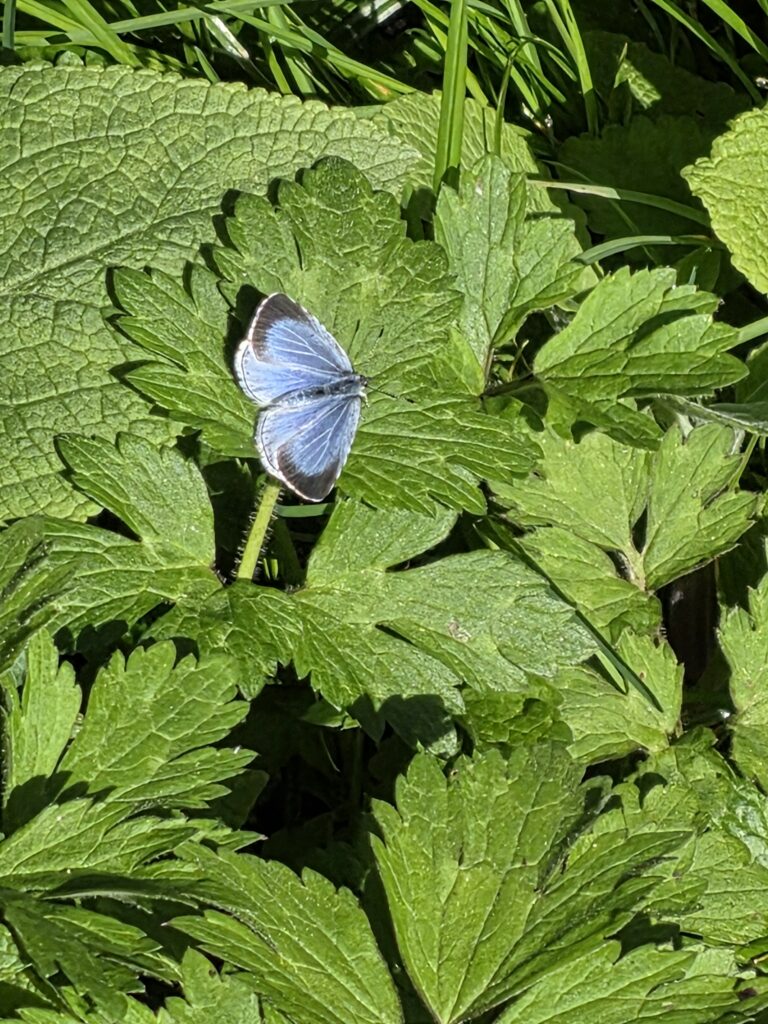
The Holly Blue butterfly (Celastrina argiolus) is a common spring visitor to the garden.
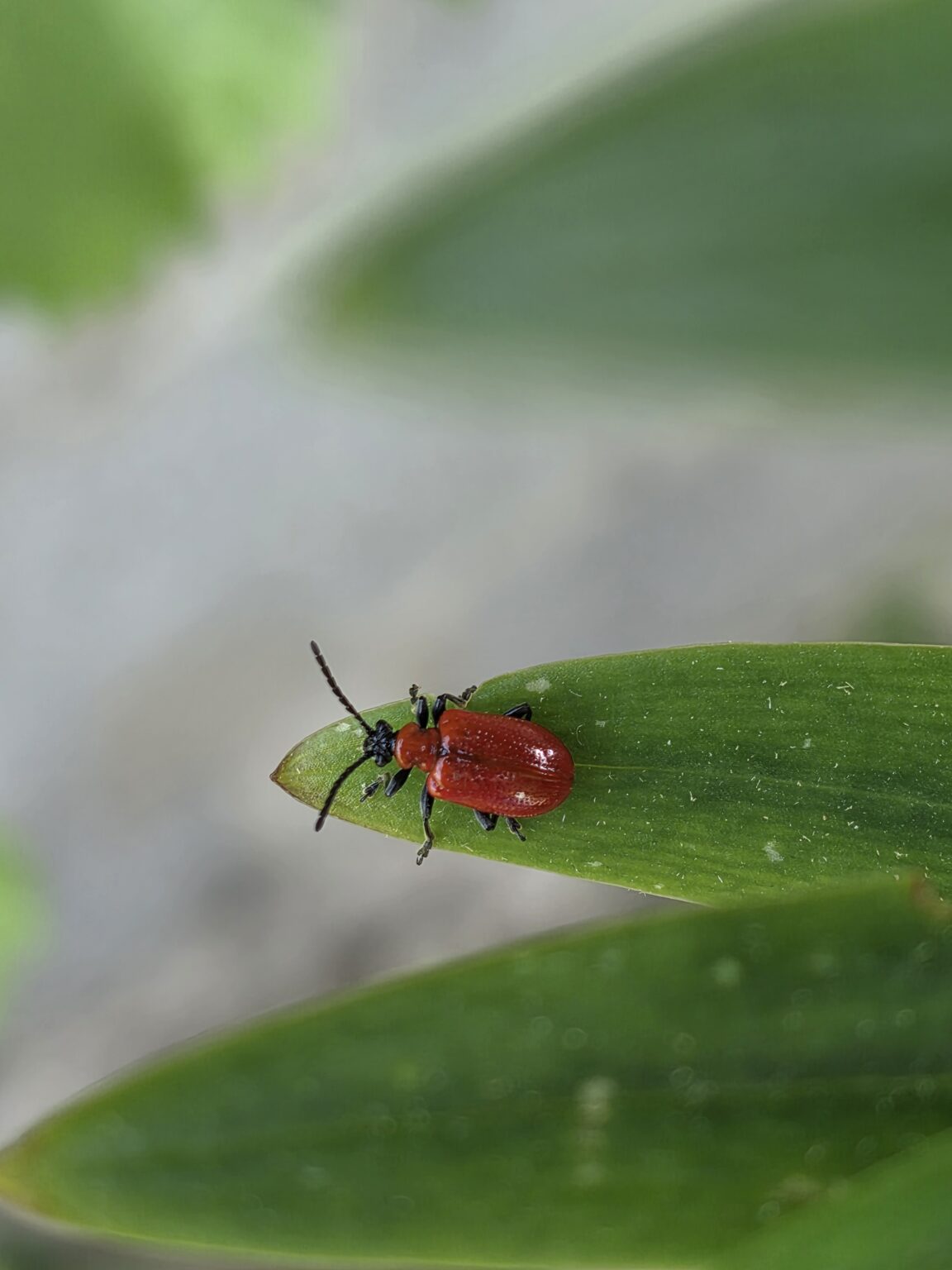
The bright scarlet Red Lily Beetle (Lilioceris lilii) is not exactly discreet when it comes to destroying the lilies in the garden.
Easy to spot, with its bright red livery against the predominantly green backdrop, that doesn’t mean it’s
easy to stop.
If you don’t manage to pinch it rapidly and firmly between finger and thumb and crush it immediately, it will beguile you into believing that it’s dead, by dropping off its perch and falling upside down onto the ground, where you’ll be hard put to find it as it lies on its back, concealing the tell-tale red elytra, or forewings, and exposing only its dull black abdomen, which is hard to see against the surrounding soil and undergrowth.
That’s not all of its party tricks, though, as it can also ‘squeal’ to frighten you as you approach… and for this it uses a technique of ‘stridulation’ akin to that used by crickets, by rubbing two parts of their body together.
However, let’s not be confused by reports about the « epidemic expansion » of this curious little beetle…
It has lived in Asia and mainland Europe for decades now – if not for centuries – and here in France it’s under pressure from no less than three parasitoid wasps which are constantly hunting this little beetle to host their larvae, which will ultimately consume the beetle from the inside out.
However, these parasitoid predators have not accompanied the Red Lily Beetles on all their worldwide travels, and in the USA and the UK, the expansion of the beetles remains largely unchecked, despite a couple of projects to introduce the predator wasps.
Finally, another way these brilliant beetles have learnt to protect themselves can be seen in the way the young larvae cover themselves with their own excrement – not an appetising sight for even the young and strong at heart!
I think one of the ways these bugs arrive in the garden is in the form of eggs or larvae on purchased lilies, and as I’m not a great fan of lilies anyway, the best way is just not to buy any more of them, to protect my little colony of snakeshead fritillaries up by the ponds.
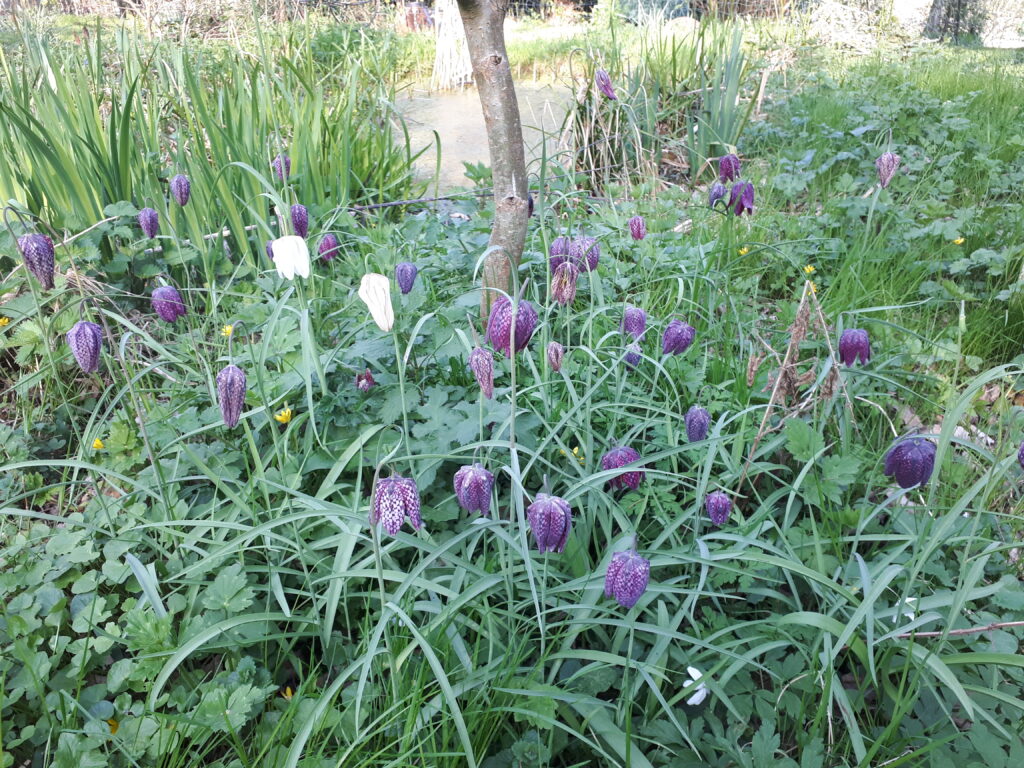
Snake’s head fritillaries (Fritillaria Meleagris) in spring. Native but vulnerable in France, these dainty little lilies thrive in wet meadowland and here they are established at the foot of a ‘twisted willow’ (Salix babylonica pekinensis ‘Tortuosa’) between the two ponds. As well as the classic purple harlequin variety, you can also see a couple of flowers of the white sub-variety, Fritillaria Meleagris alba.
To help protect these rare beauties from a possible red lily bug infestation, I’ve decided not to bring in any other lilies to my garden.
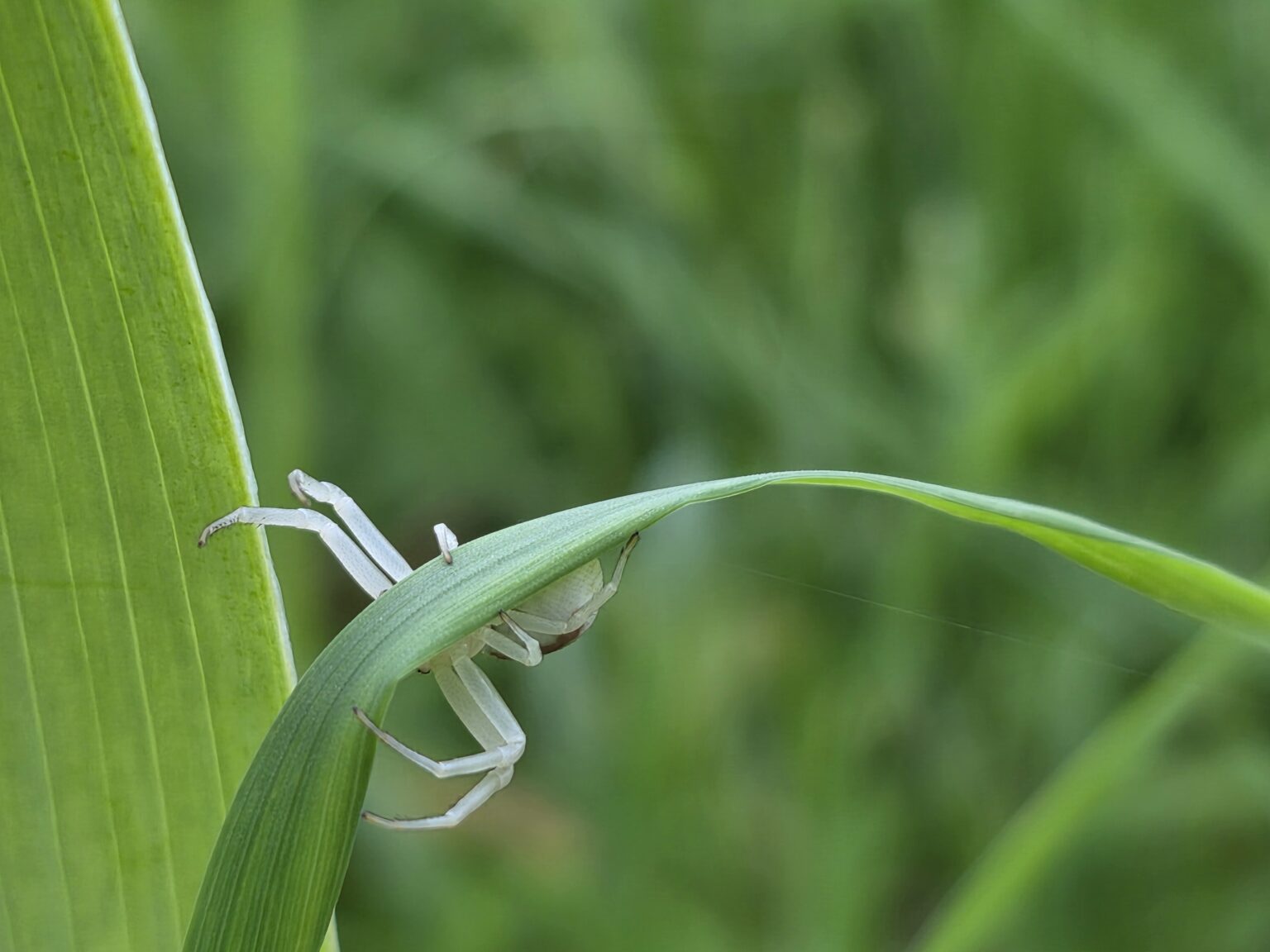
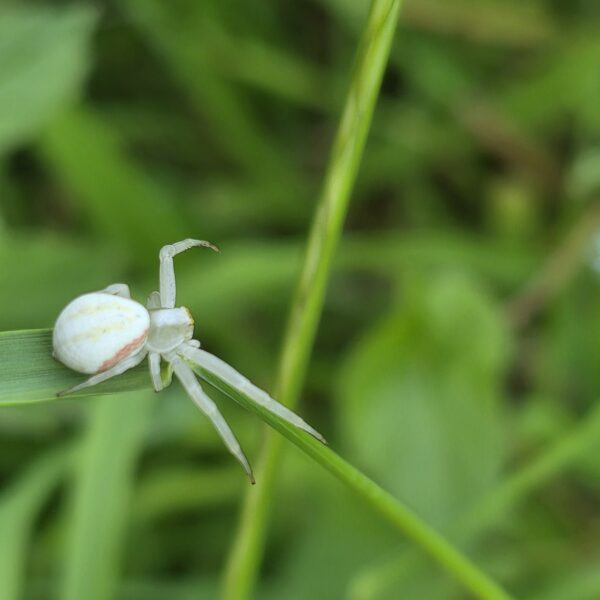
I came across this little flower crab spider (Misumena vatia) while I was photographing my irises.
They are curious in that, as well as being able to walk sideways like a crab, they can also change colour between white and shades of yellow – the colour of their common haunt, the Goldenrod (Solidago genus).
These spiders hide out in flowers, lying in wait of pollinators to catch.
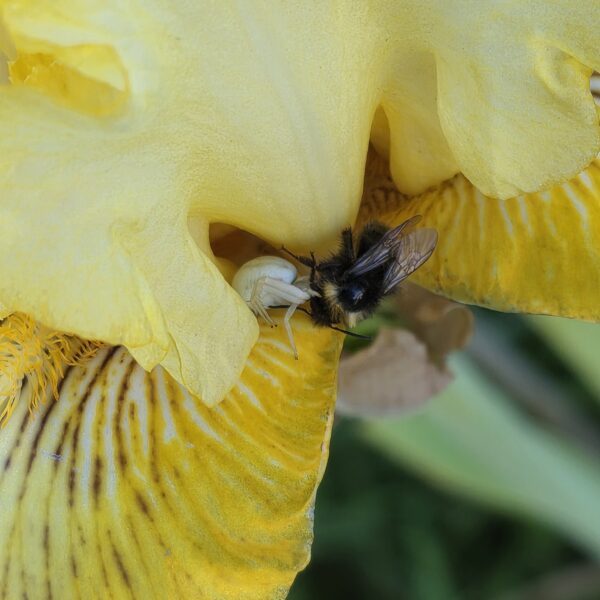
The next day, to my surprise, I found this little guy digesting a small wild bee he’d caught in the yellow and white flower of an iris ‘Poivre Rouge’ (Cayeux, 2015).
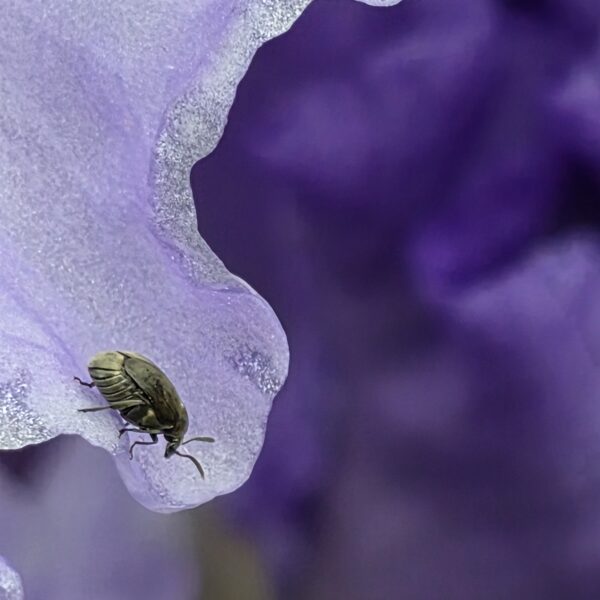
I caught this little guy on camera as he was scurrying across the lilac-shaded falls of an iris ‘Miah Jane’ (Parkhill 1999).
To such a tiny creature, it must have seemed like crossing a purple desert, probably in search of pollen to chew.
I’m no entomologist, but he’s likely a seed beetle, or bruchine (sub-family Bruchinae) and one of nearly two thousand species currently identified – but then, even the entomologists don’t agree as to whether they belong to the Coleoptera–Bruchidae or the Chrysomelidae–Bruchinae.
Whoever he is, he’s cute and I’m happy to have him as a pin-up on this page!
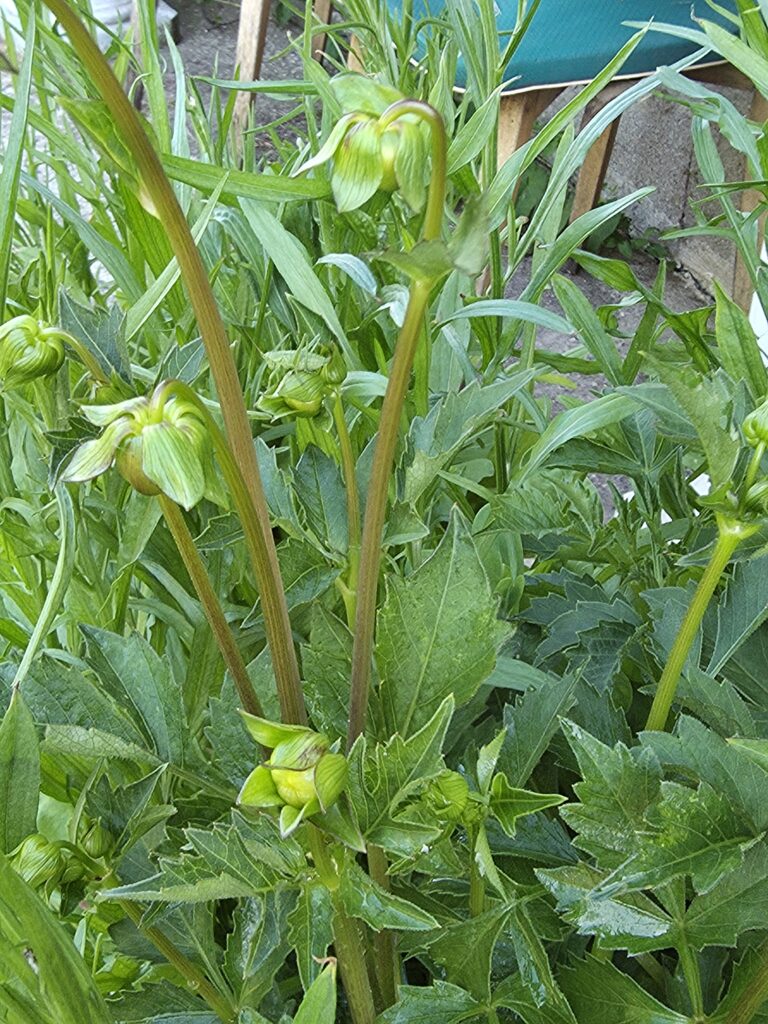
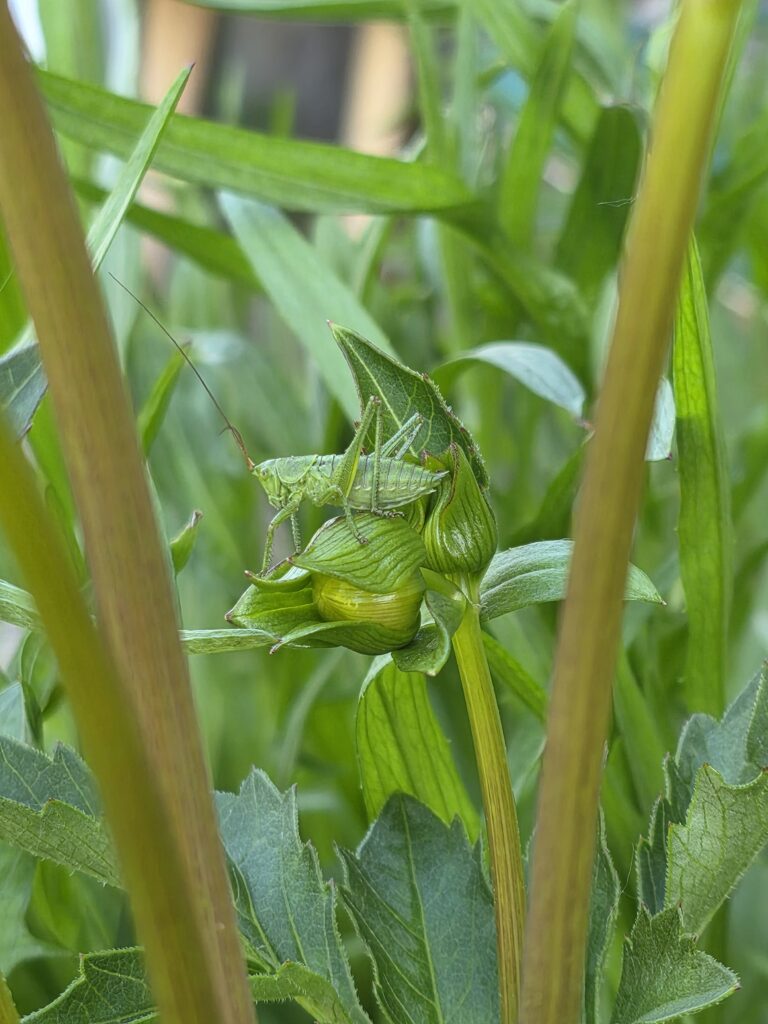
Spot the intruder!
At first sight – nothing to see…
Just a handful of dahlia blooms in bud.
But a closer look and this little guy stands out.
But shhhh… Don’t give the game away!
I was incredibly lucky to be able to catch this Lime Hawkmoth (Mimas tiliae)
on camera as it emerged from its winter pupation in the soil and undergrowth of the woods in mid-May.
As adults, these moths don’t feed, but search out Lime (Linden, Tilea x europaea) or Beech (Fagus sylvatica) trees to lay their eggs.
This one won’t have far to search, as there’s a very big Lime/Linden tree on the edge of the woods, and also a fair number of beech trees.
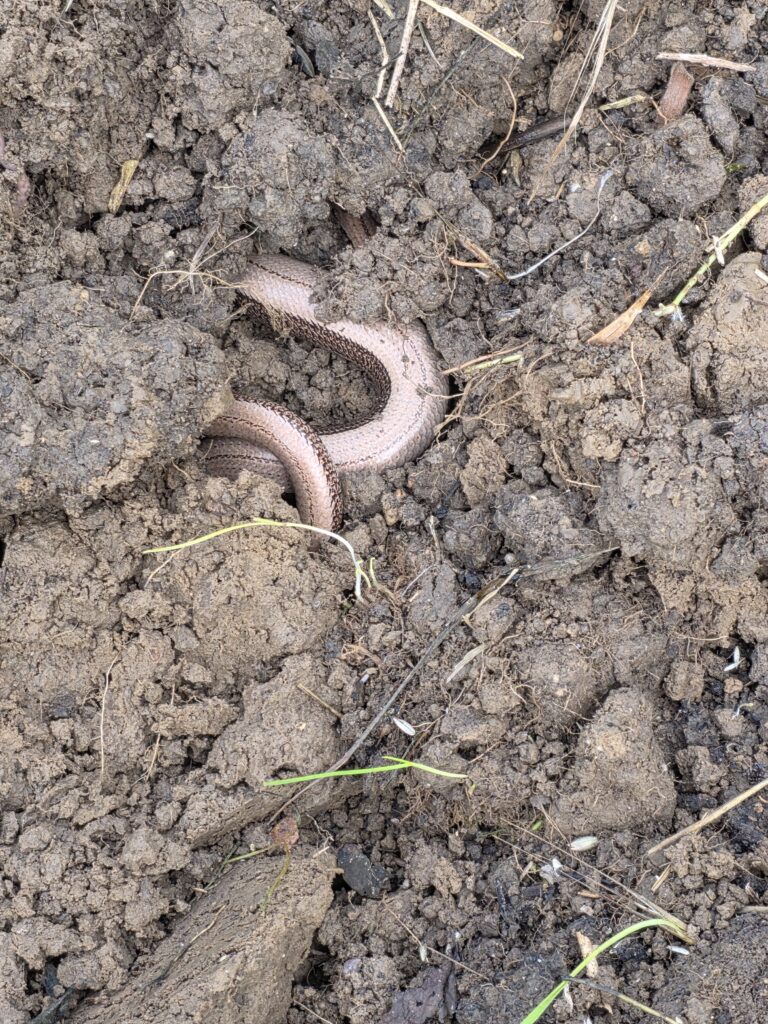
What are these bright coils I see as I lift the mulch from the flower bed?
Click on the video to see them uncoil!
The common slow-worm (Anguis fragilis, the ‘Glass snake’) is an elusive inhabitant of the garden, where it finds ideal habitats and hideaways,
as well as plenty of good hunting grounds, eating slugs, snails, worms and spiders…
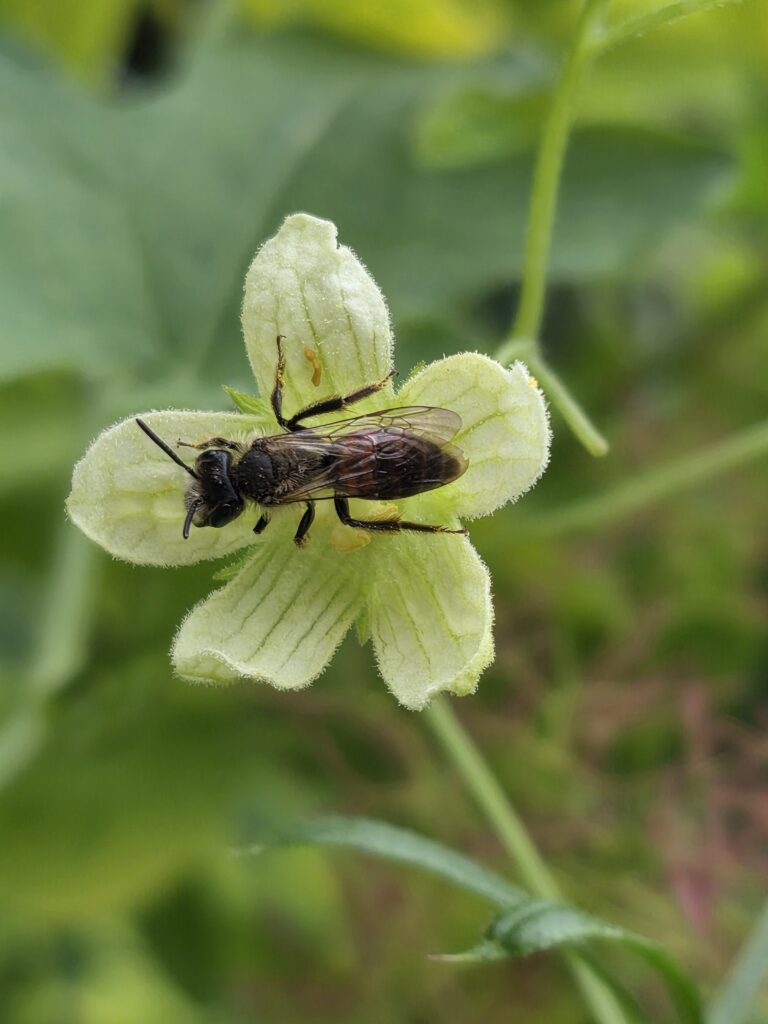
This little wild bee is Andrena florea, the Bryony Mining Bee, which visits only this single flower species for pollen, though it will fly to other flowers for nectar – usually brambles (Rubus fruticosus).
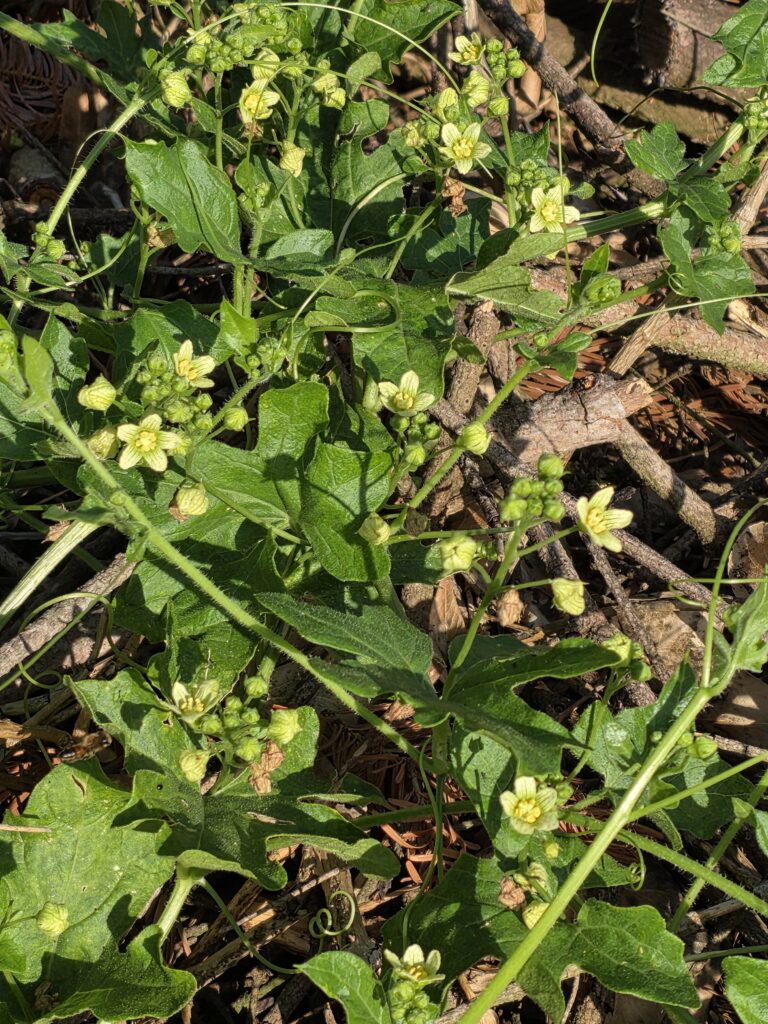
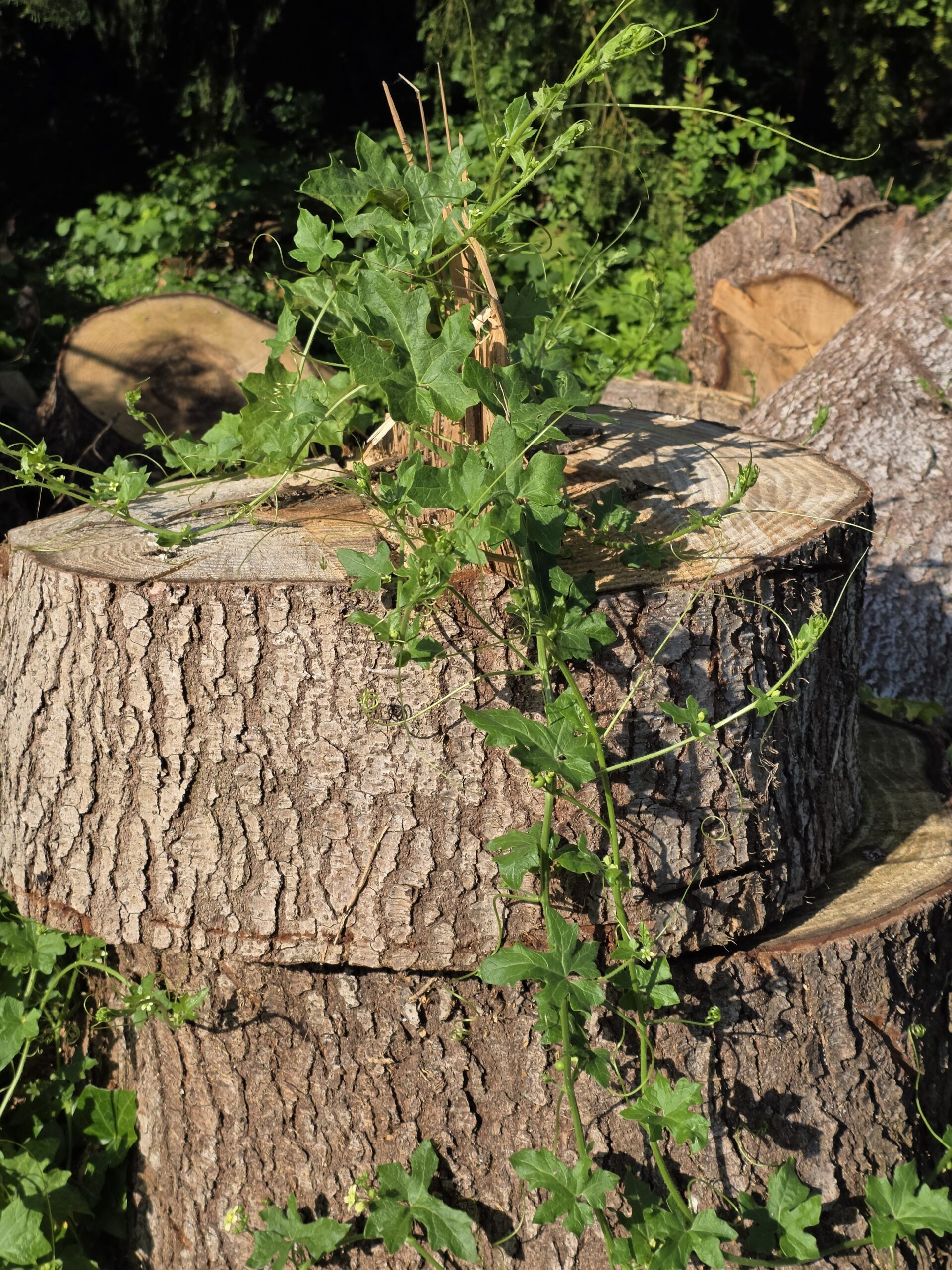
There are quite a number of White Bryony (Bryonia dioica) plants dotted around the garden, and they come up every year in the same place from their single thick, deep root. They are vining plants and love to scramble over other plants and climb trees.
The plant in the picture used to climb the enormous blue epicea that overshadowed the house, and when the tree was cut down in early 2026, the White Bryony turned up as usual and is now scrambling over the logged branches and trunk on the ground!
It’s a very toxic plant, causing bad skin rashes, and even ingesting a small amount of its juice will cause intense gastrointestinal irritation, with nausea and vomiting.
However, with such a charming little bee depending on them for pollen, the plants will be preserved here!
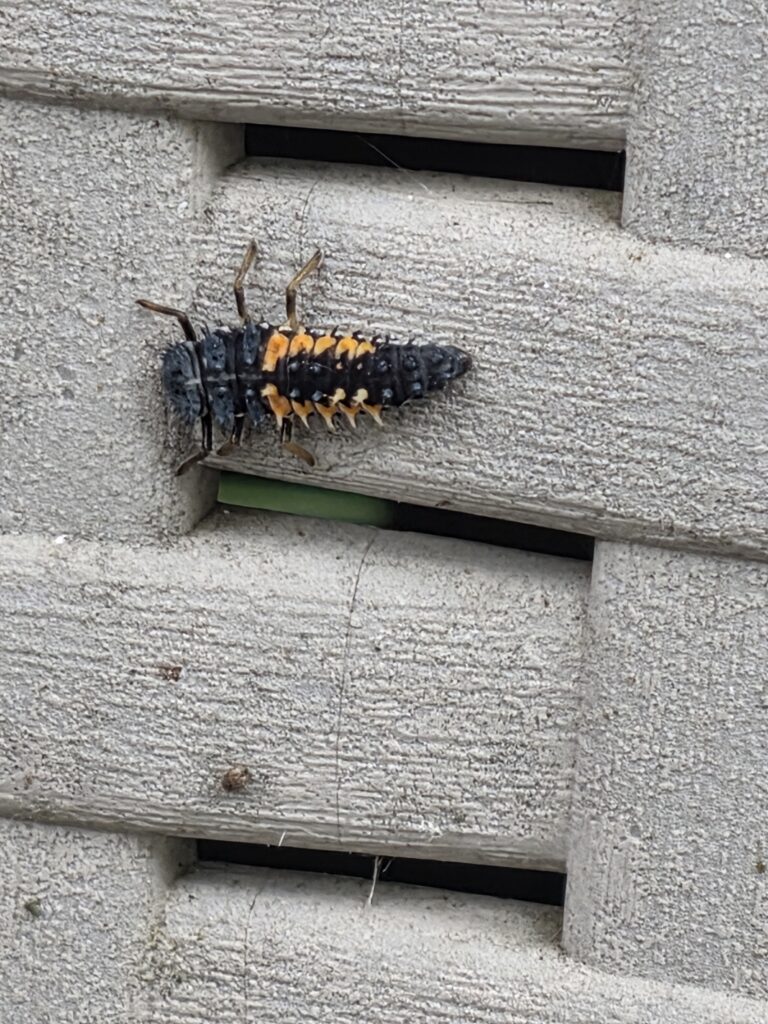
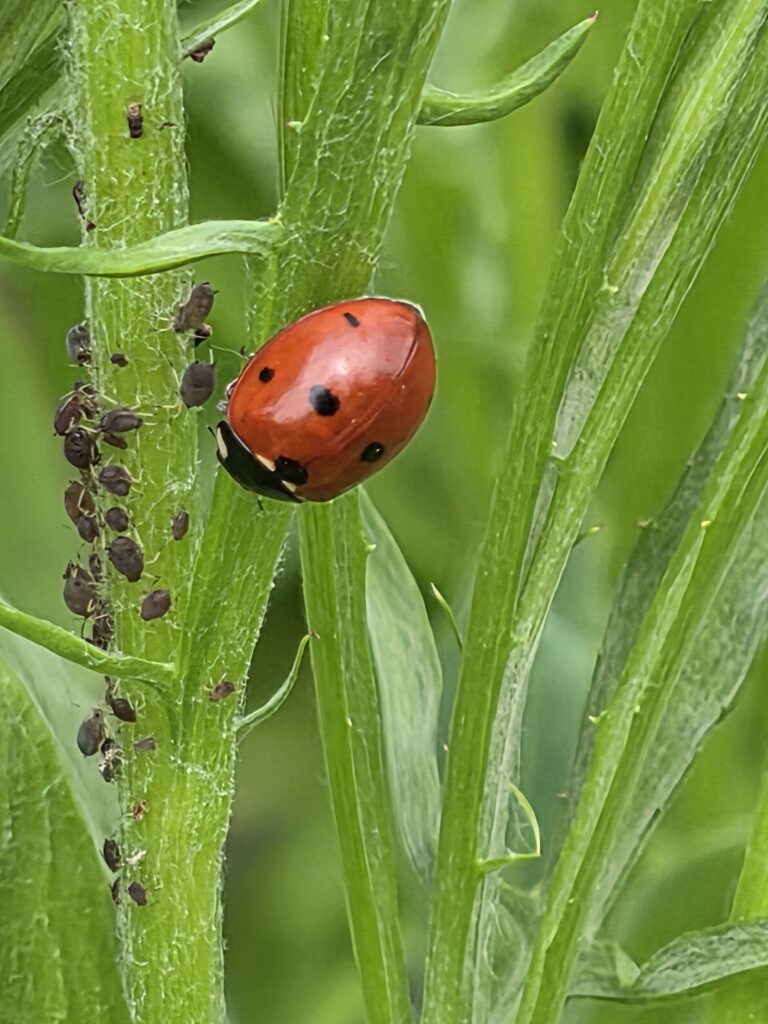
The ladybird larva is grey/black and orange, and this one is the larva of an Asian ladybird, or Harlequin ladybird (Harmonia axyridis), as it has as many as five orange segments, whereas the adult here is Coccinella septempunctata, commonly known as the seven-spot ladybird.
Wherever they come from, there’s space enough here for all types of ladybird, especially the 90 or more species of native Ladybird in France – and for more information about them, I’d highly recommend Chris Luck’s ladybird page, but also all the other pages of his excellent website: Wildlife in France.
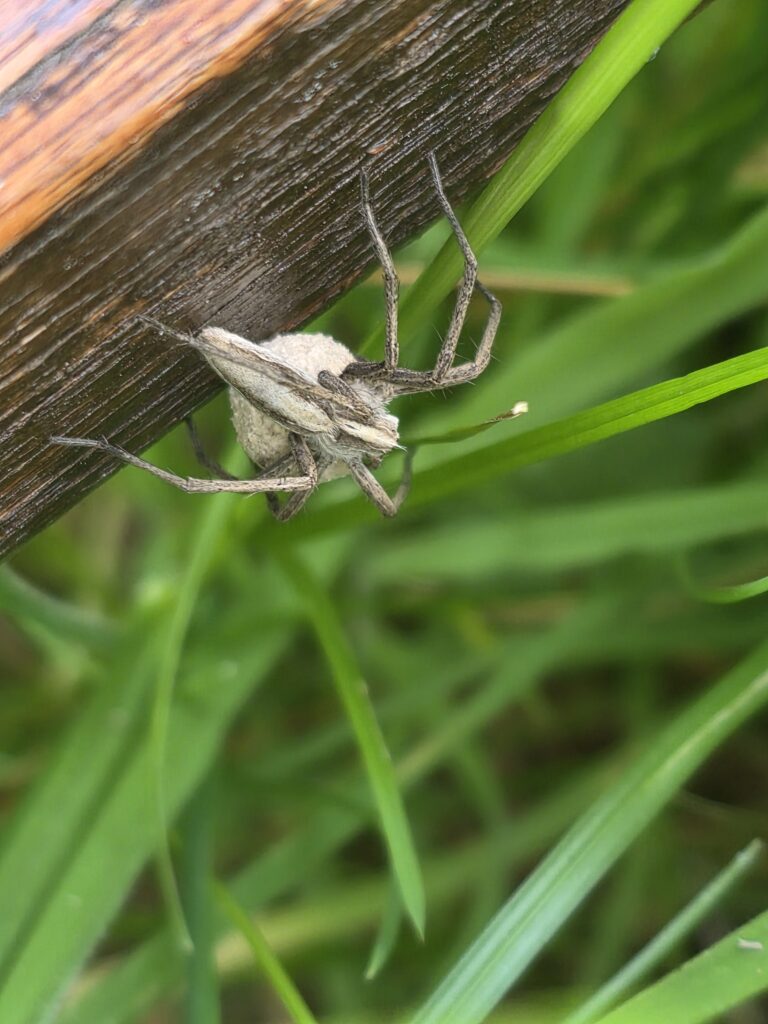
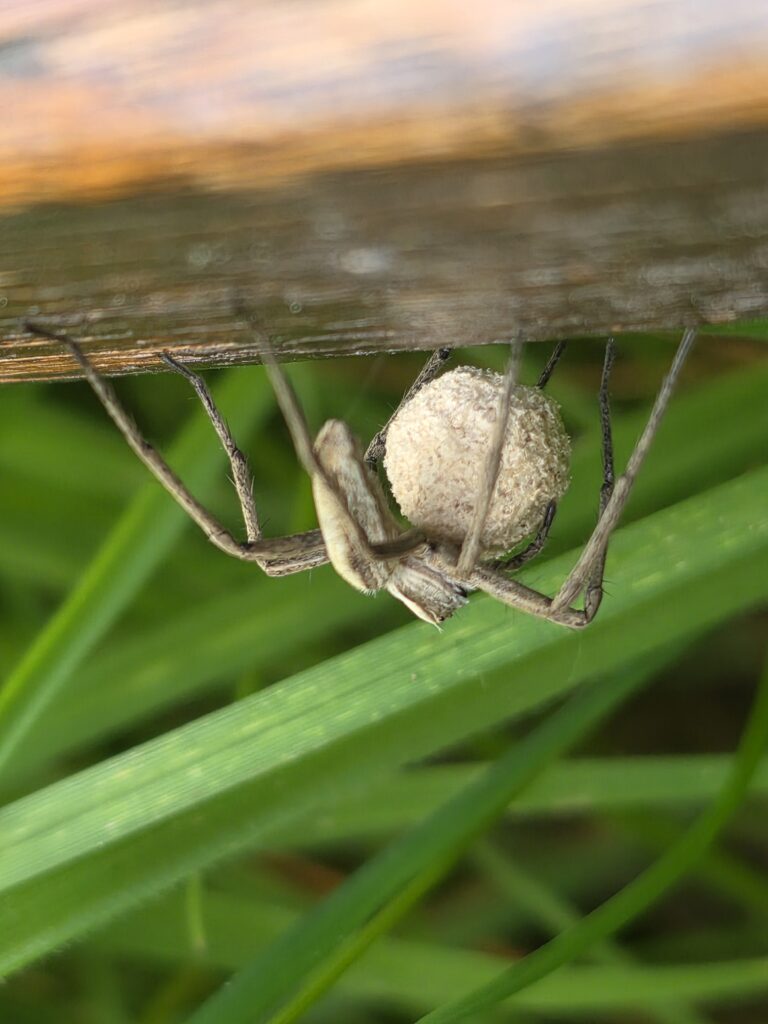
Pisaura mirabilis has many names, including the Nursery Web Spider, the Predatory Spider, and the Tent Spider, and even the Bridal Gift Spider, as the male presents a carefully wrapped insect to her as part of the mating ceremony!
Here, this female is carrying a silk ball containing her eggs and, before they hatch, she’ll spin a silk tent to protect her offspring when they emerge.
The Pisauridae are the family of hunting spiders, and they use their strength and speed to catch flies and other small insects.
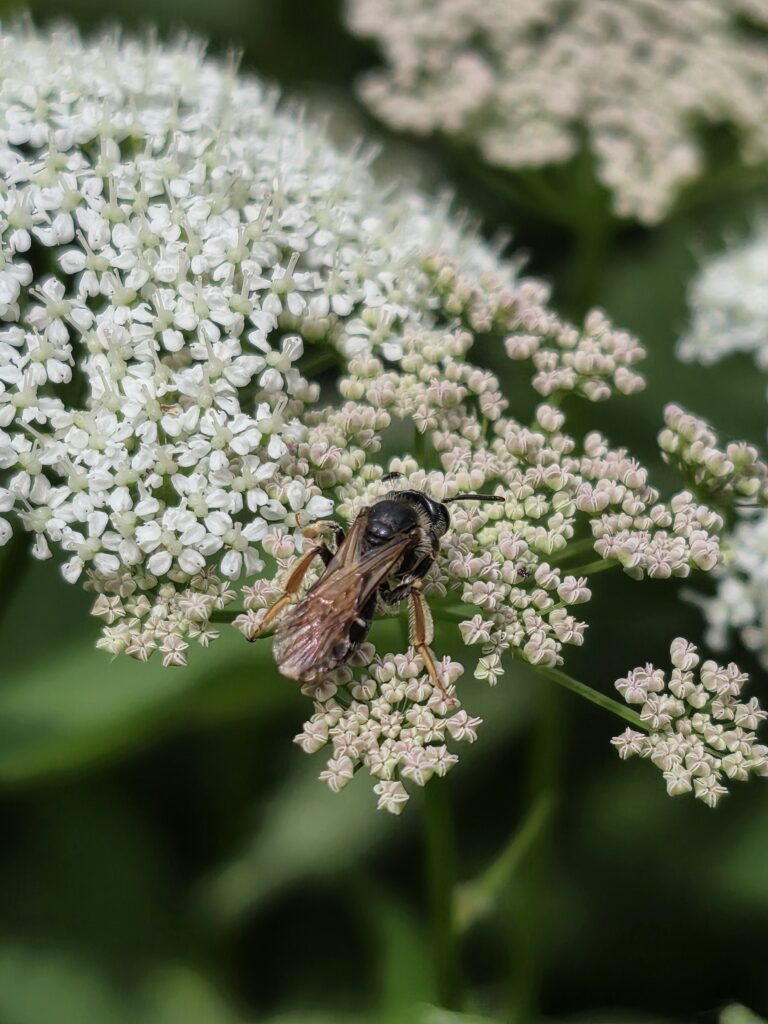
Andrena is a genus of bees with over 1,500 species, commonly known as mining bees as they live in a hole in the ground. The scopal hairs (scopae) on its legs are used for carrying pollen.
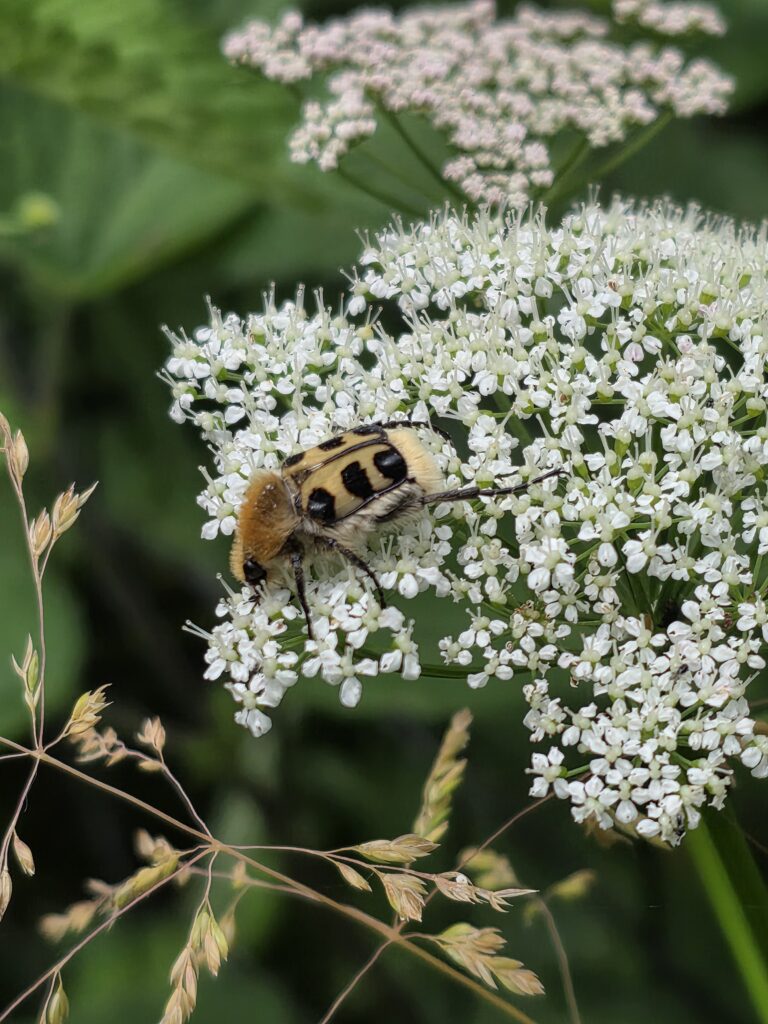
The French flower chafer, or bee beetle (Trichius gallicus) looks more dangerous than it really is, with its hairy yellow-and-black pattern helping it to imitate a bumblebee and discourage predators.