
Here in my garden in Picardy—better known for its generous rainfall than for drought—succulents occupy a somewhat unexpected, yet quite natural place.
These remarkable plants, shaped by some of the driest and most unforgiving environments, have developed ingenious ways to store water in their leaves and stems, allowing them to endure long periods without rain. Their compact forms, subtle colours, and often geometric shapes bring a quiet, sculptural presence to the garden.
What I find compelling is not only their resilience, but the range of strategies they use to survive—waxy coatings, tightly packed rosettes, and even a nocturnal rhythm of respiration that helps them conserve moisture.
Each feature serves a clear purpose: ‘Form follows function’.
As climatic conditions continue to shift, these plants—once something of an anomaly here—may, in time, seem rather less out of place.
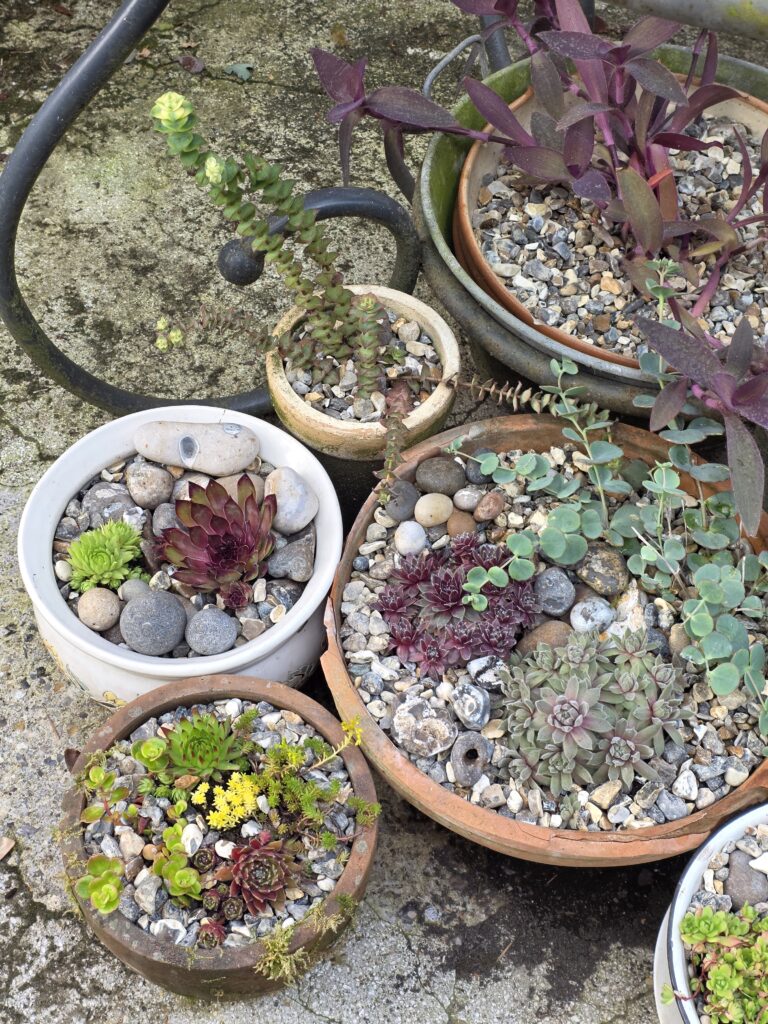
A mix of succulent plantings under the glass table, which protects them from rather too much winter rain!
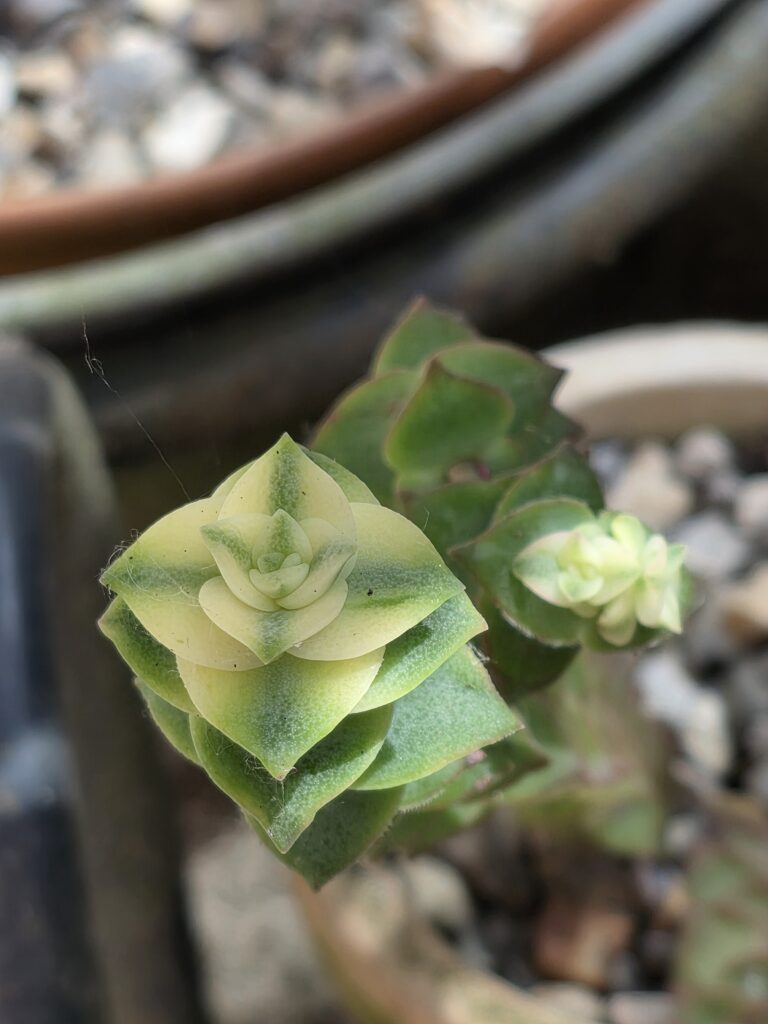
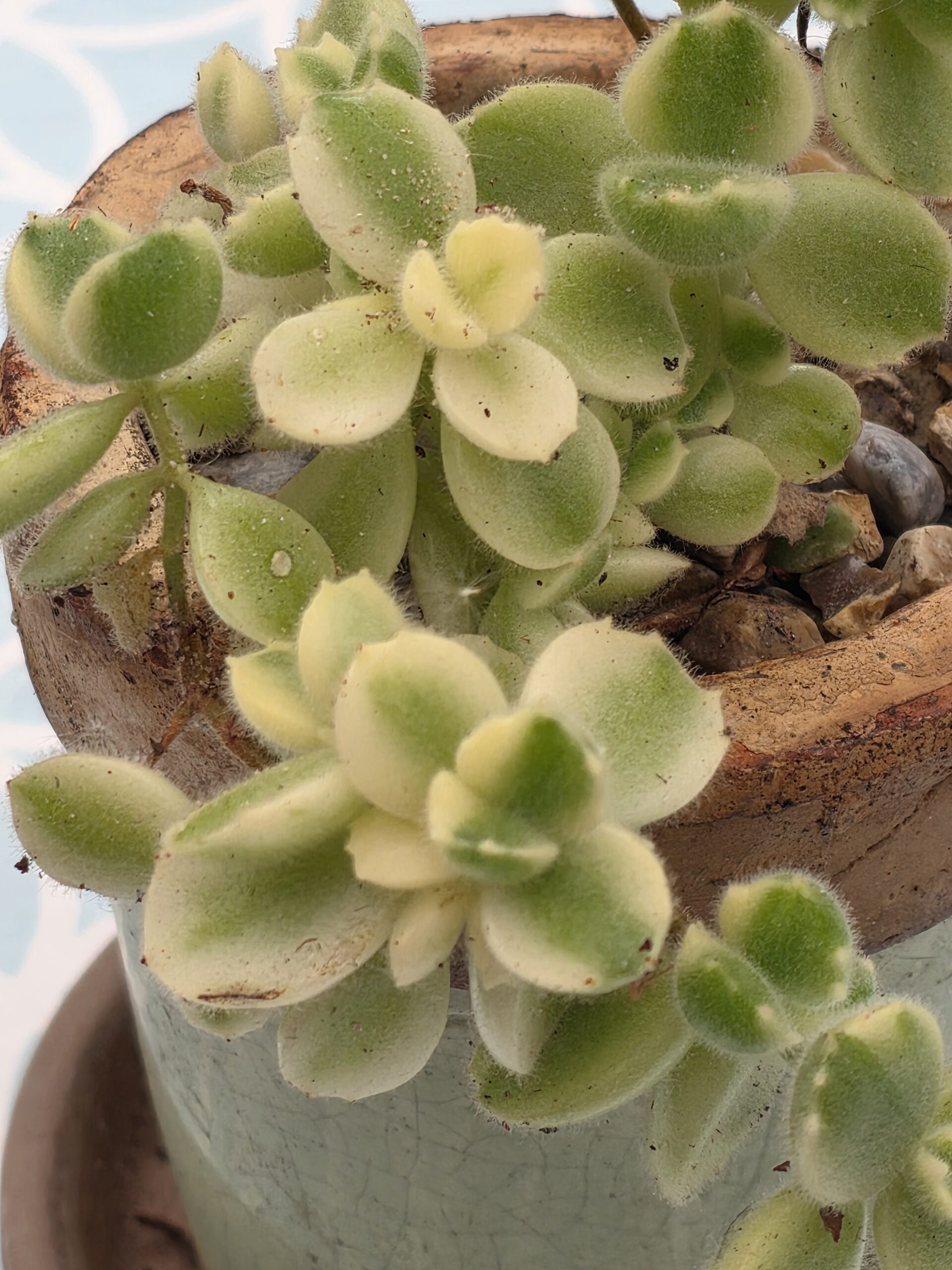
Crassula perforata f. variegata, the Variegated ‘String of Buttons’, originates from South Africa.
The perforations in its leaves (NB. Crassula perforata) reduce water loss through transpiration.
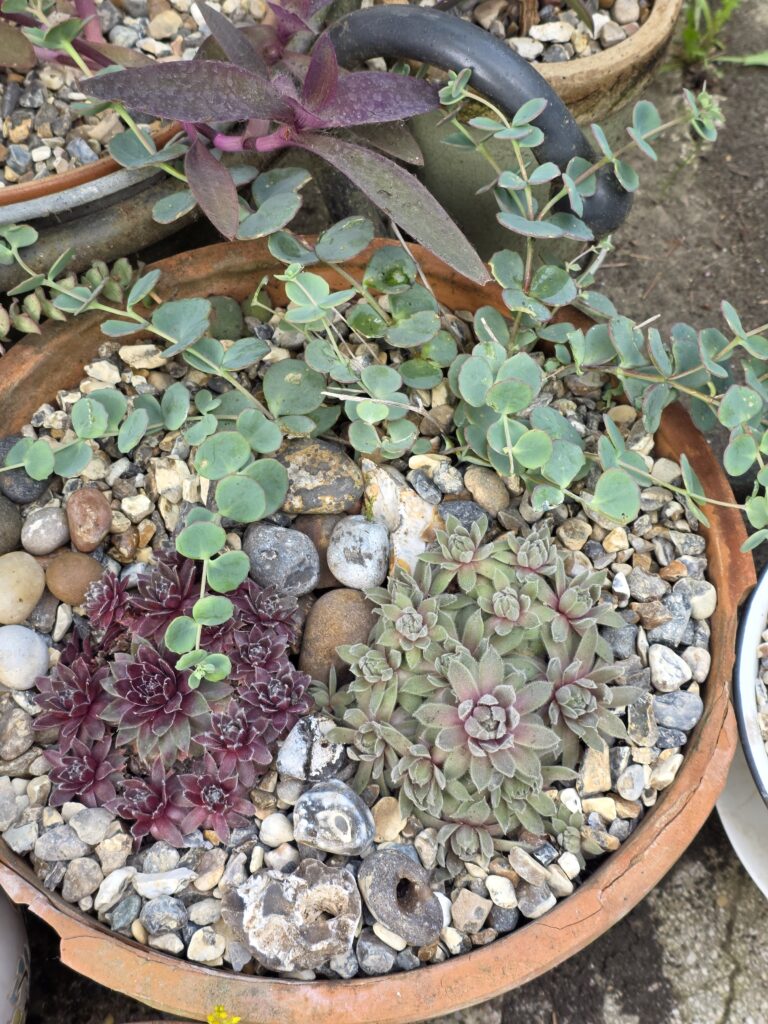
Sempervivum ‘Mahogany Pearl‘ (bottom left) and ‘Grizzle Velvet‘ (bottom right), underlying Hylotelephium sieboldii, the October Stonecrop, native to Japan, next to the Mexican ‘Purple Heart Tradescantia’, Setcreasea purpurea (top, syn. Tradescantia pallida) in the adjacent pot.
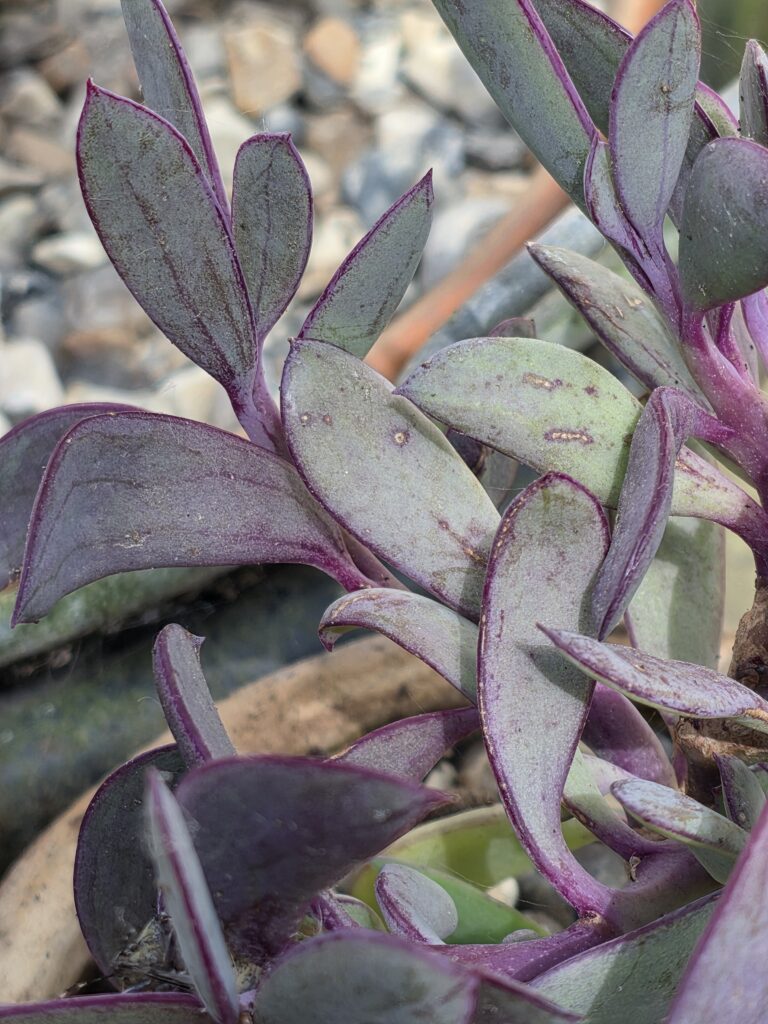
The purple-tinted leaves of Senecio crassissimus, the ‘Propeller Plant’, are vertically oriented to reduce their exposure to the scorching sun of Madagascar, where this plant originates.
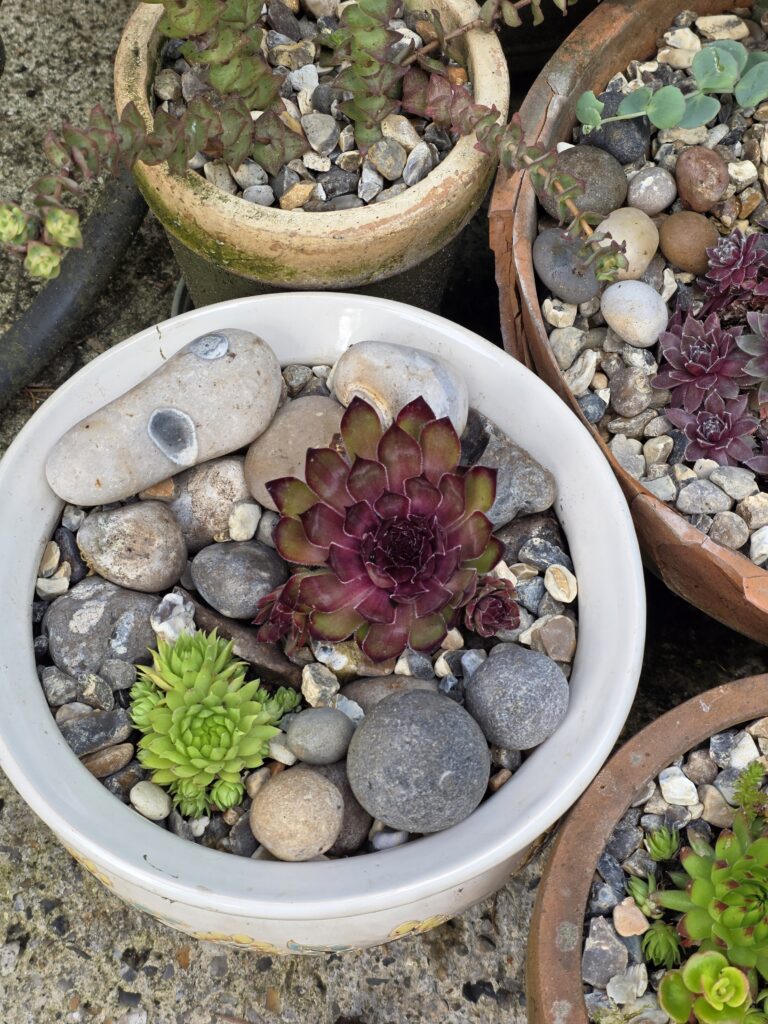
Sempervivum ‘Key Lime Kiss’ was the first plant to draw my attention to a delightful plant stand at a local street fair with its bright green rosettes. Here, set off against the deep red Sempervivum ‘Butterscotch Baby’.
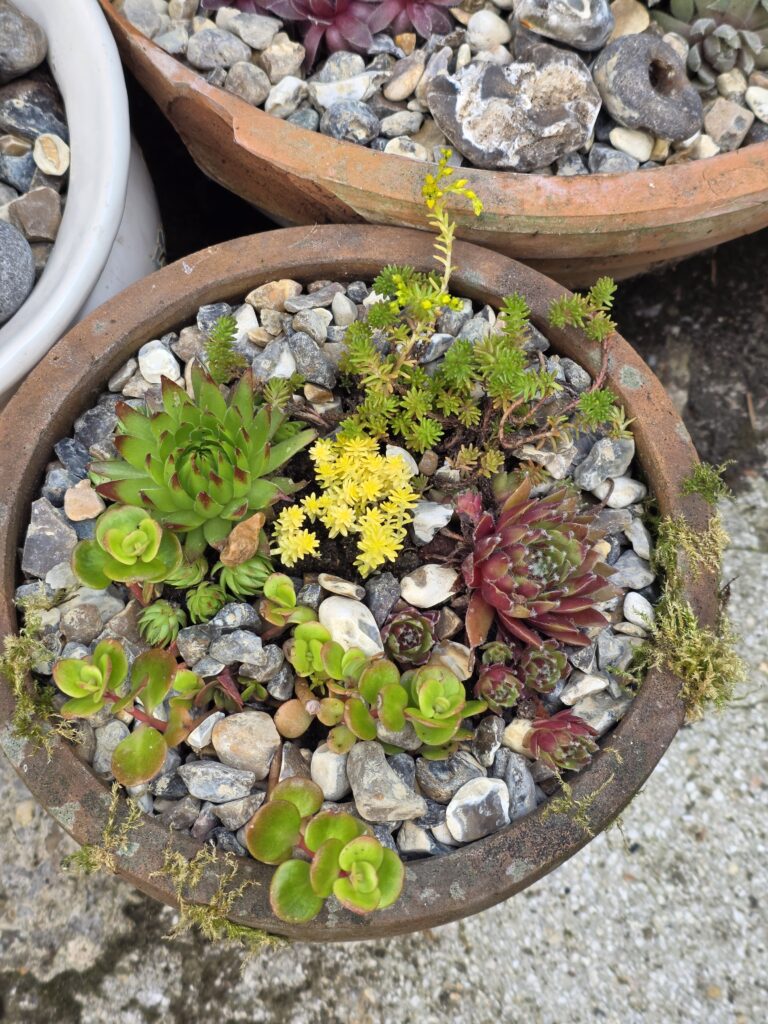
This delightful planting by Laurent Moyaux, a keen local amateur of succulent plants, blends the ‘Tasteless Stonecrop’ (top, Sedum sexangulare), Sempervivum ‘Cinnamon Starburst‘ (top right), Sedum tetracium ‘Coral Reef’ (bottom), Jovibarba ‘Autumn Fire’ (top left), around the bright yellow Sedum japonicum ‘Tokyo Sun’.
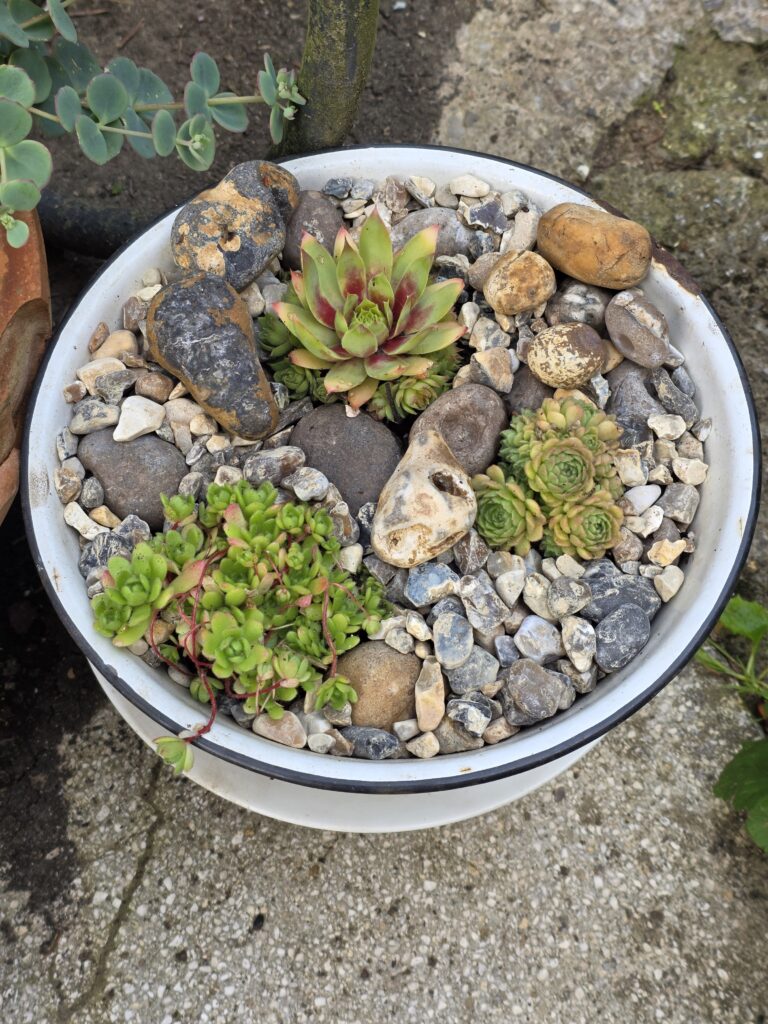
More plants from the Laurent Moyaux collection, with Sempervivum ‘Gold Rush’ (top), Rosularia Sedoides var. ‘alba’, (bottom left), originally from northern India, and Rosularia chrysanthum (right), from the mountains of Türkiye.
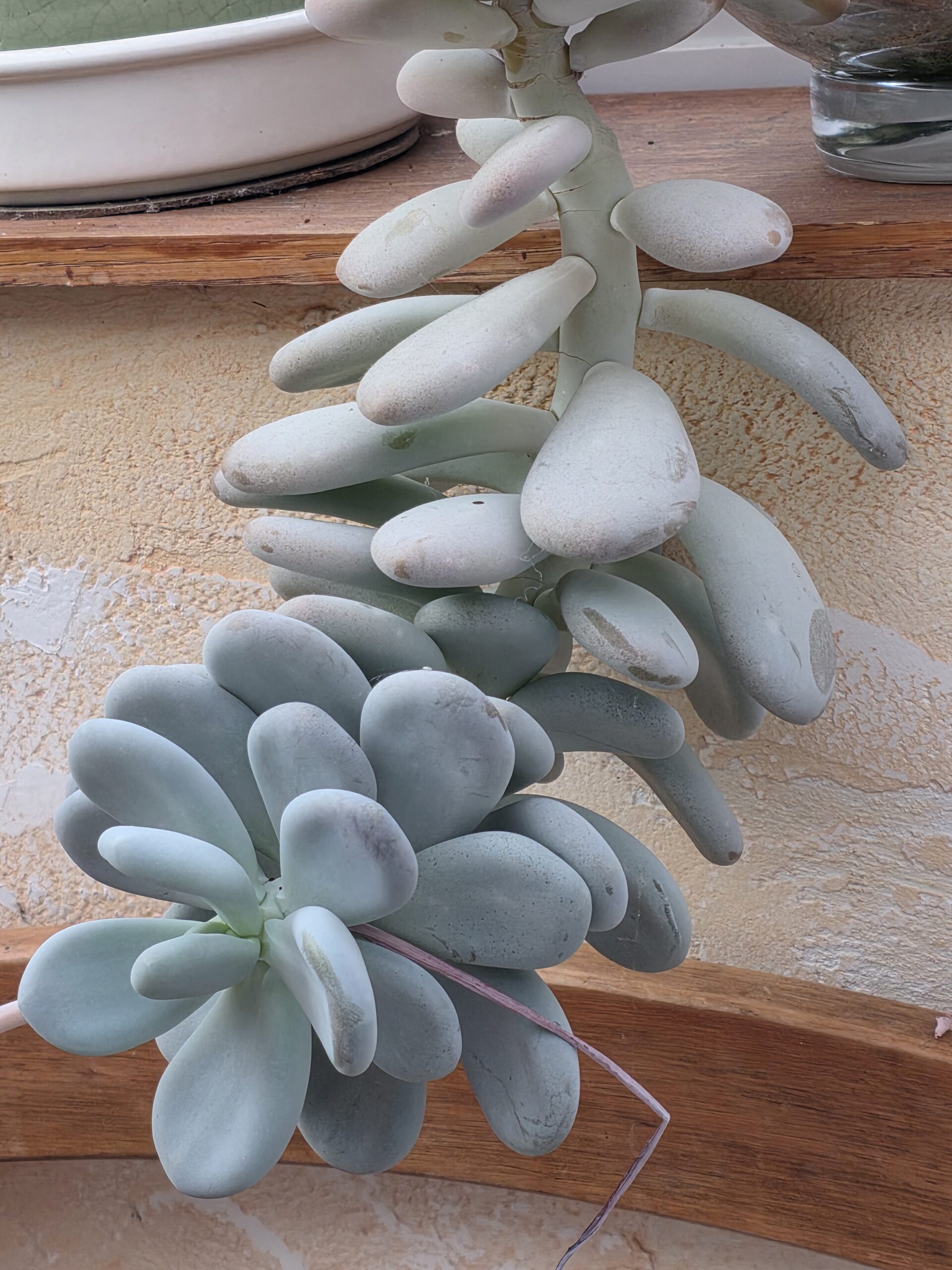
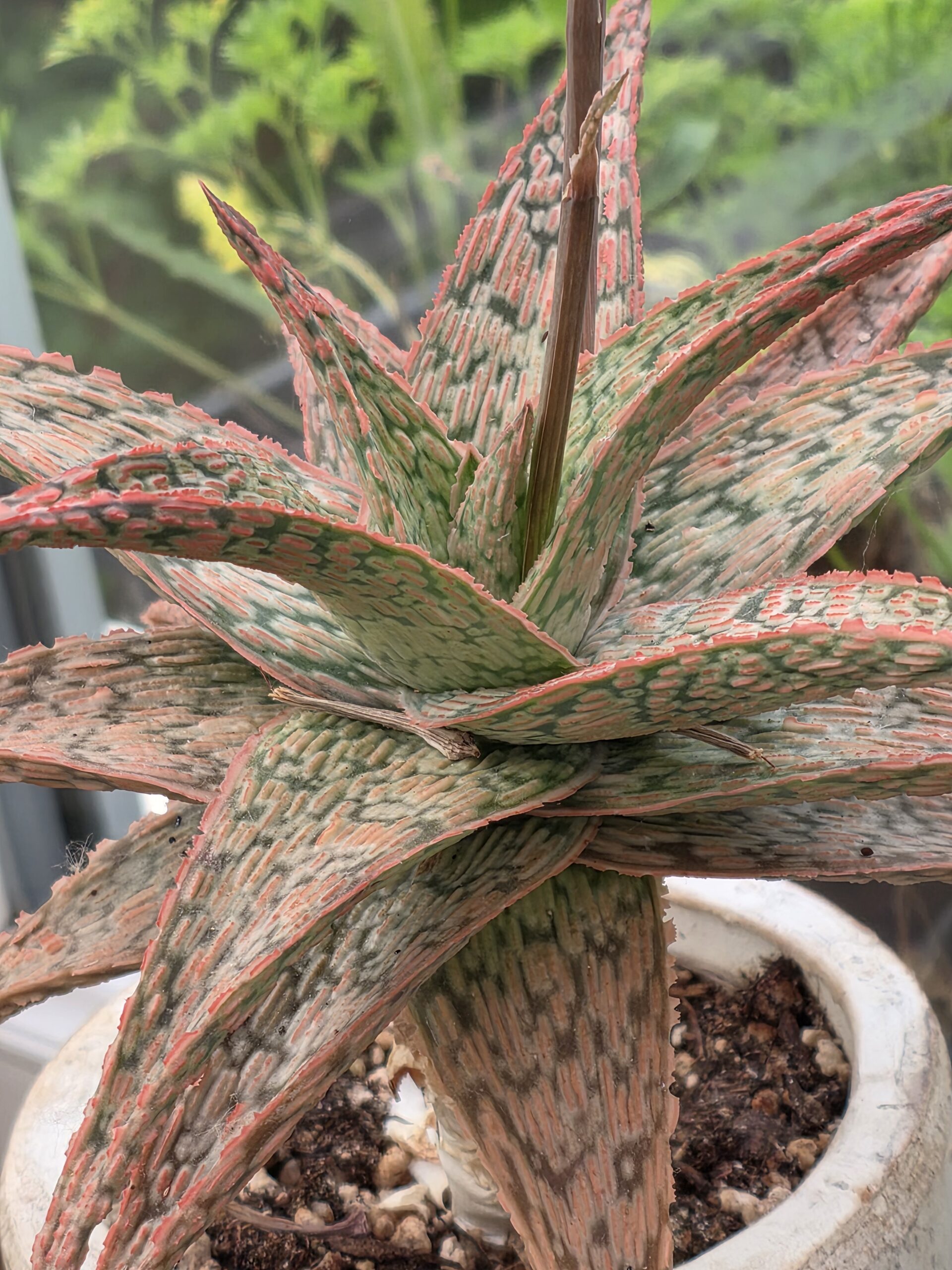
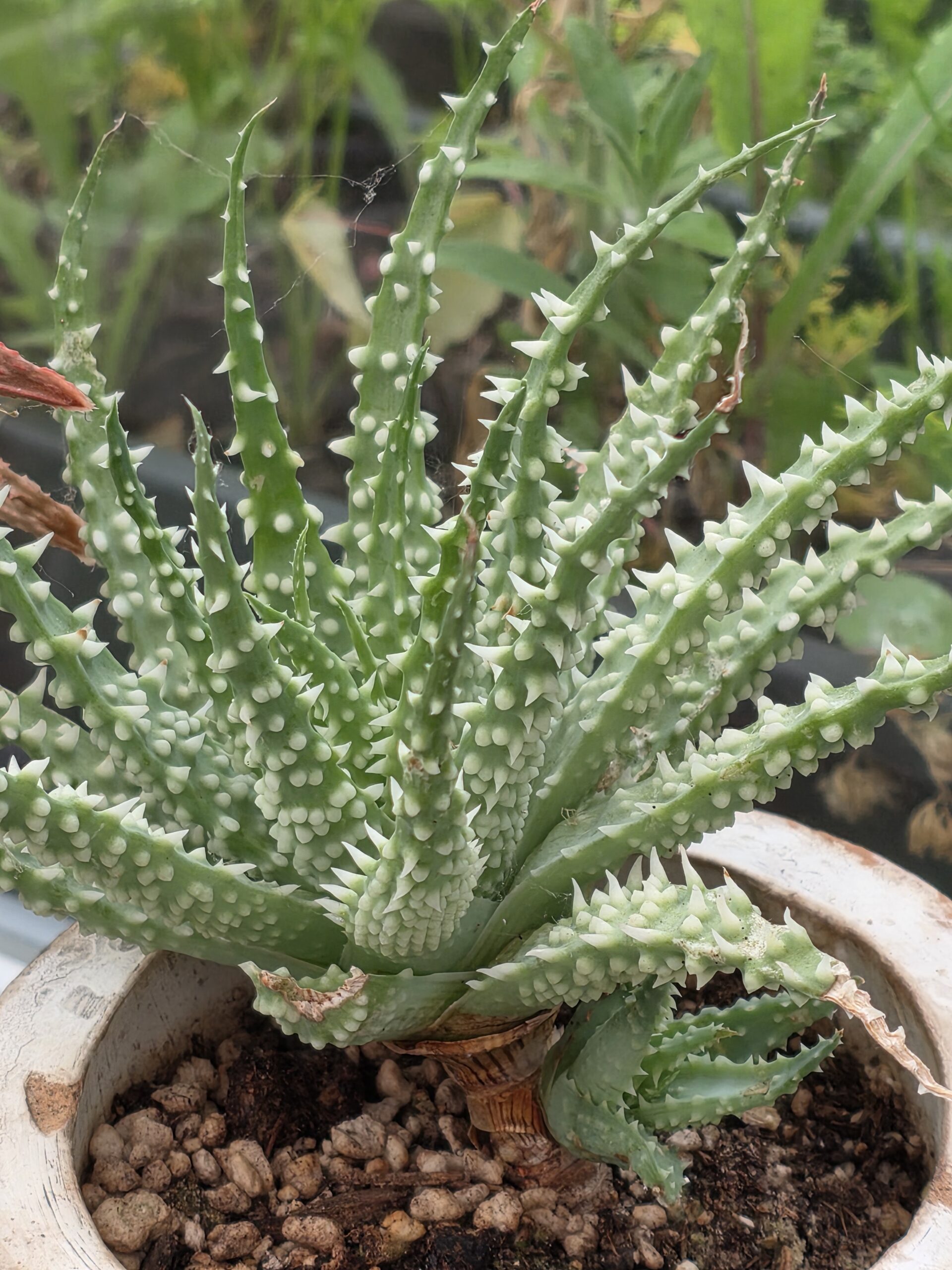
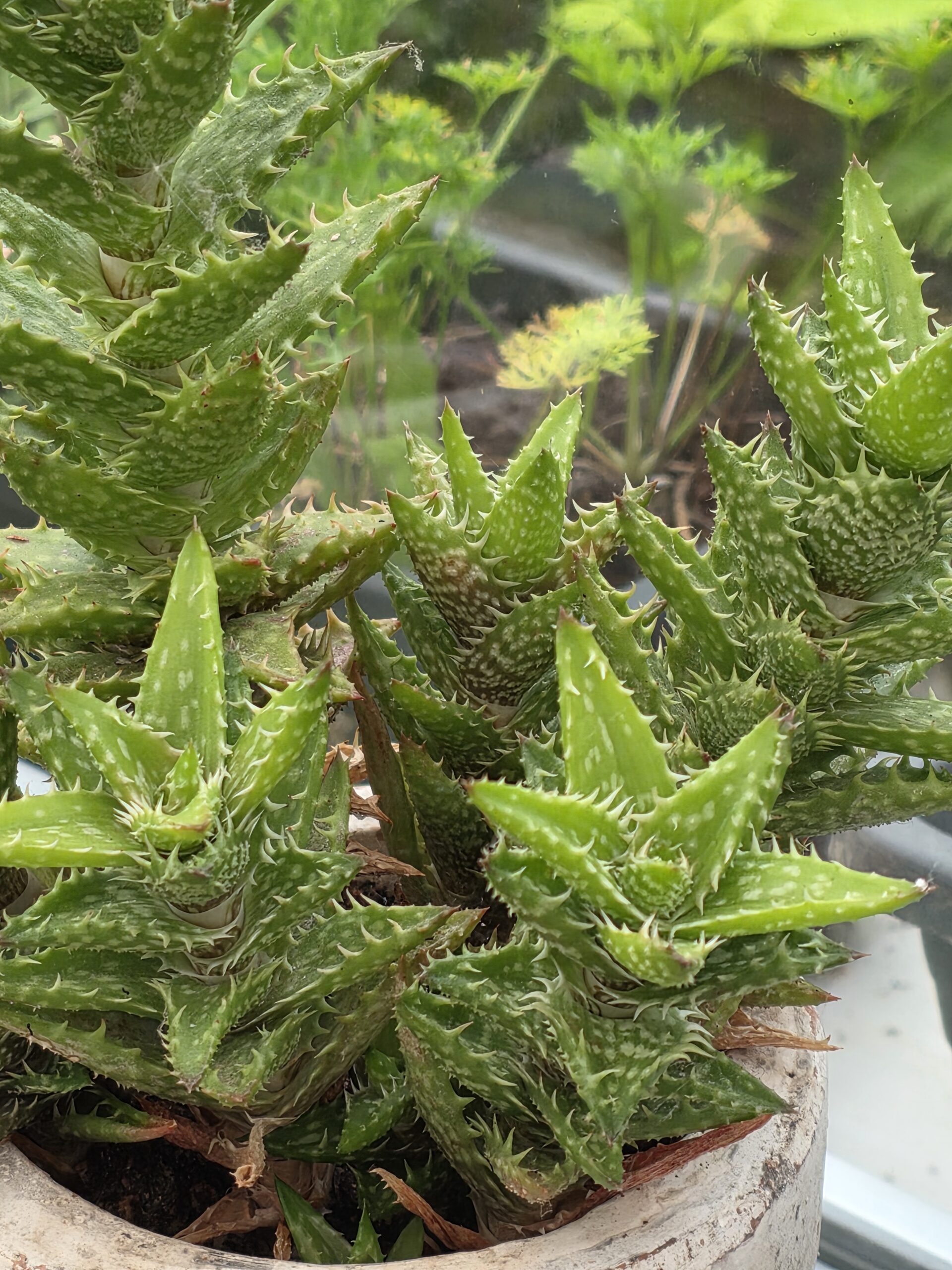
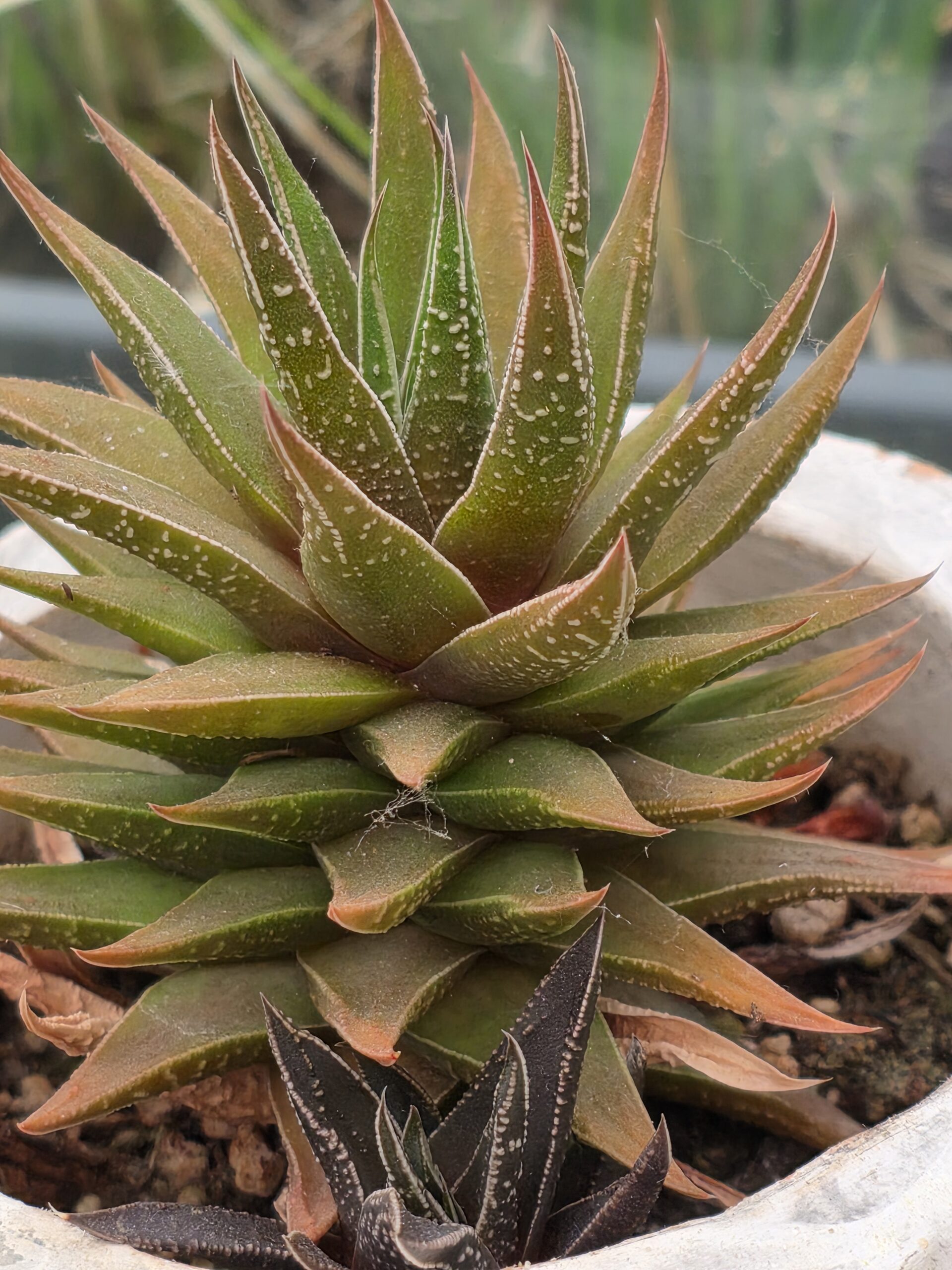
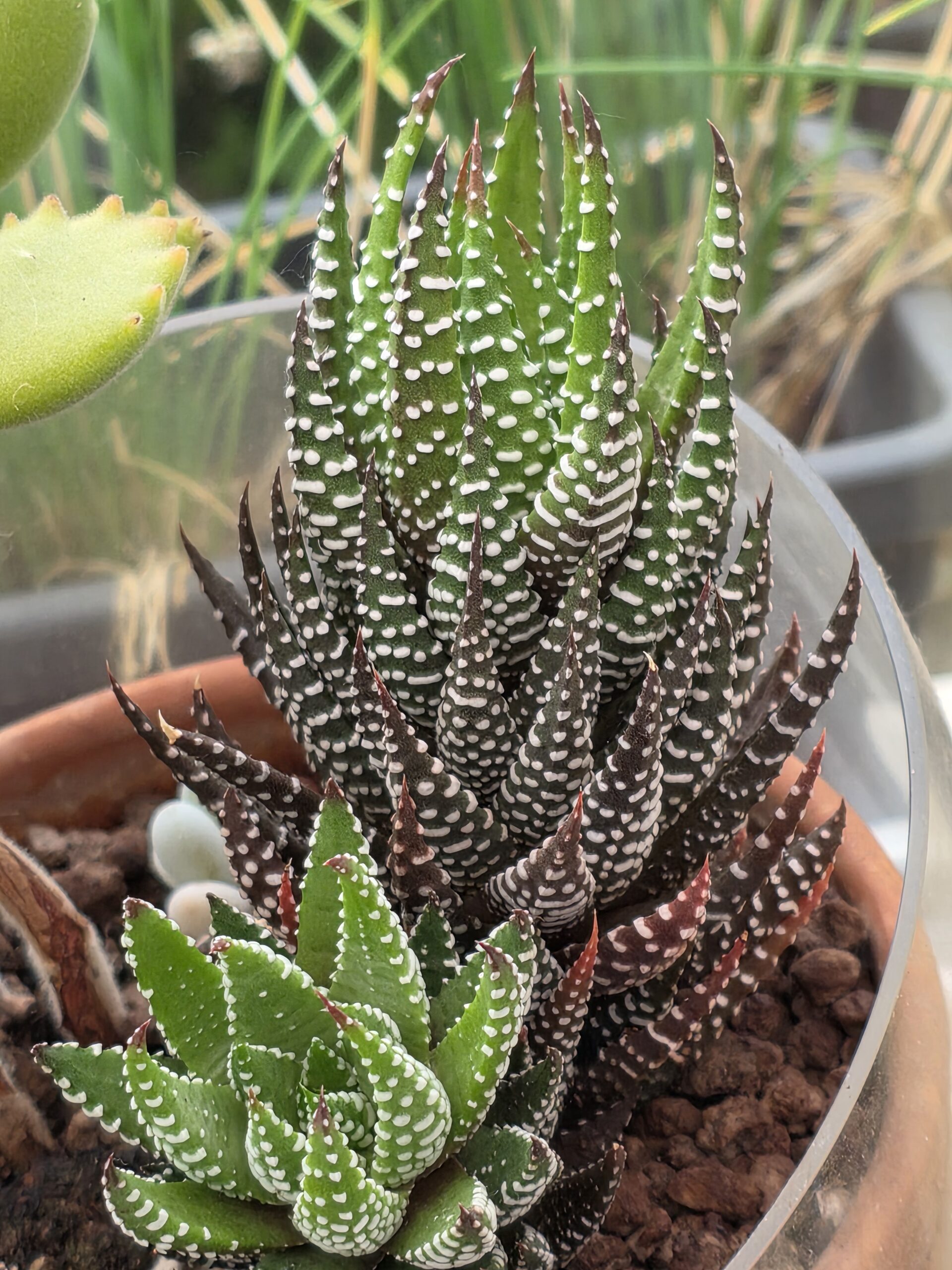
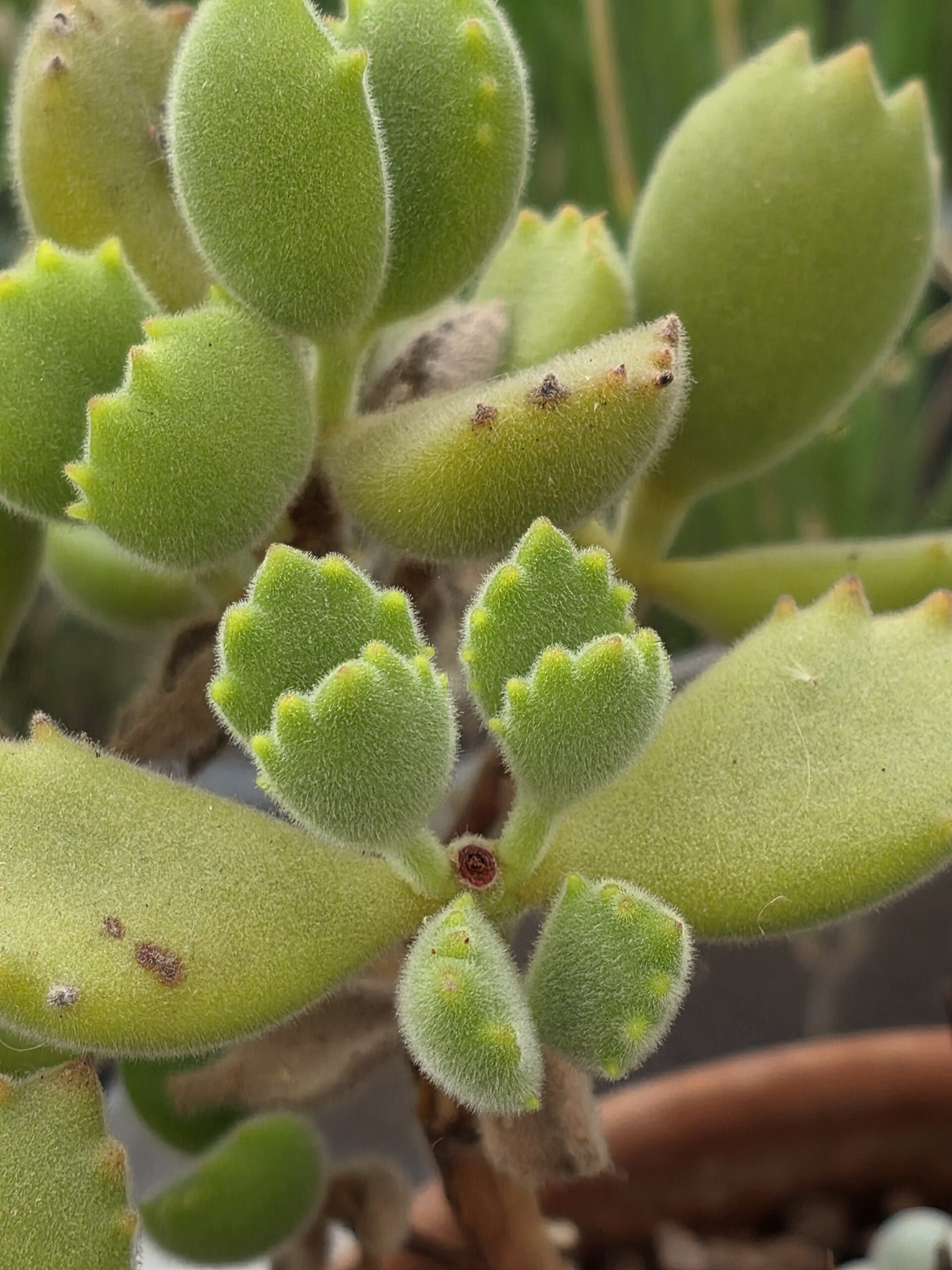
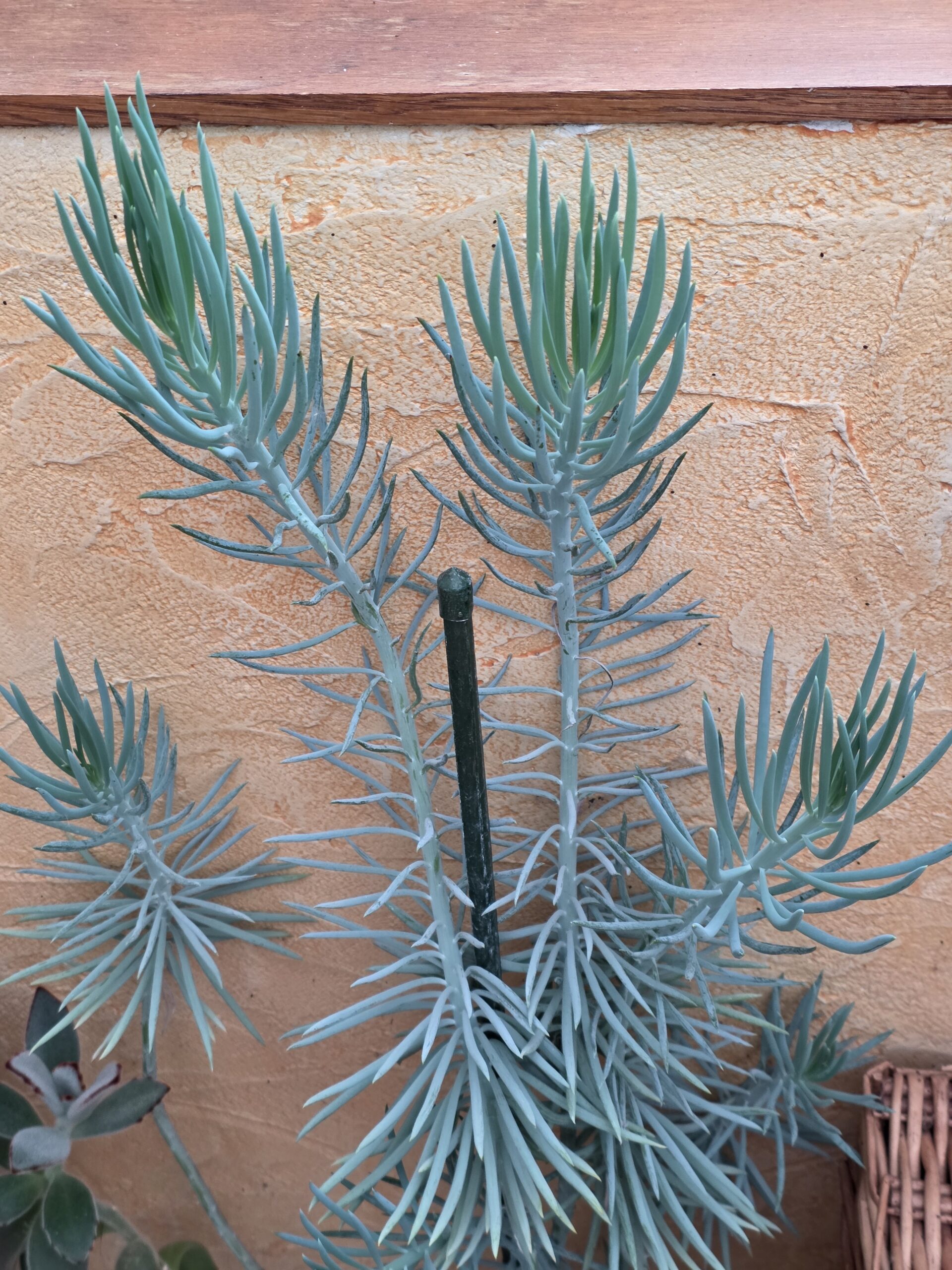
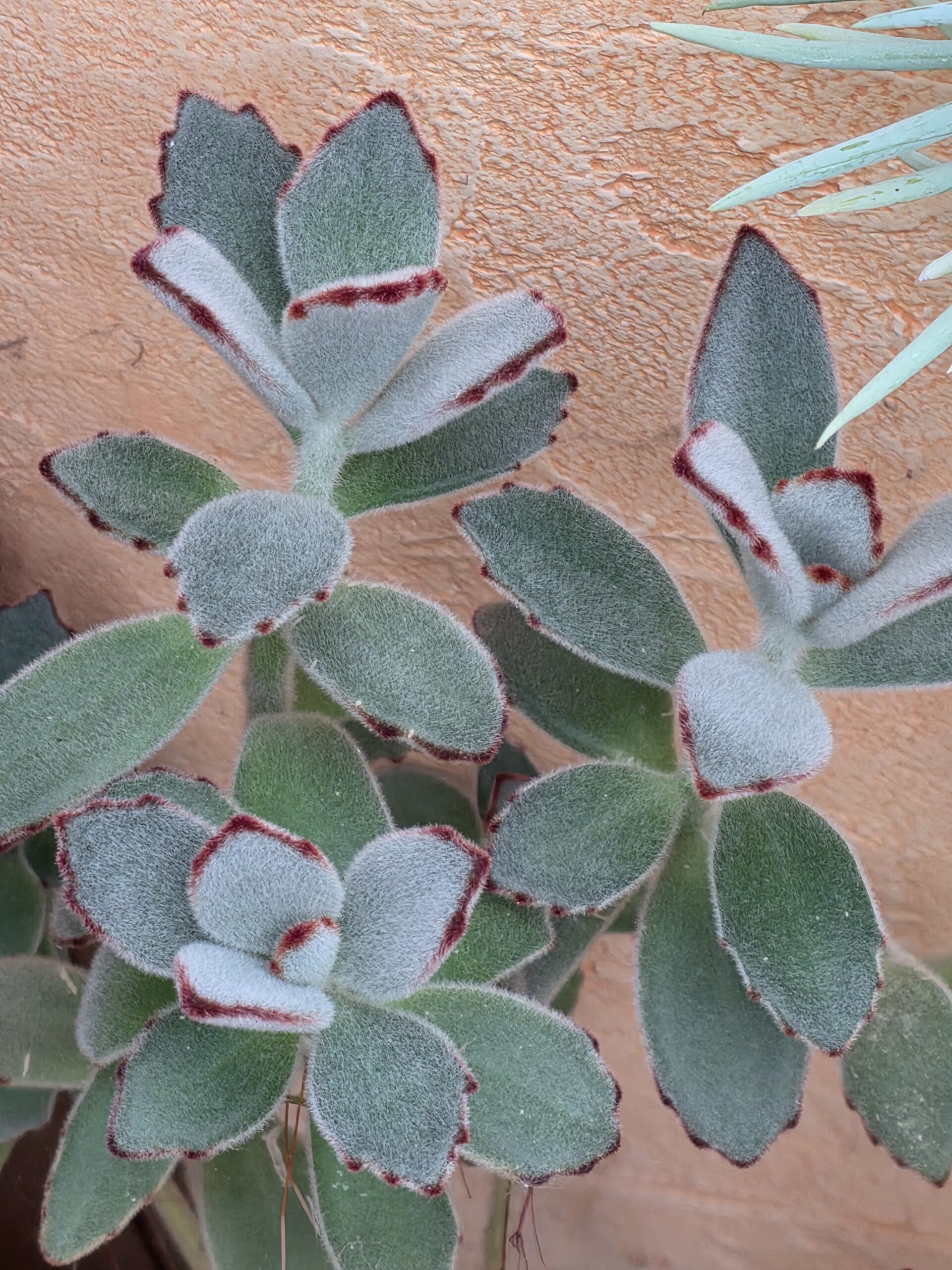
The vegetative structure of these plants is well adapted to water retention, enabling them to survive arid conditions.
The dense rosettes of leaves and fleshy stems help to store moisture, whilst the relatively shallow roots do not penetrate deep into the soil, but rather spread out horizontally to maximise moisture uptake. These adaptations allow the plant to thrive in conditions where water is scarce.