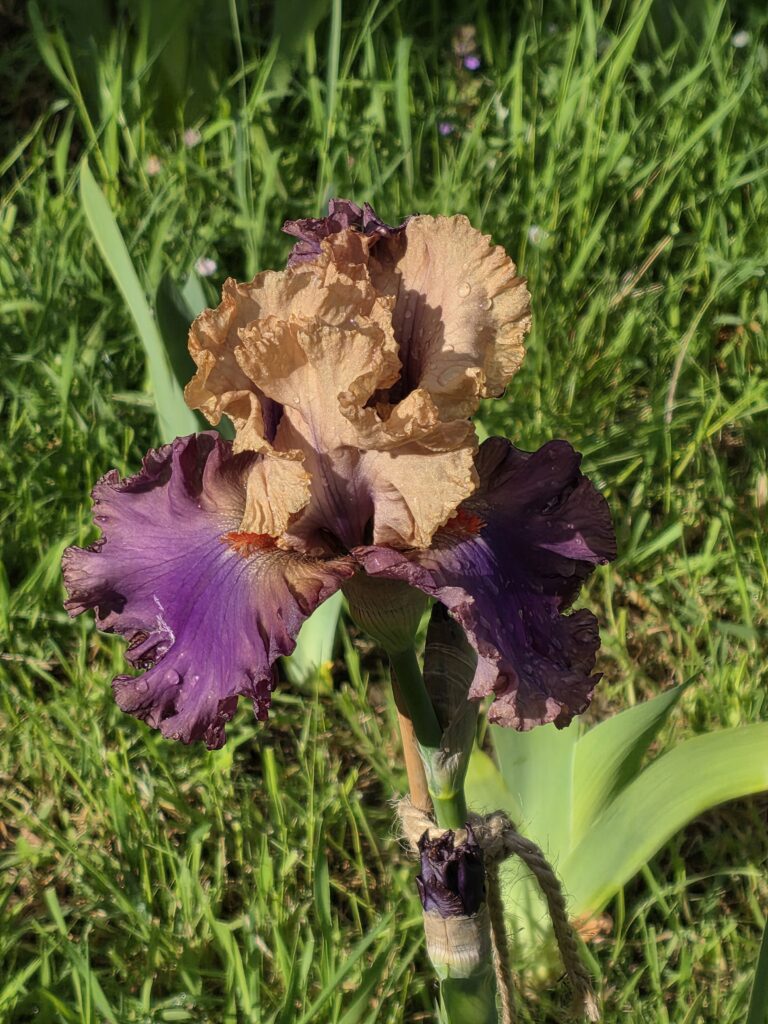
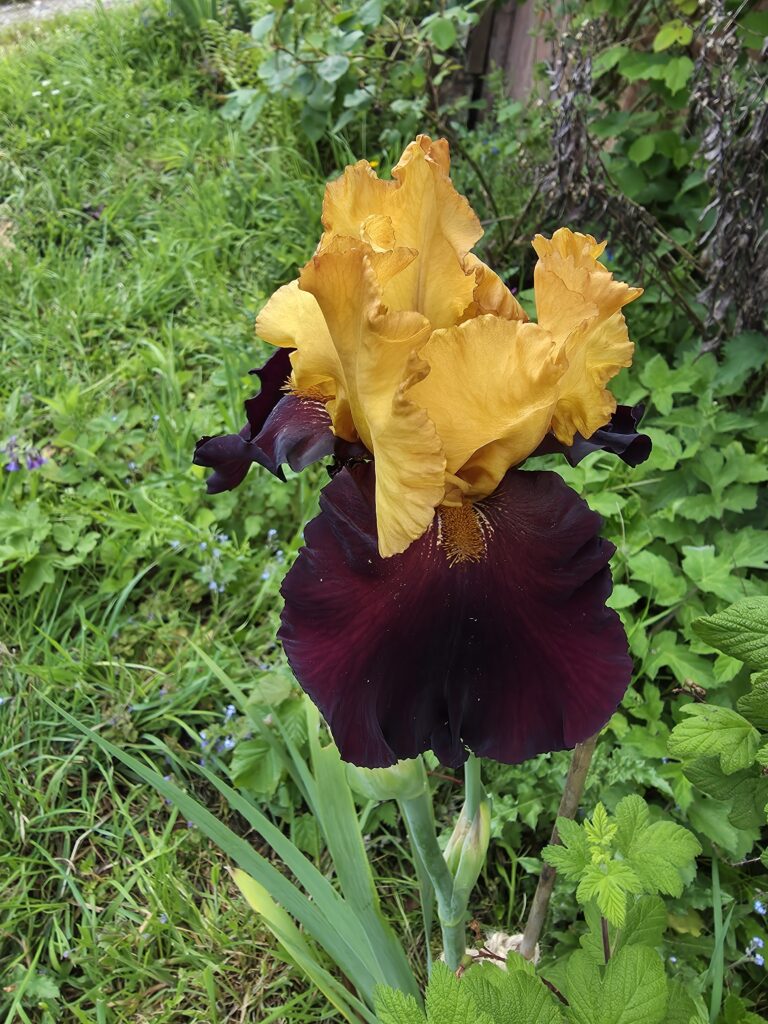
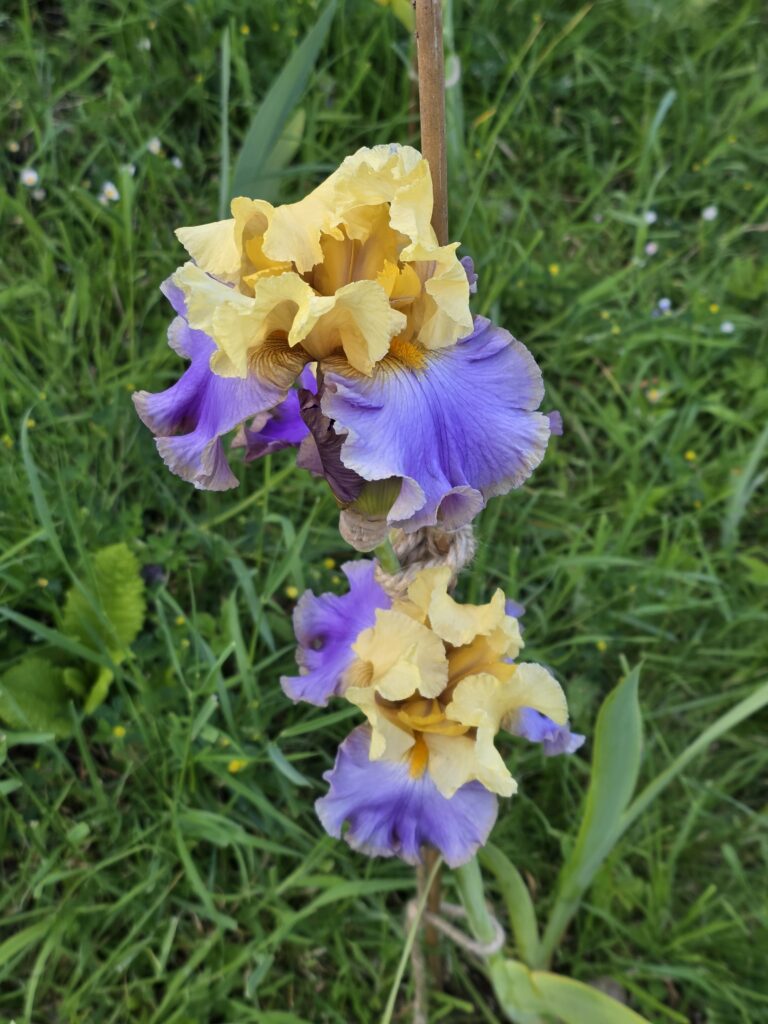
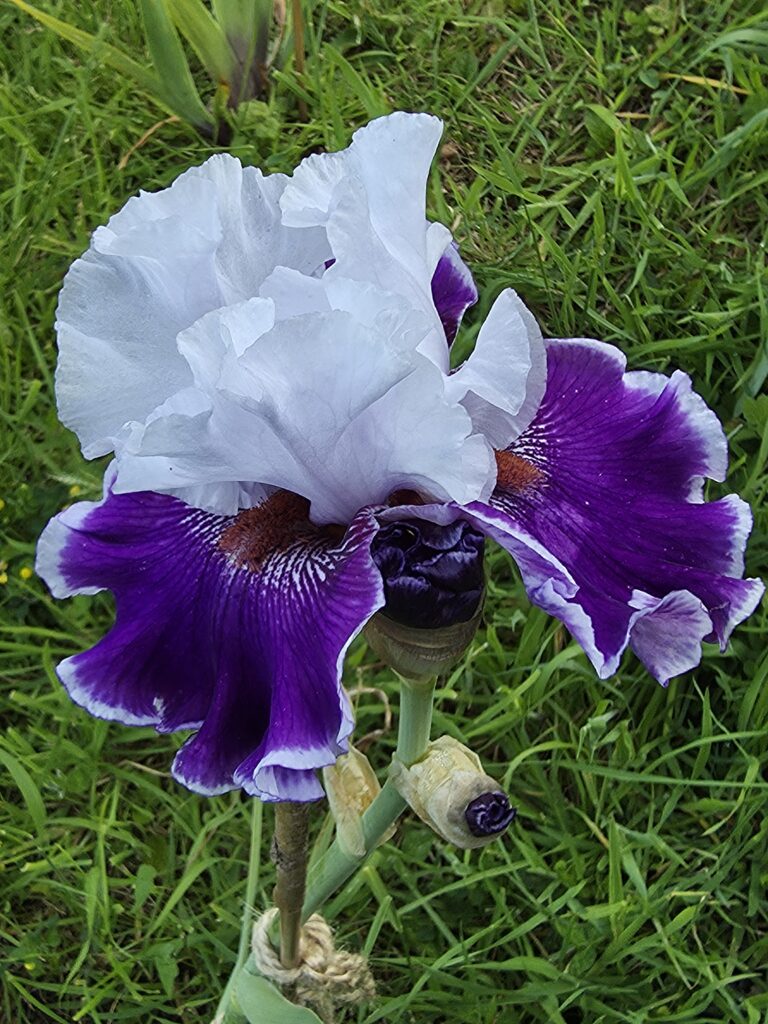
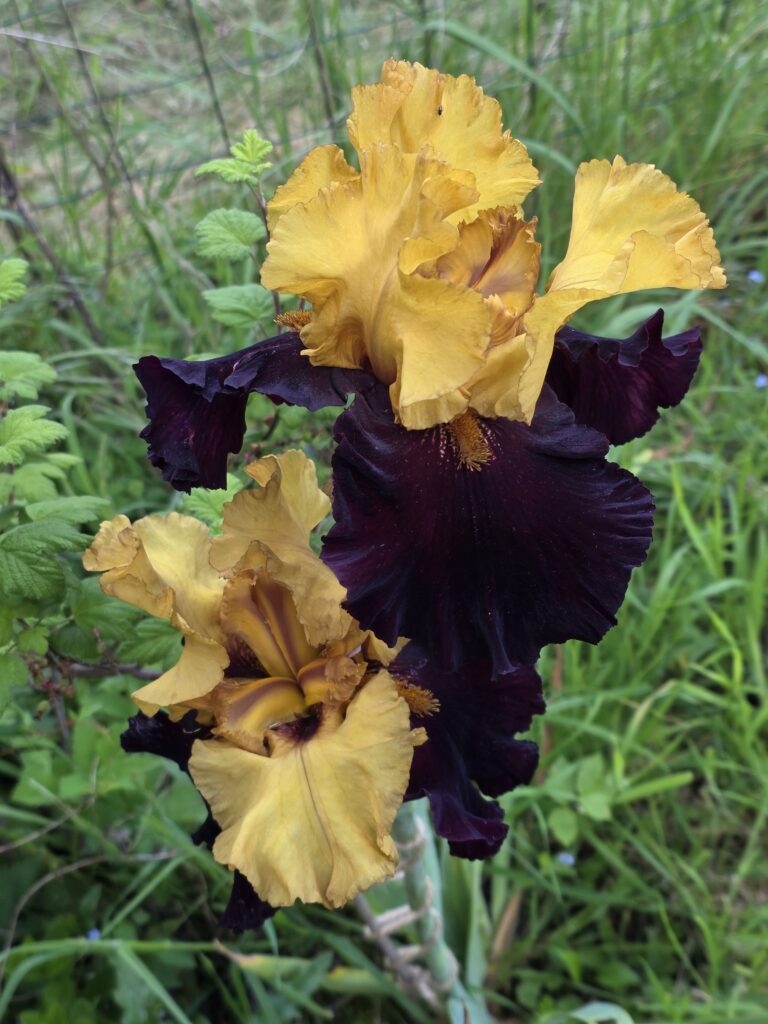
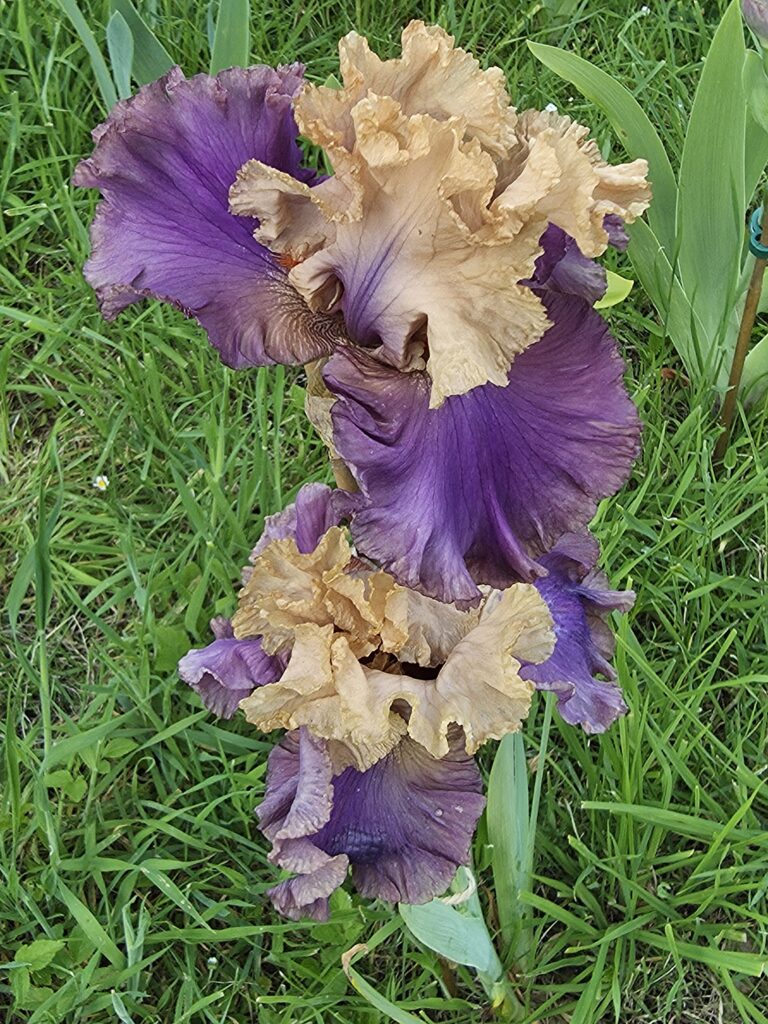
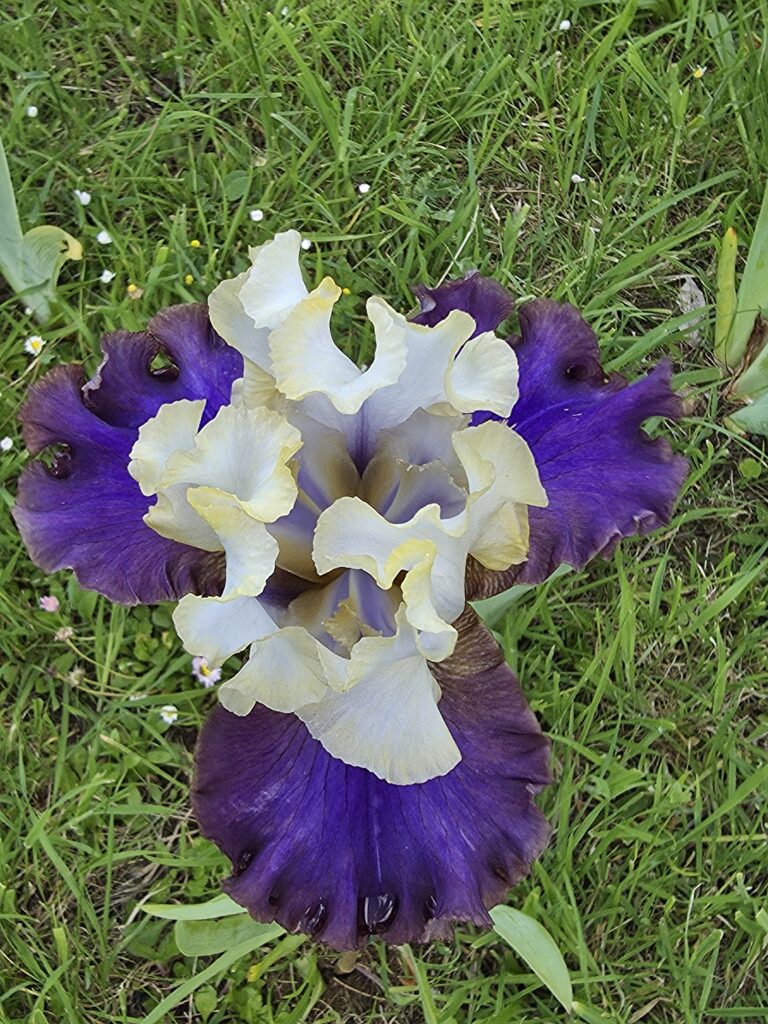
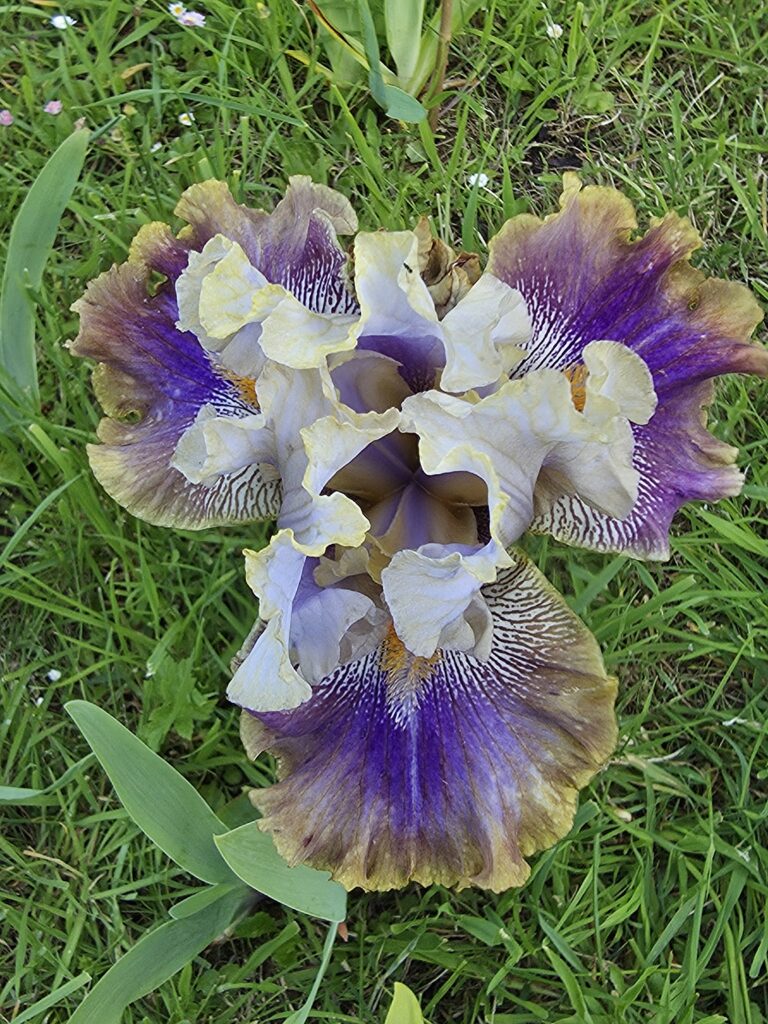
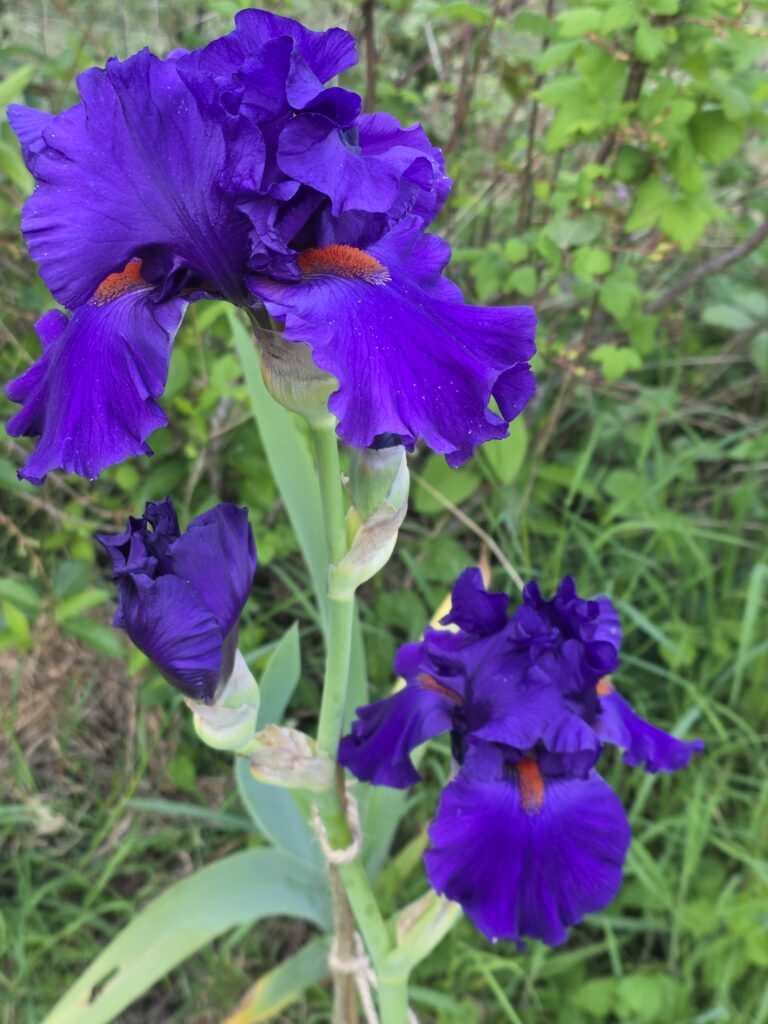
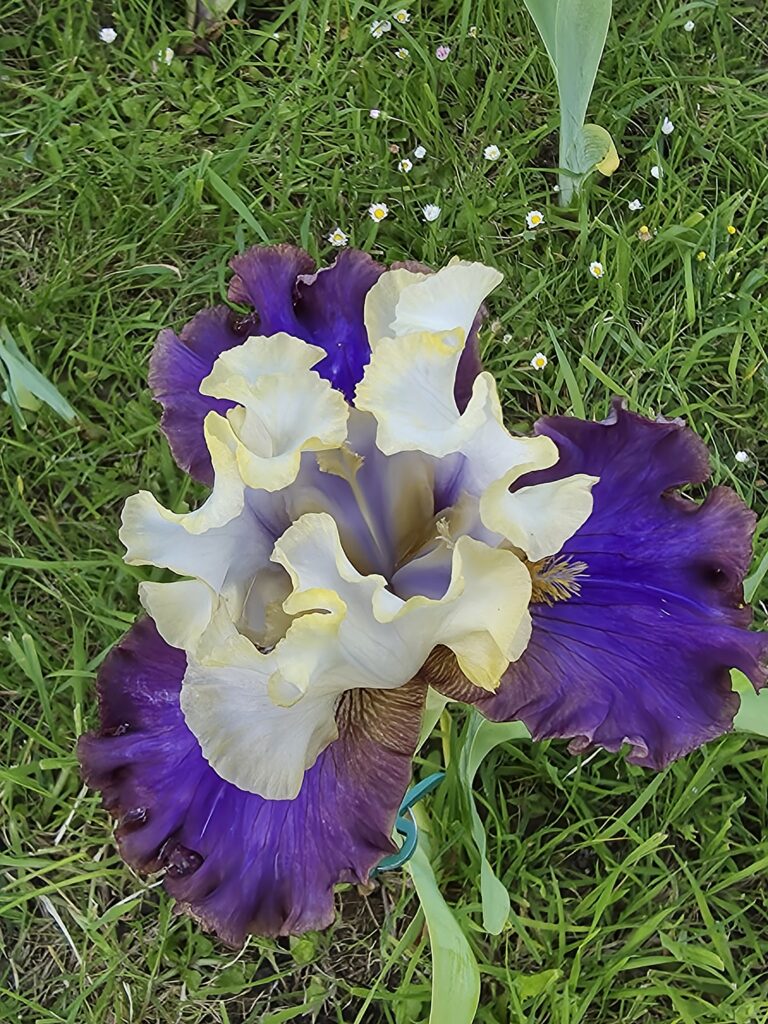
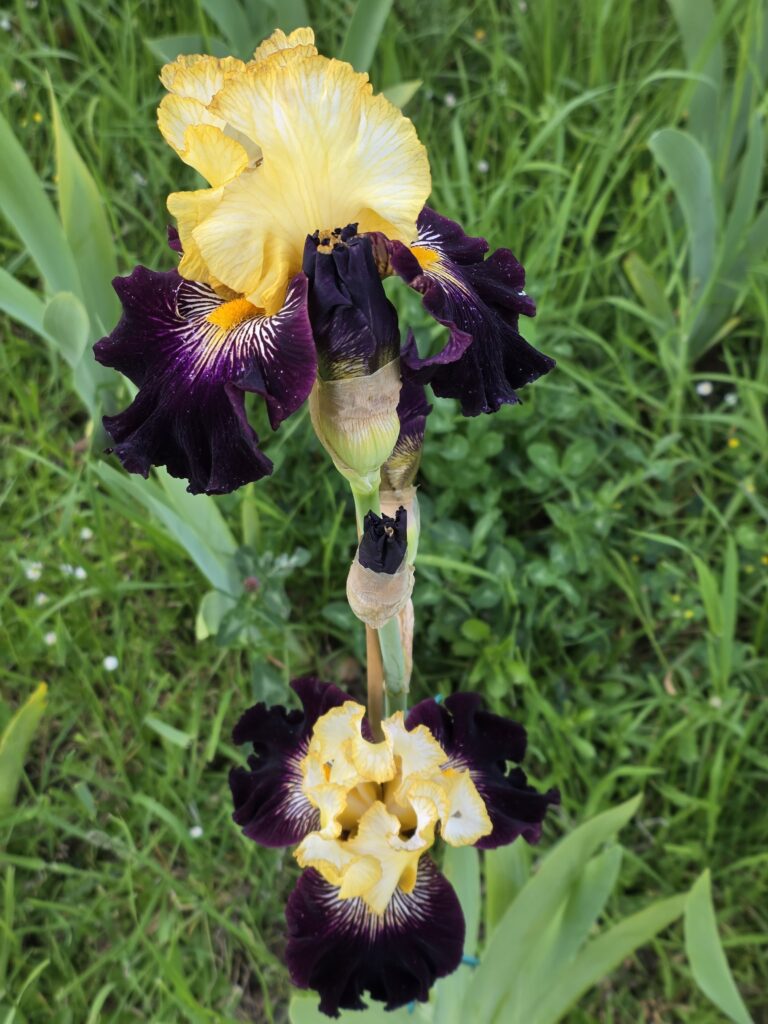
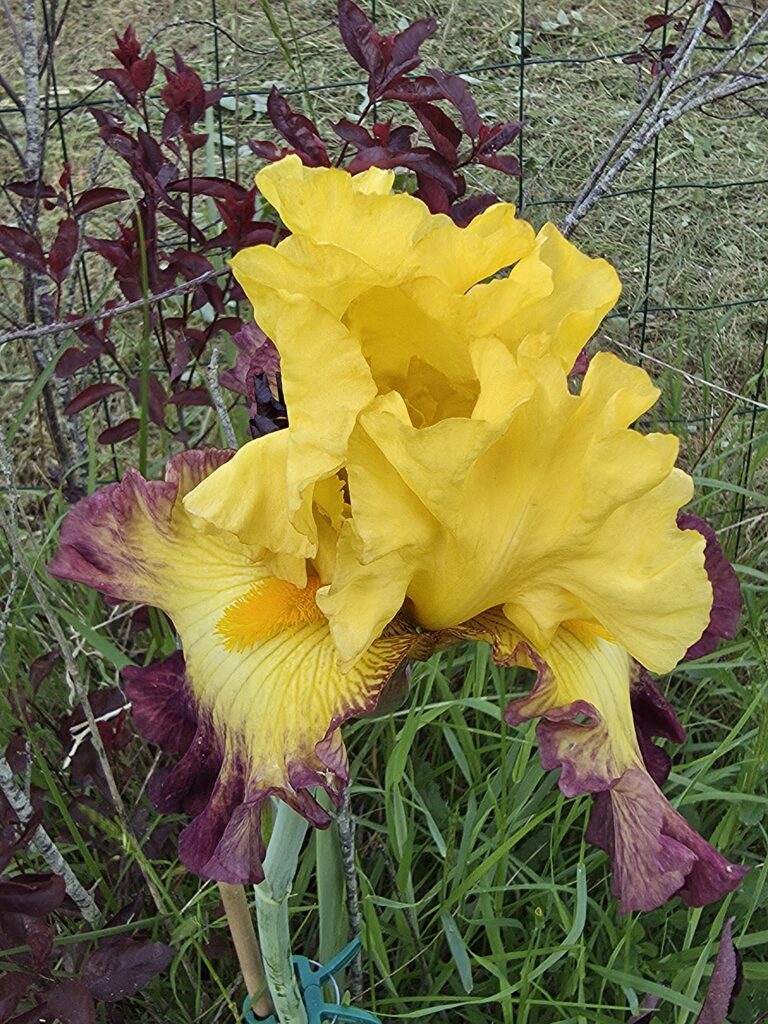
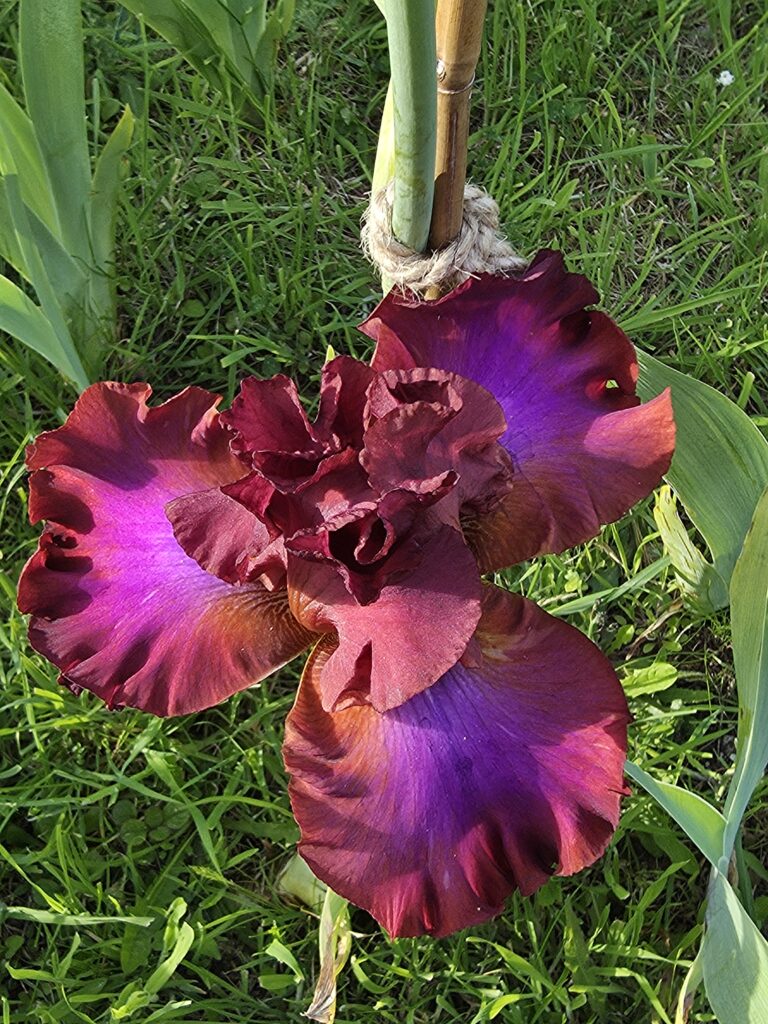
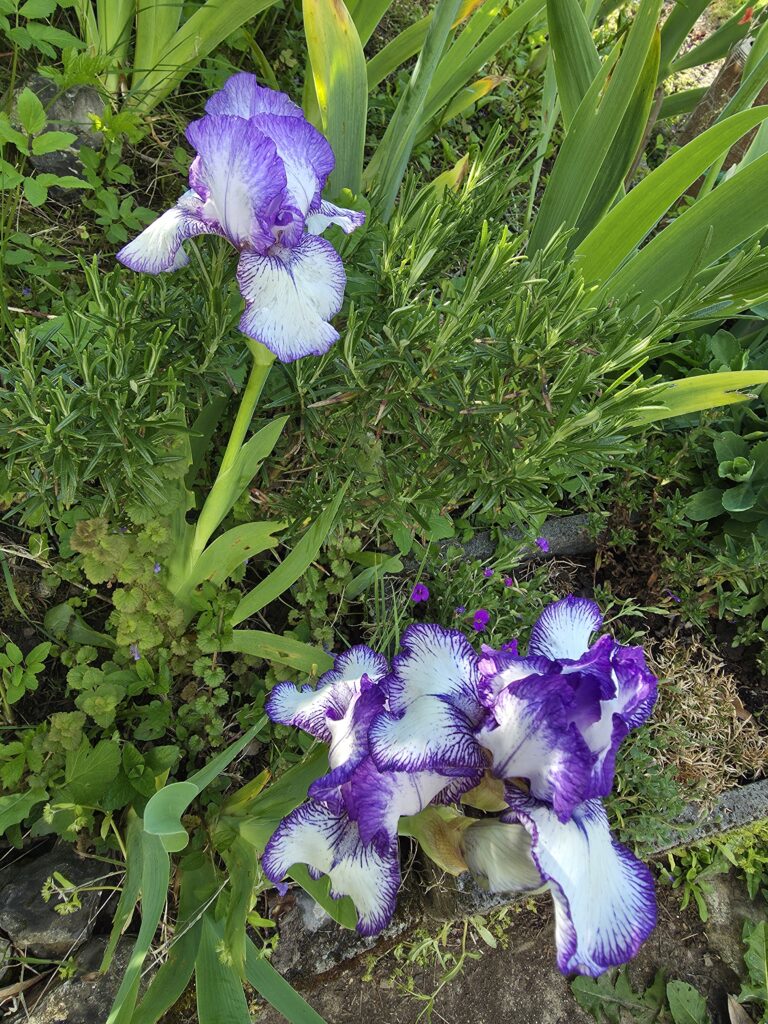
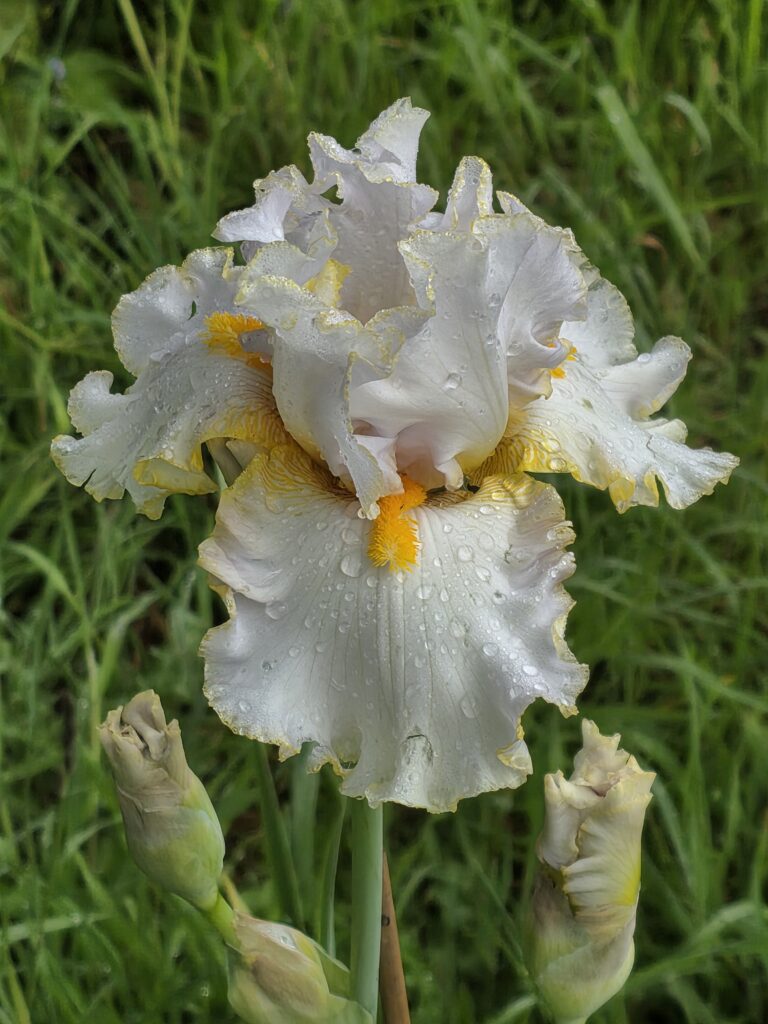
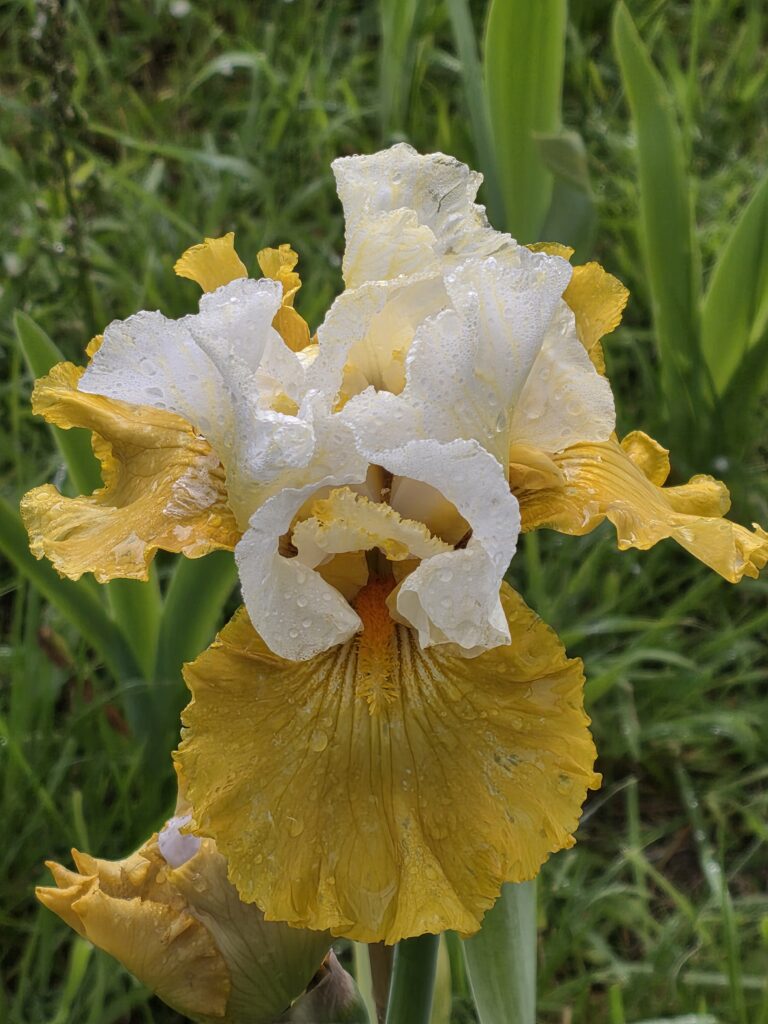
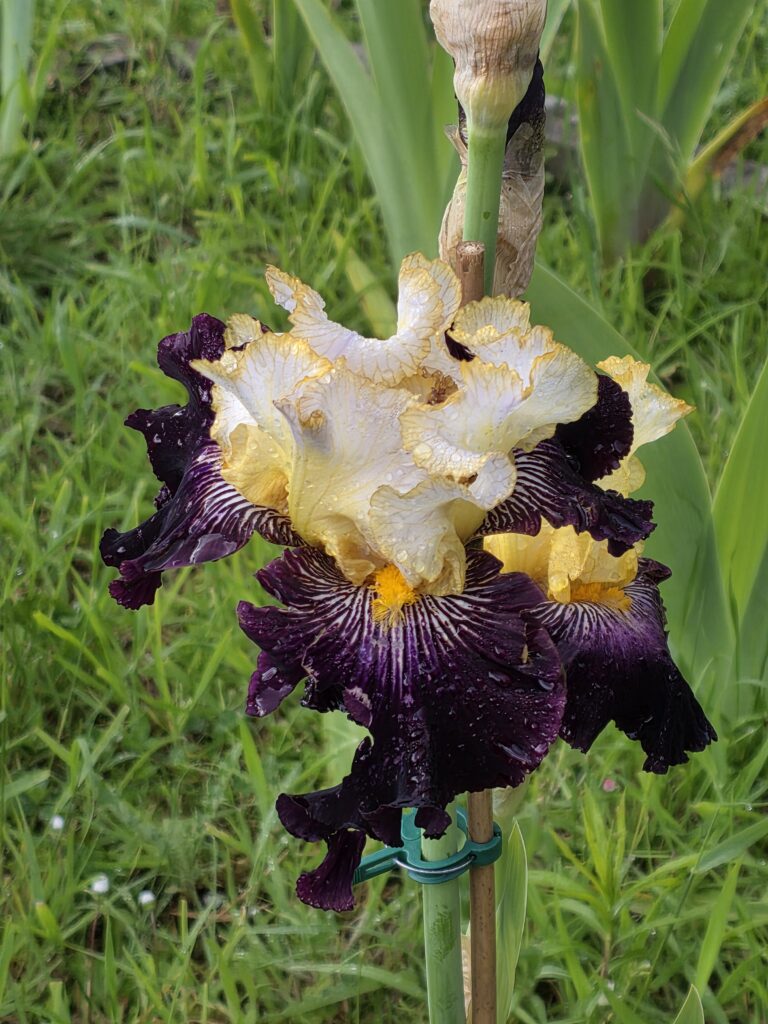
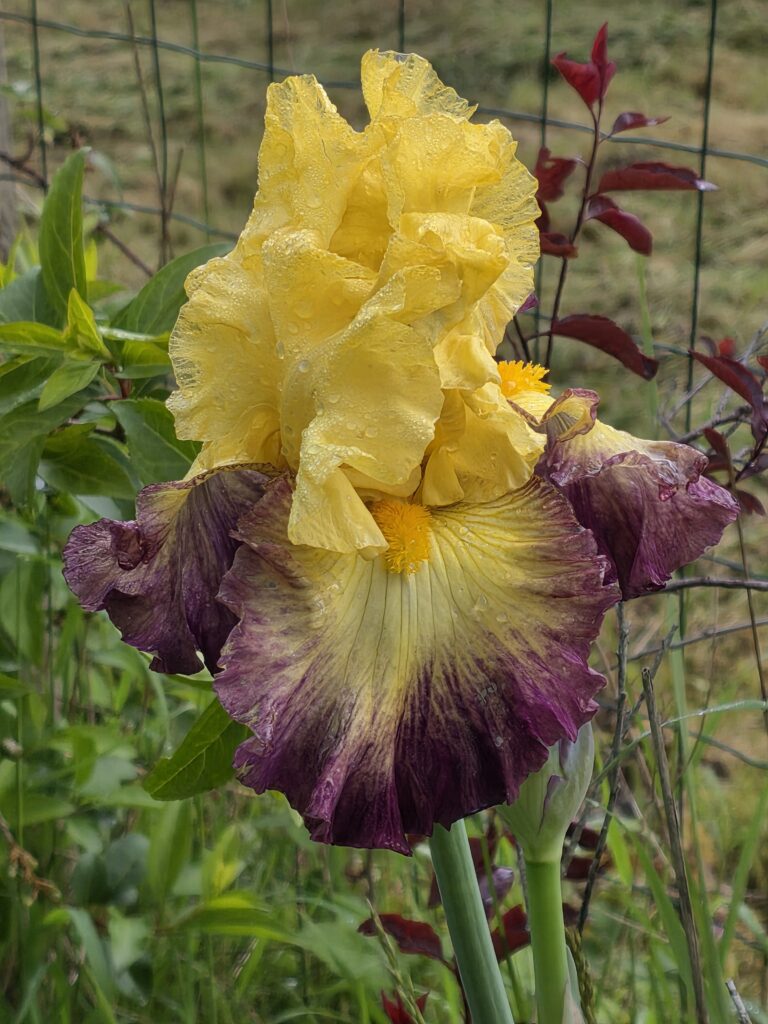
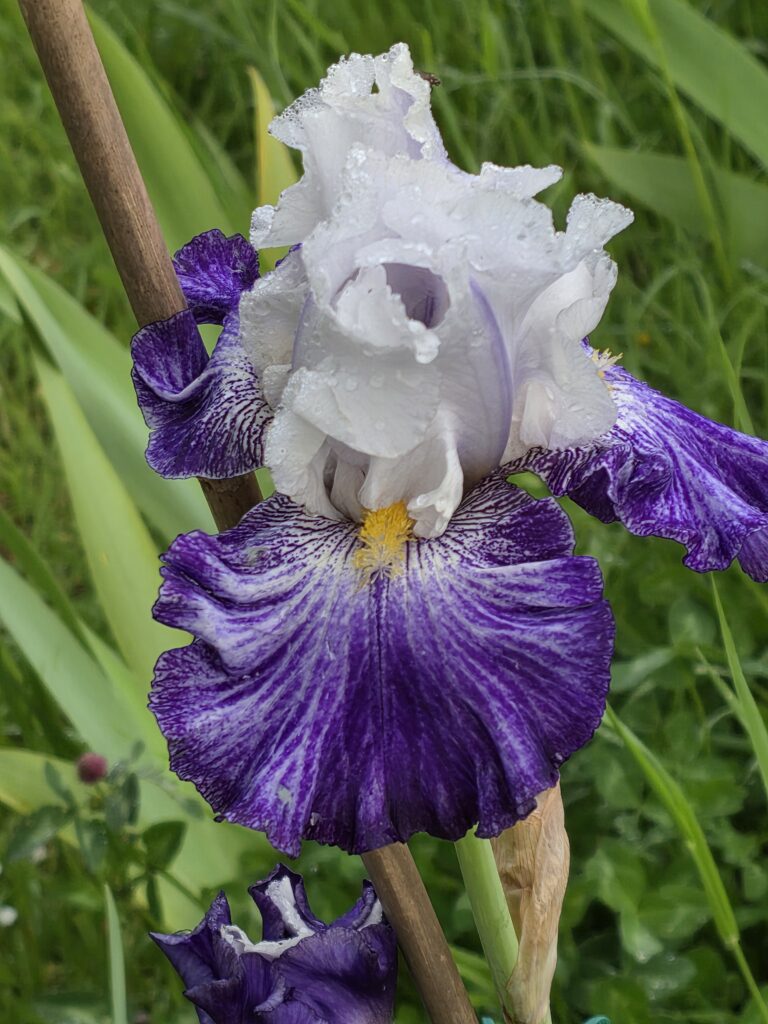
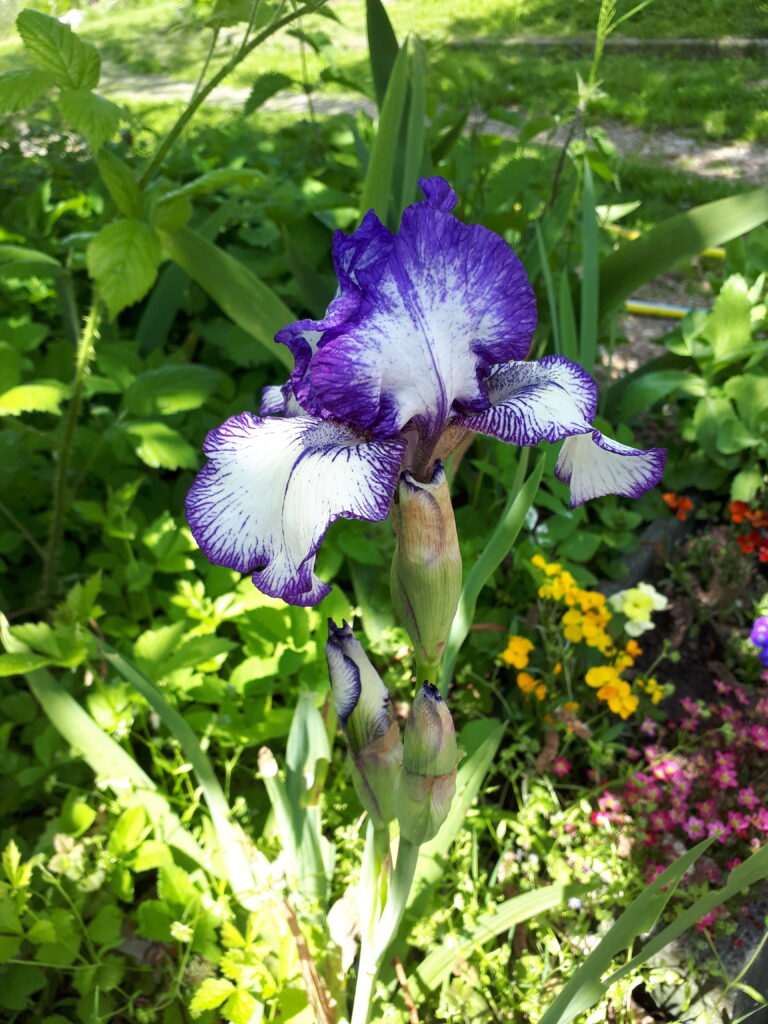
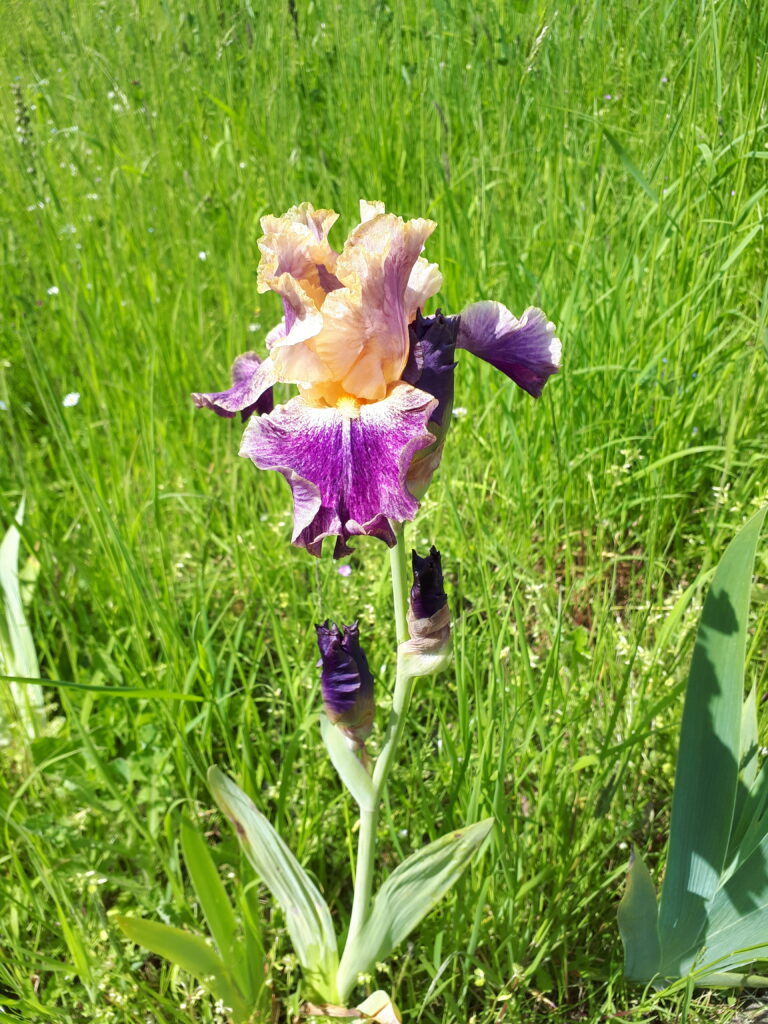
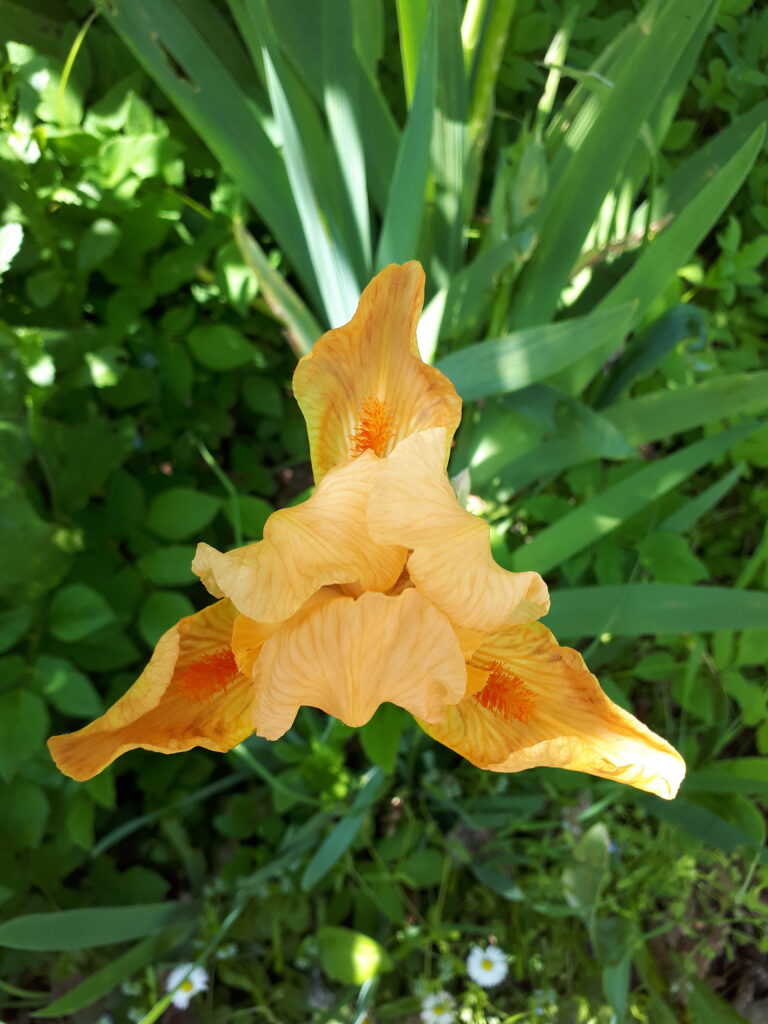
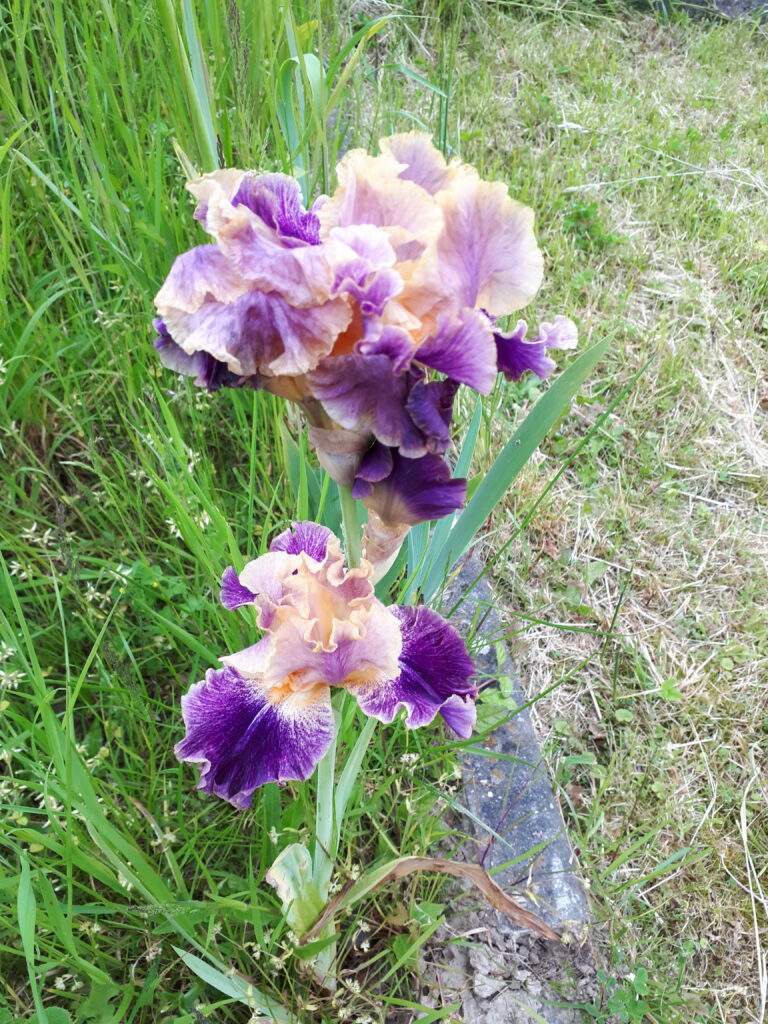
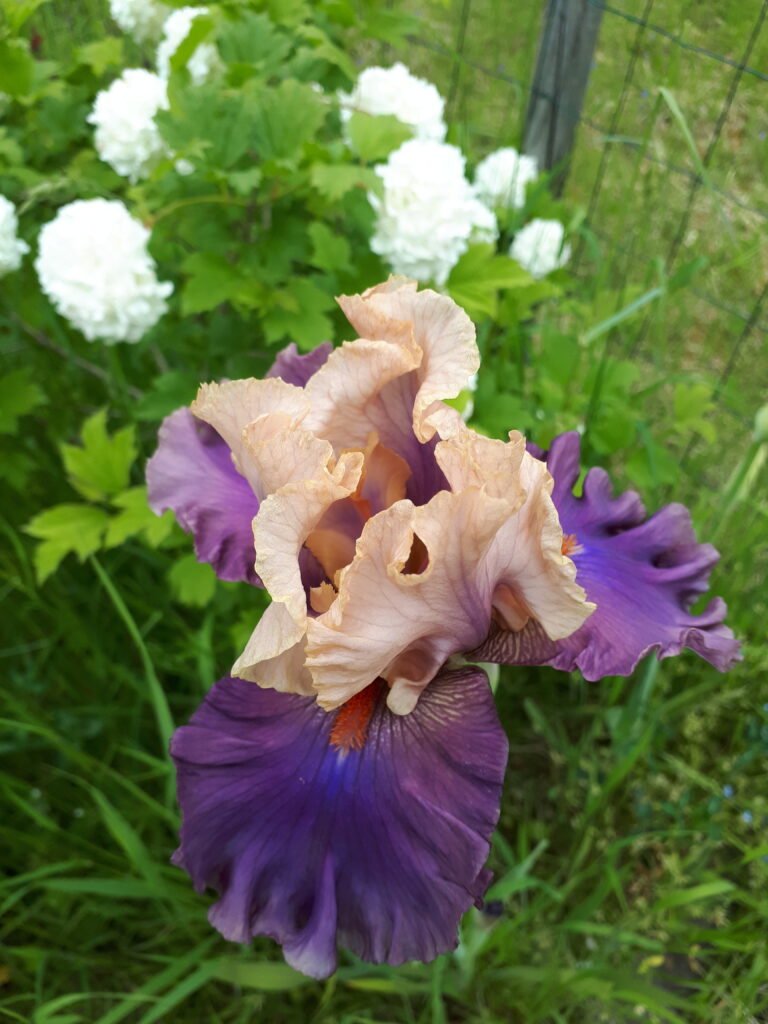
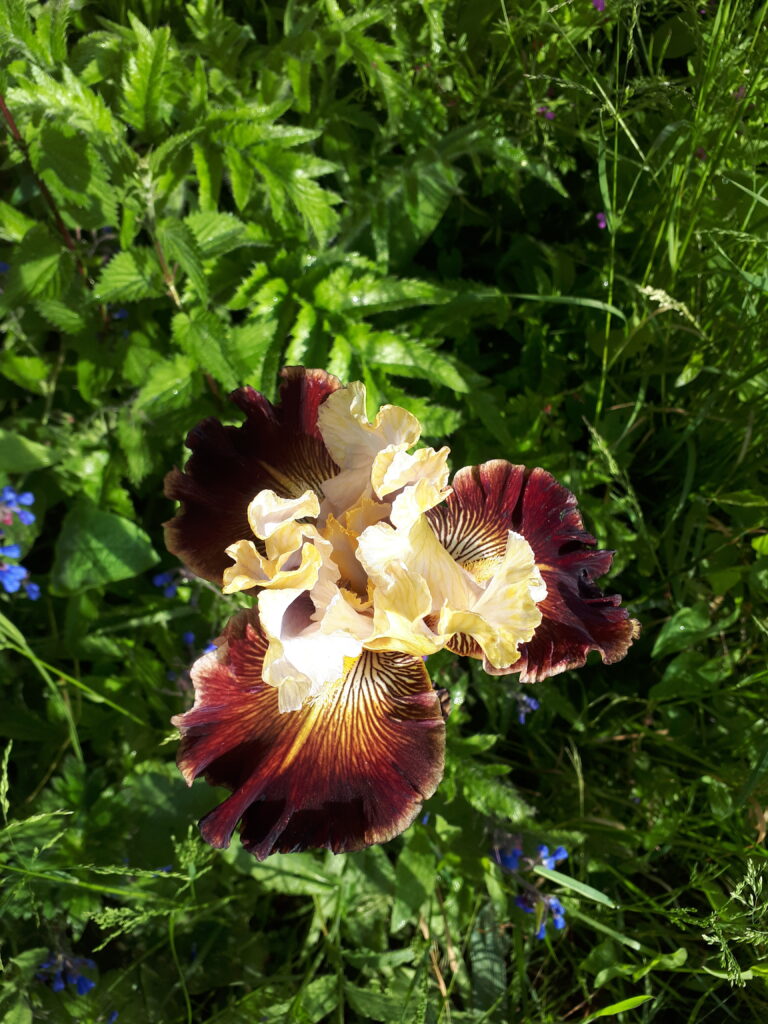
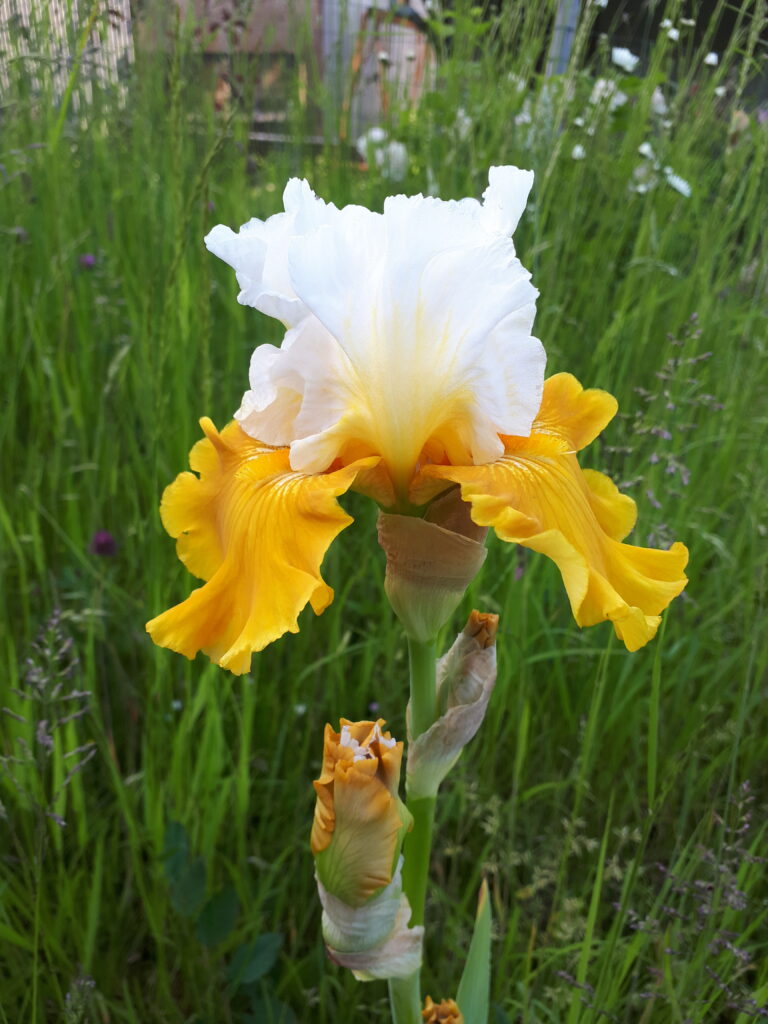
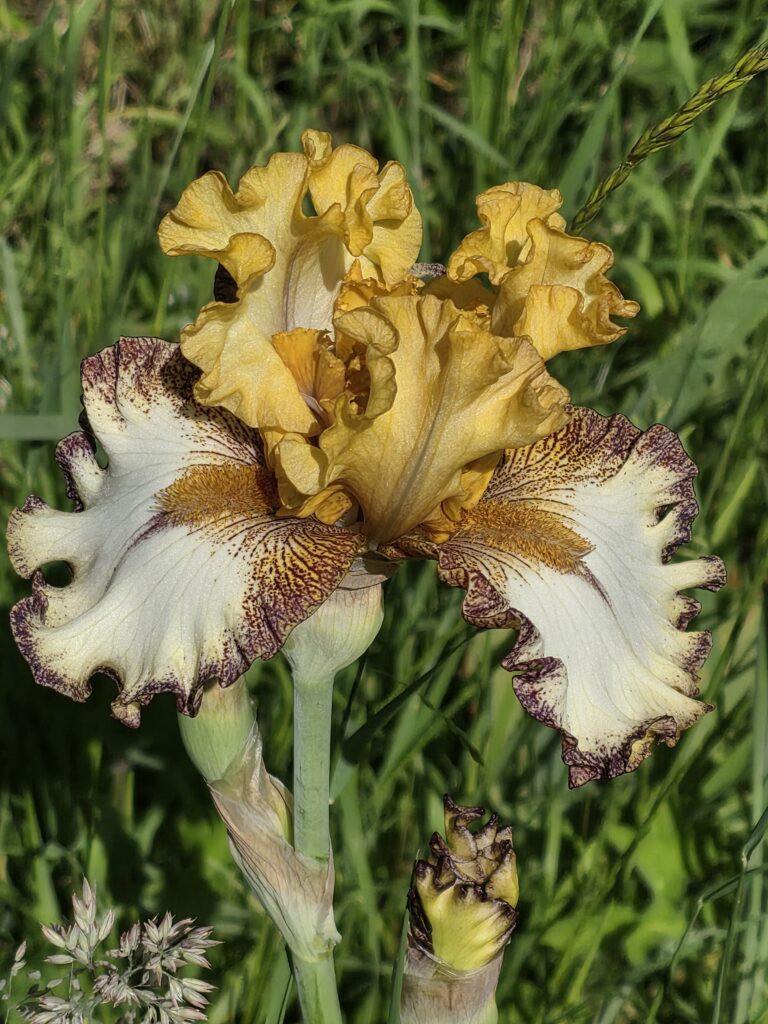
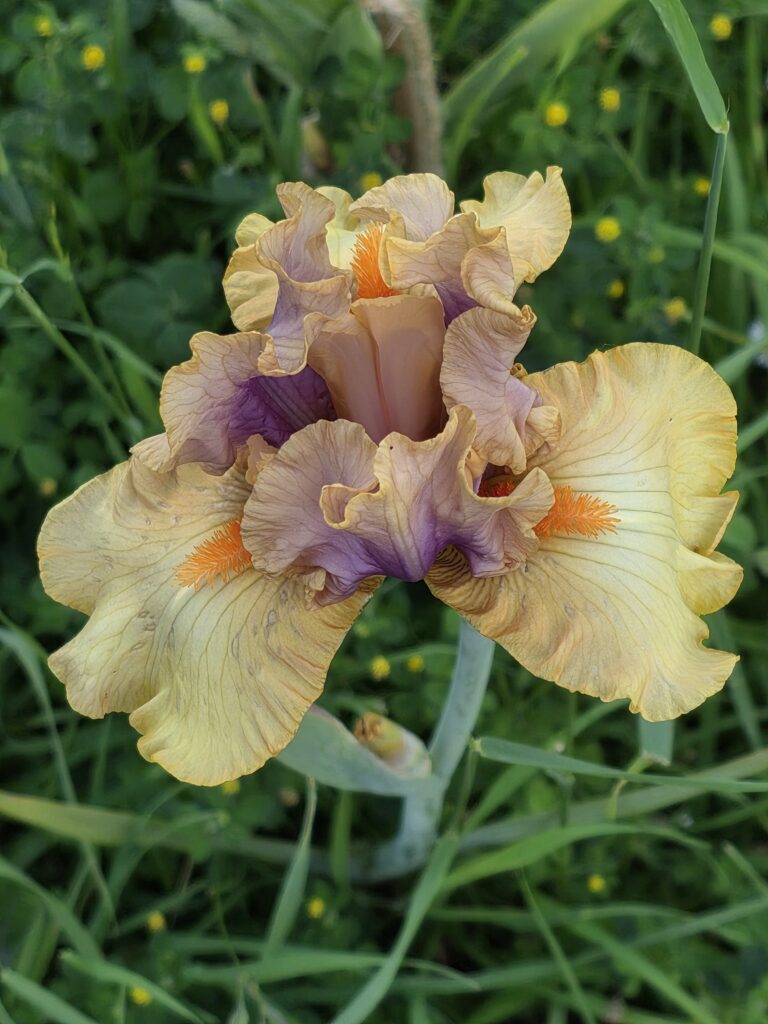
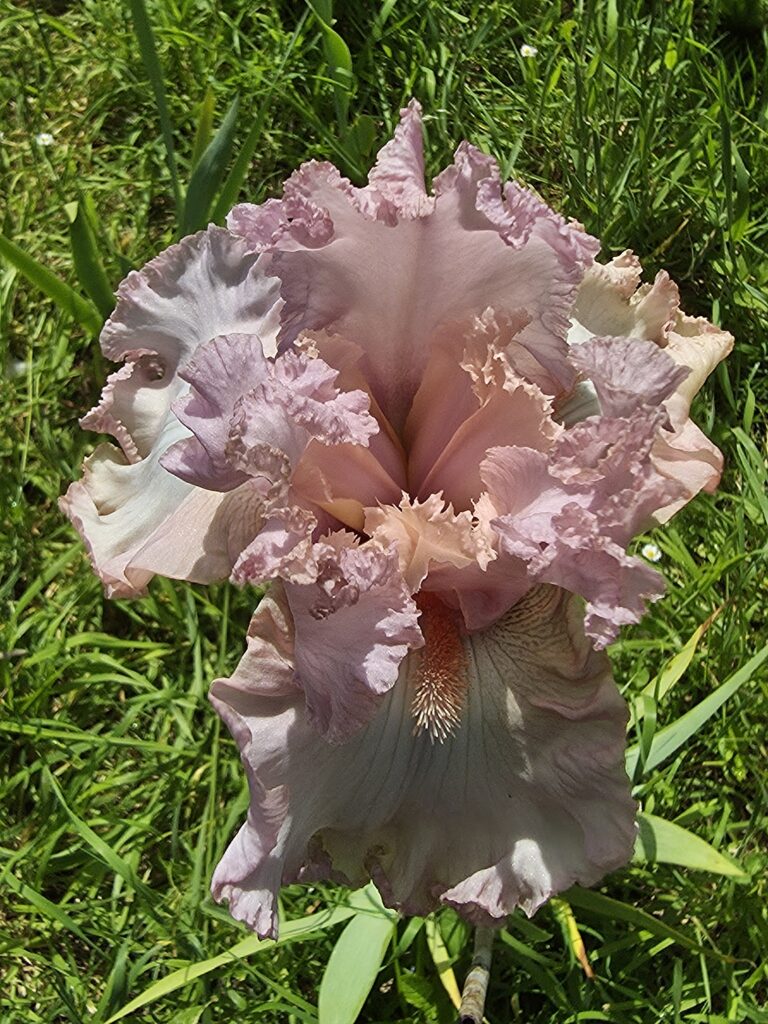
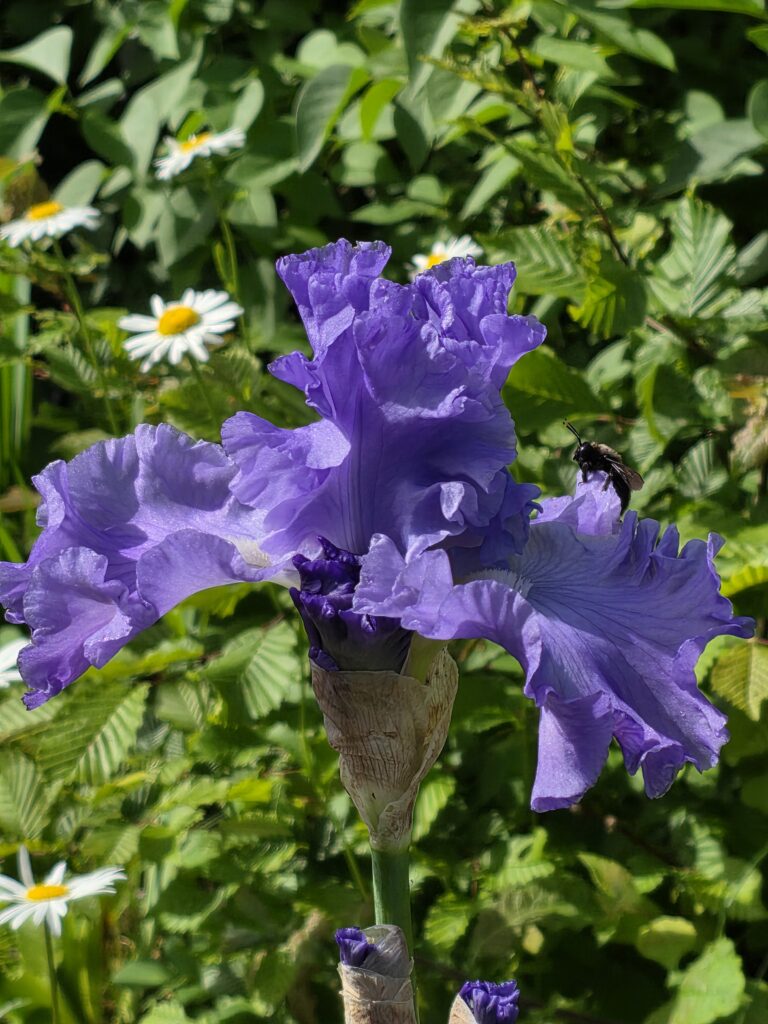
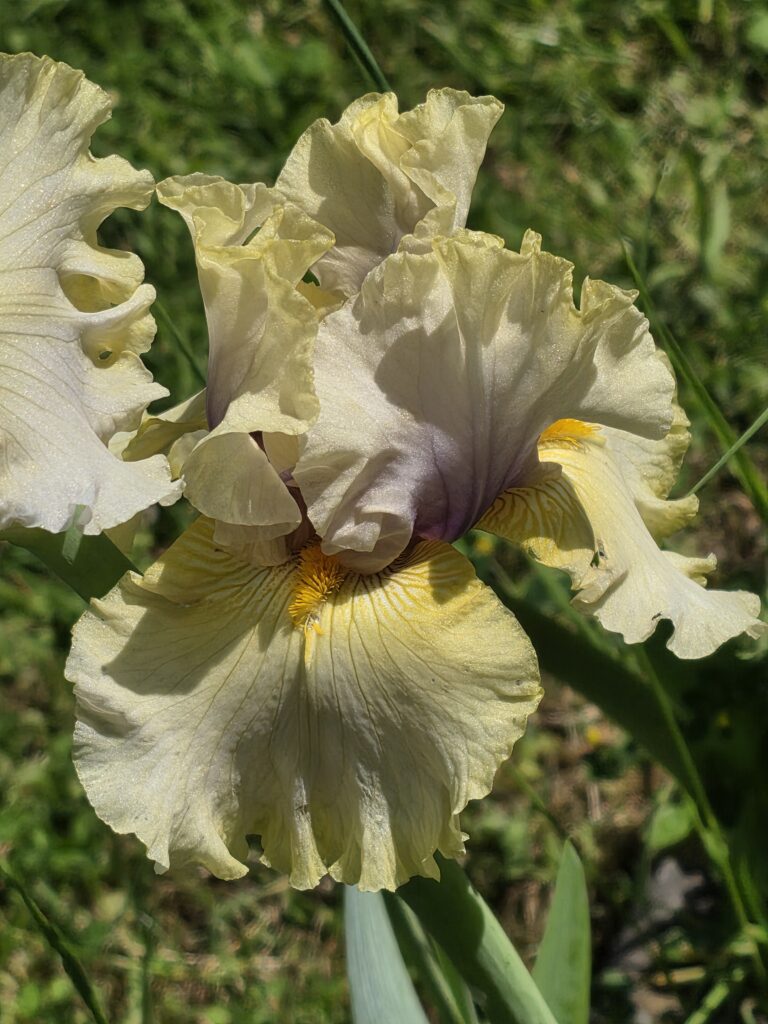
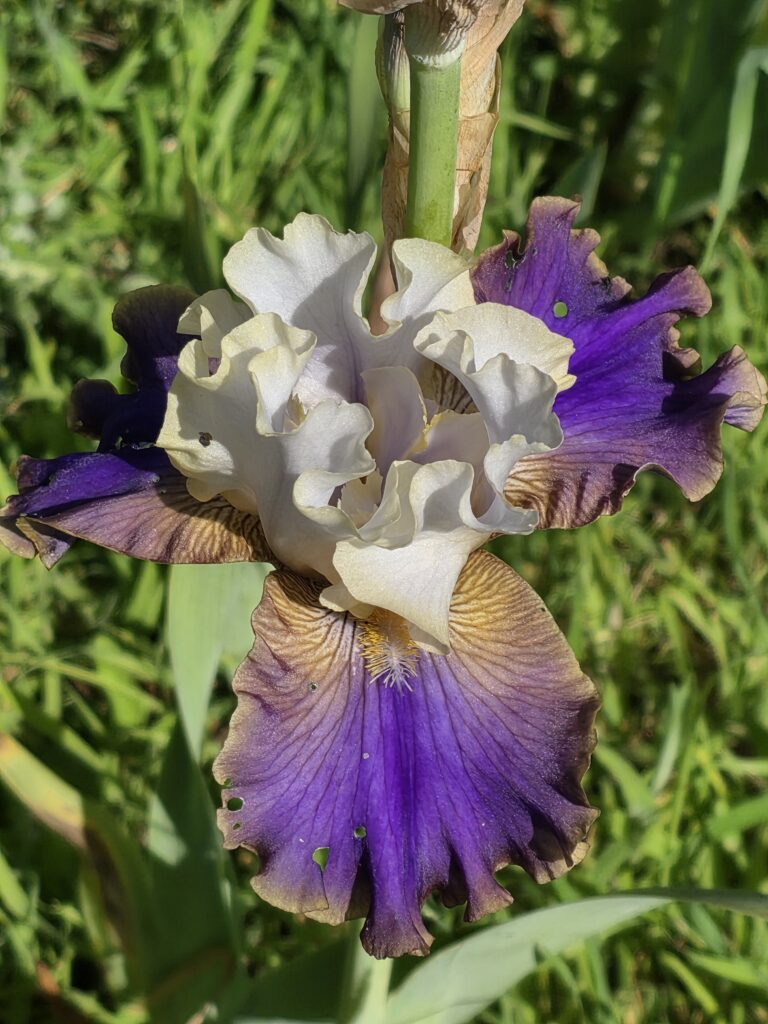
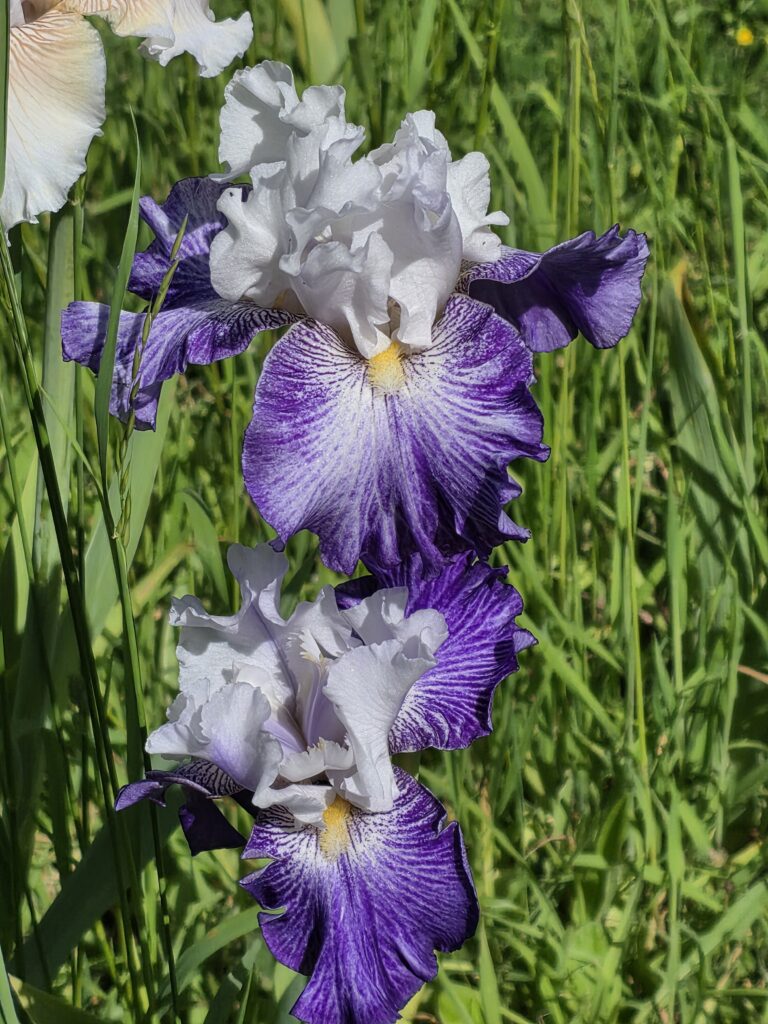
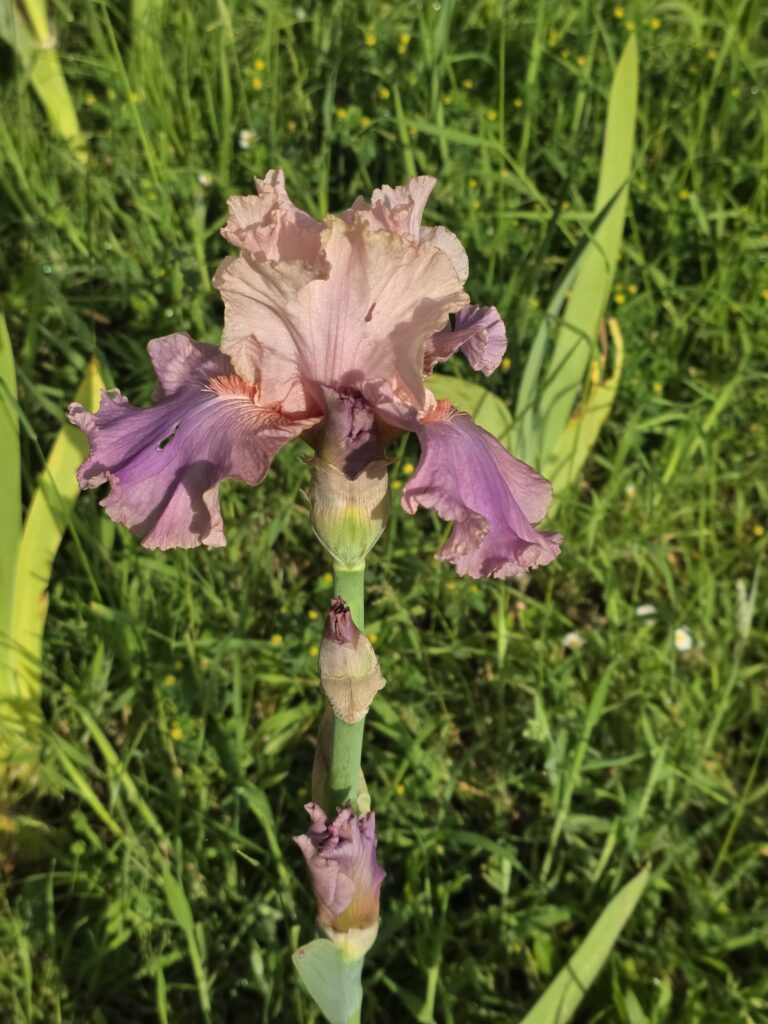
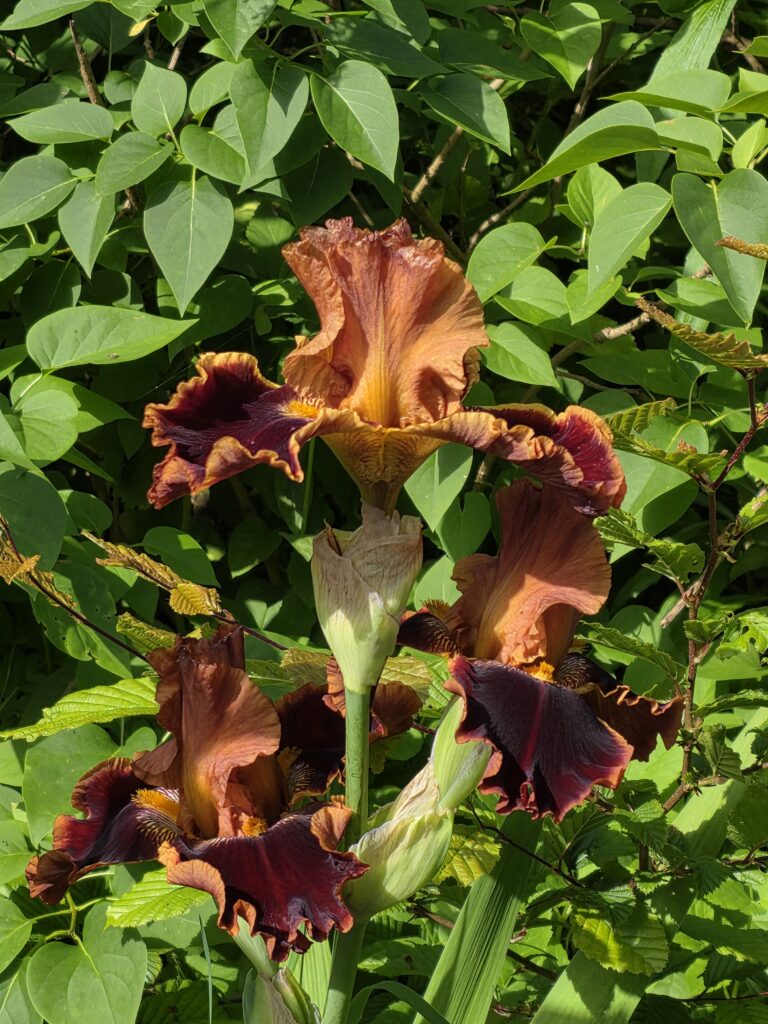
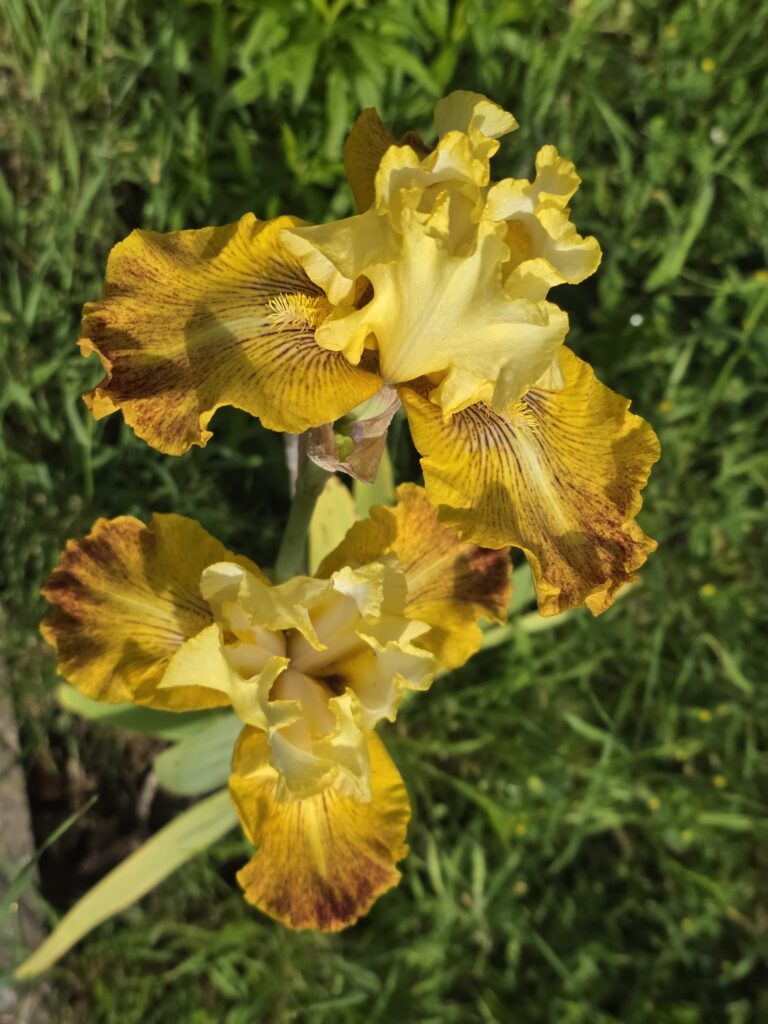
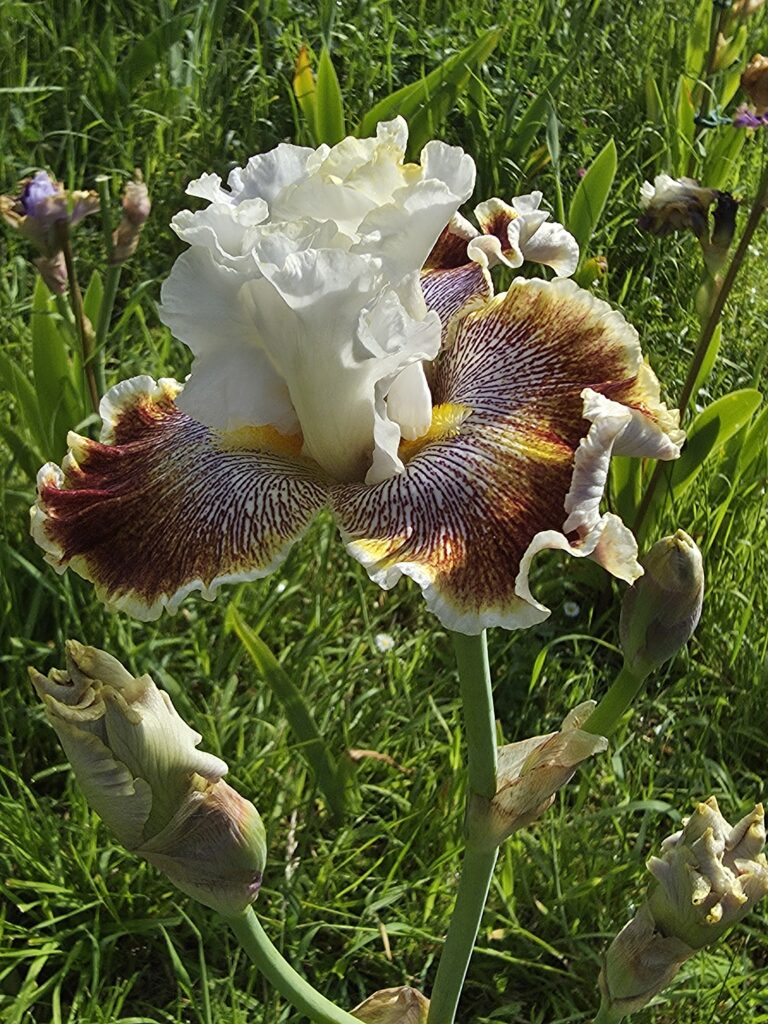
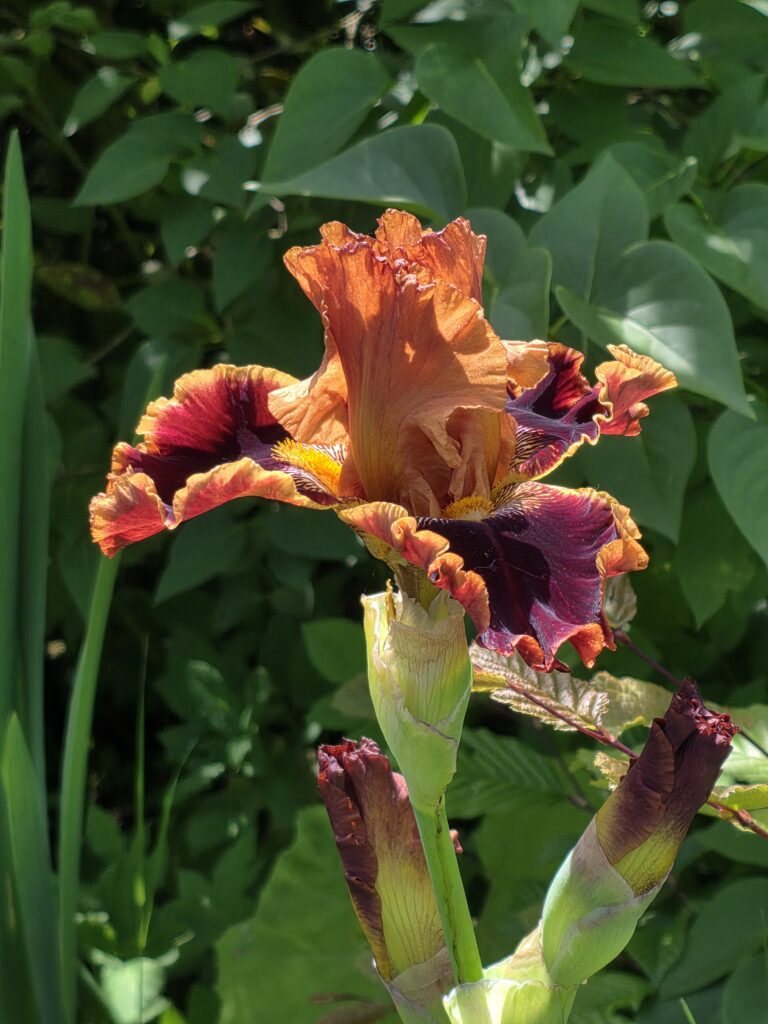
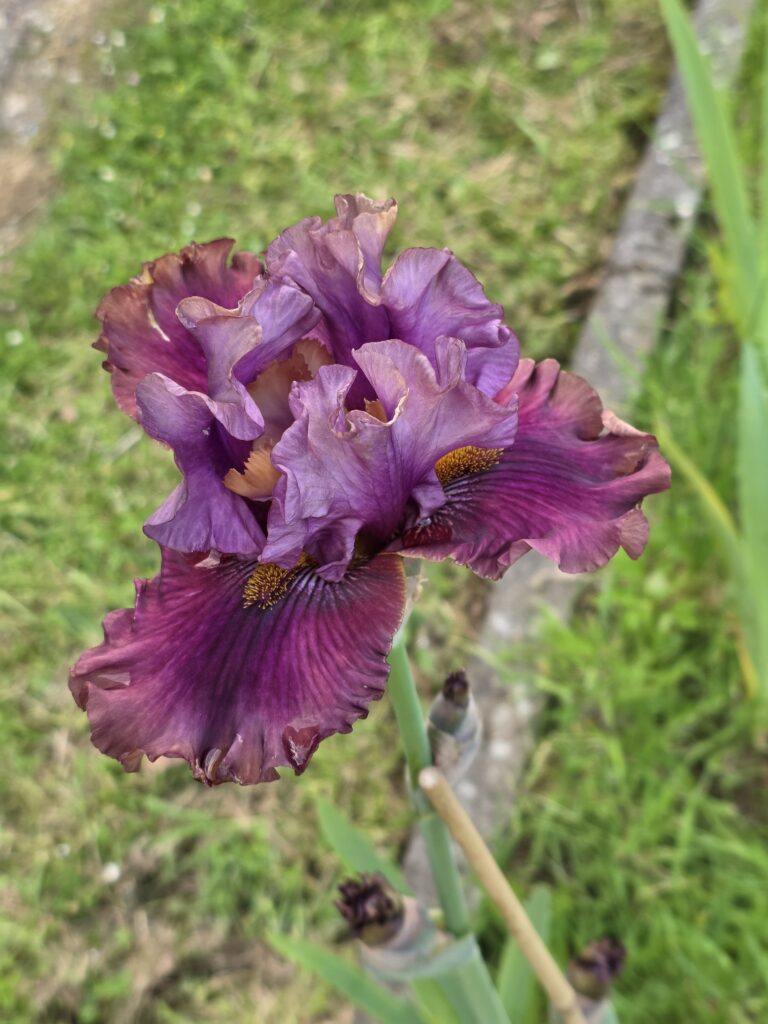
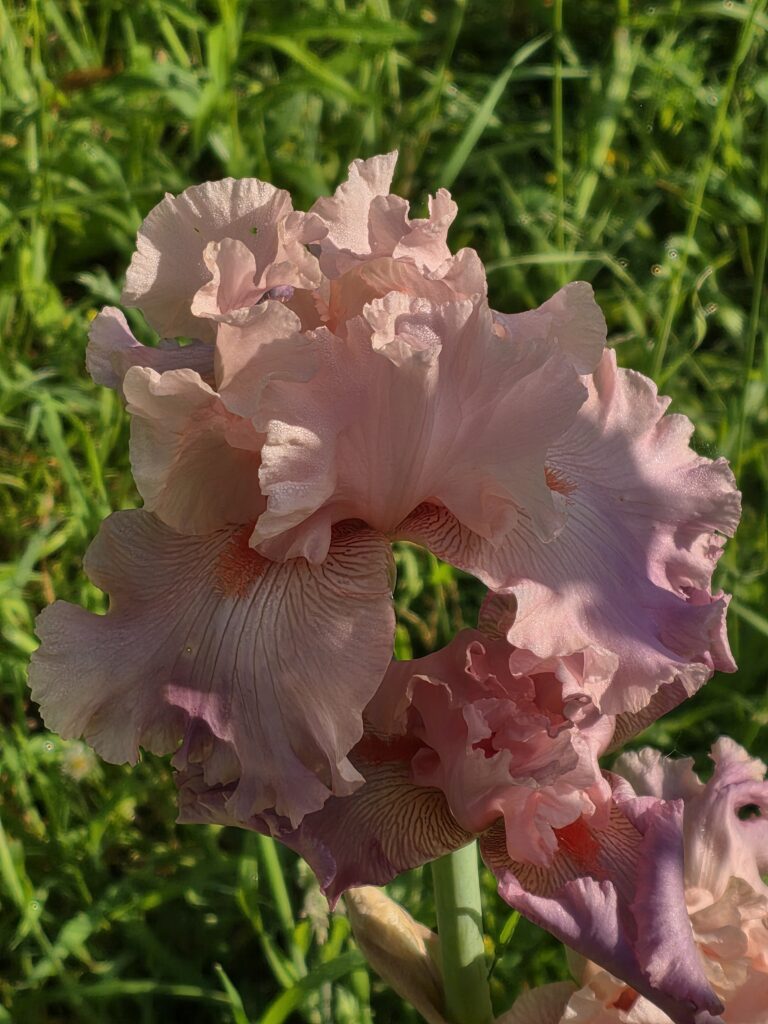
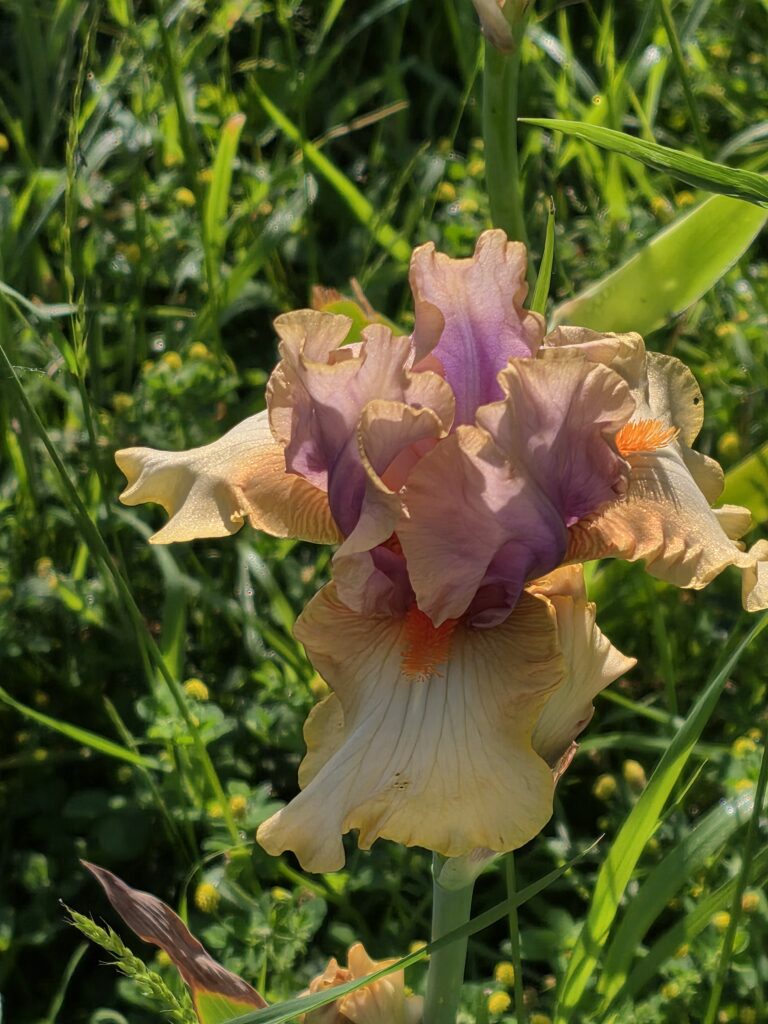
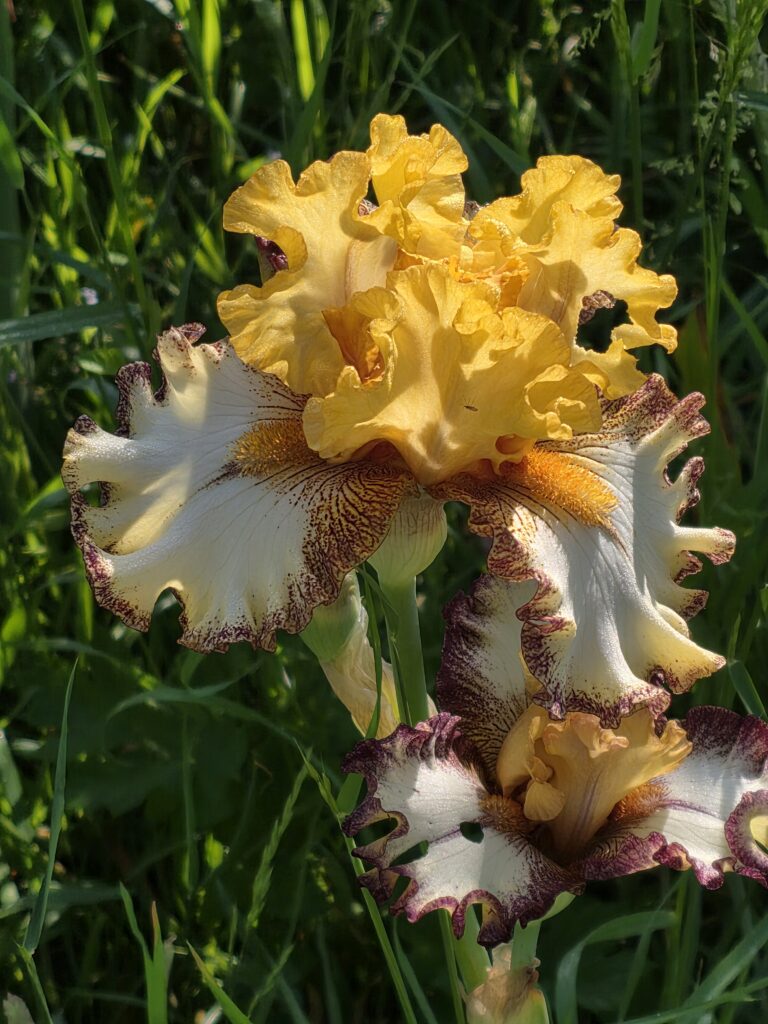
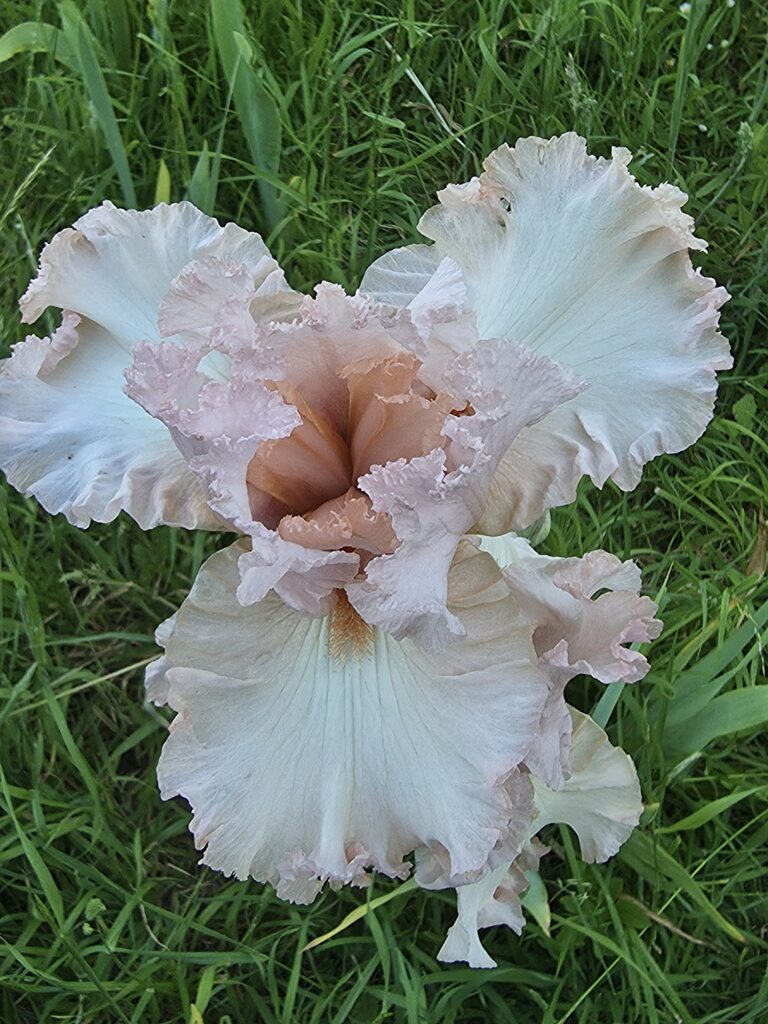
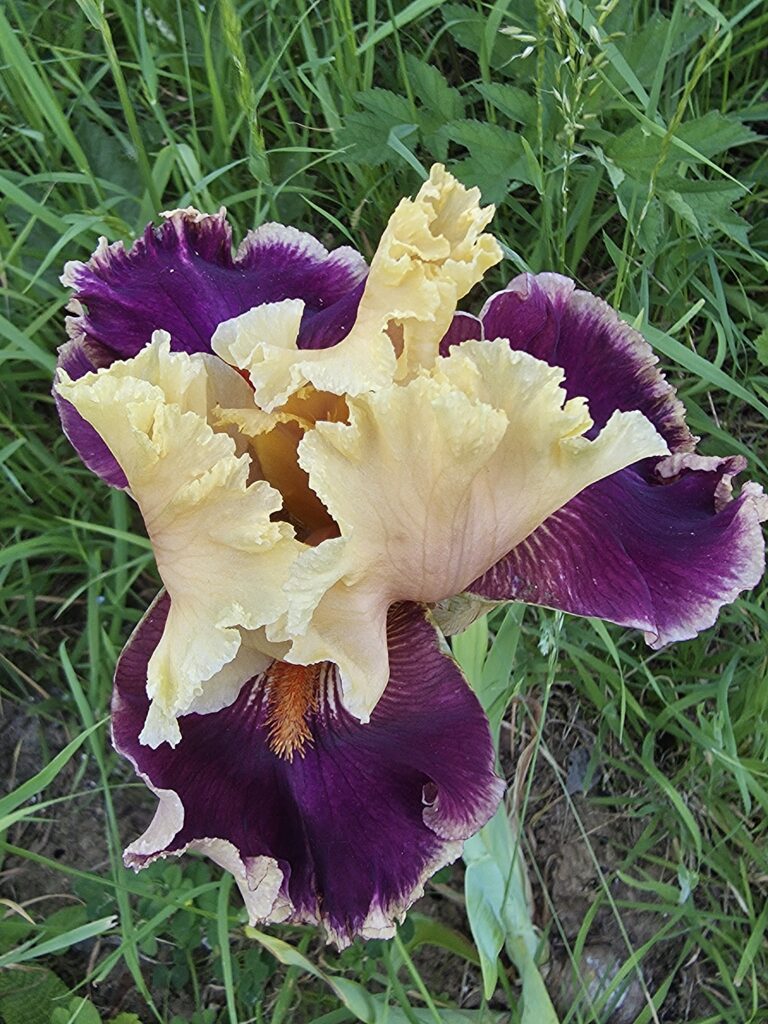
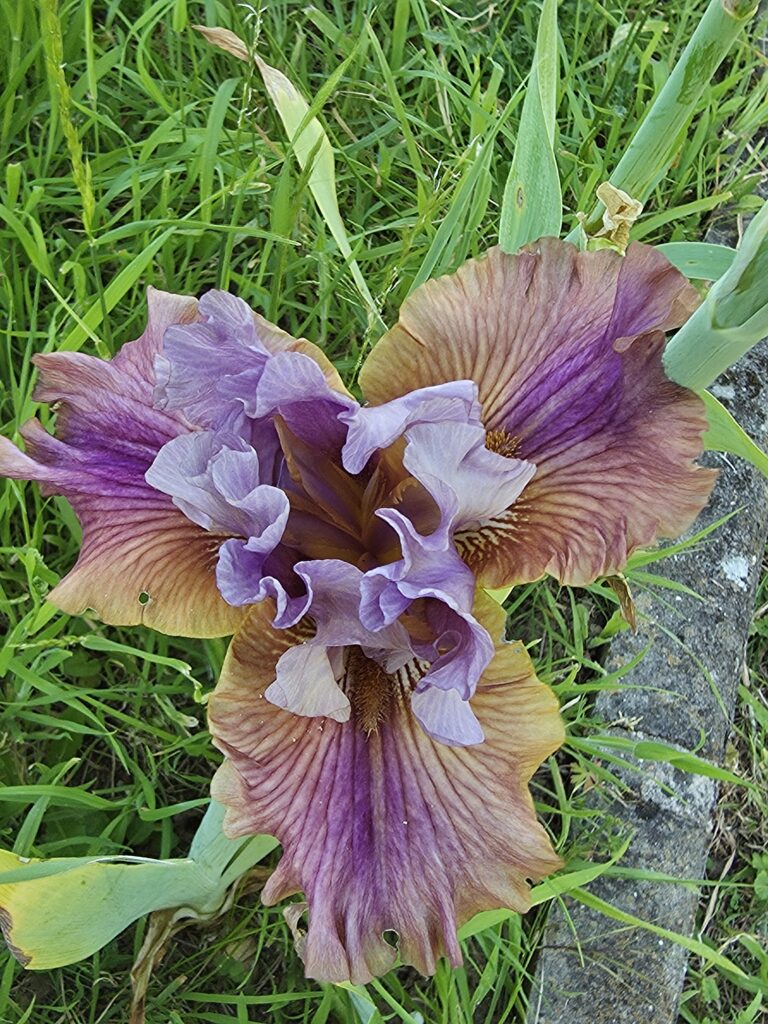
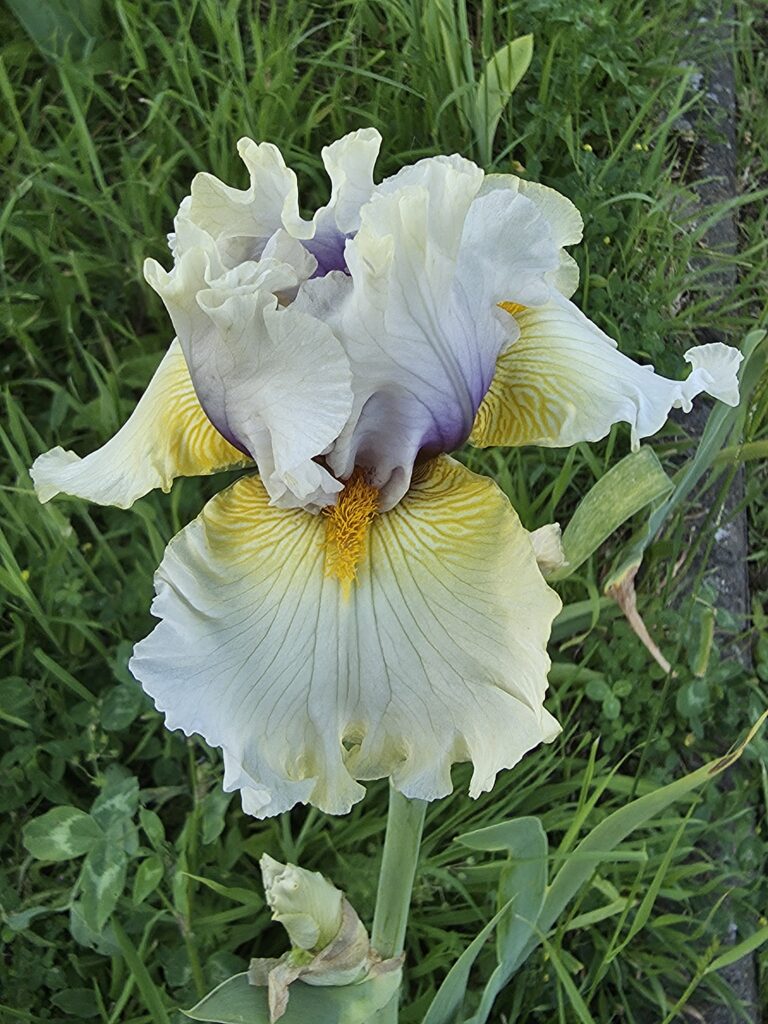
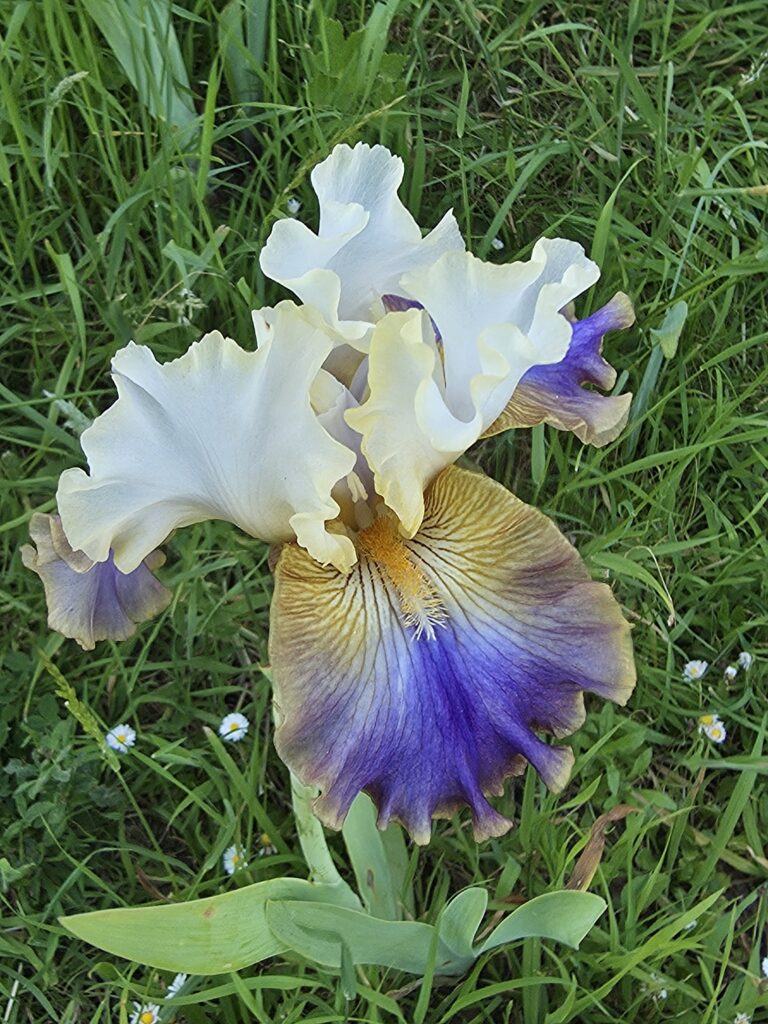
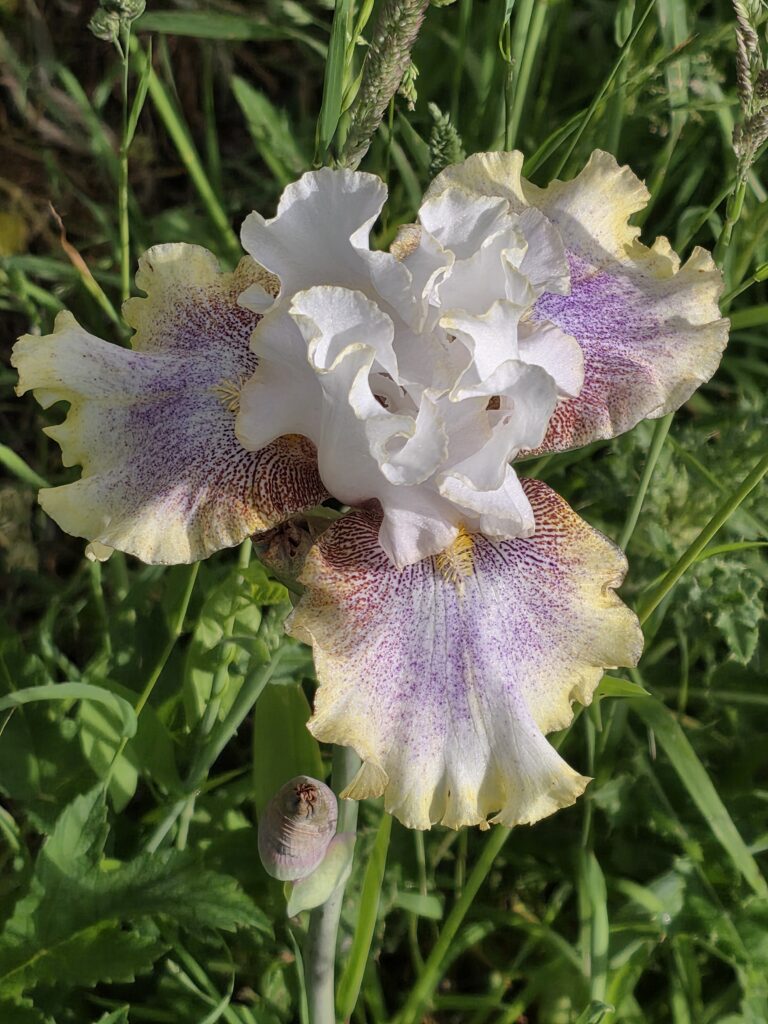
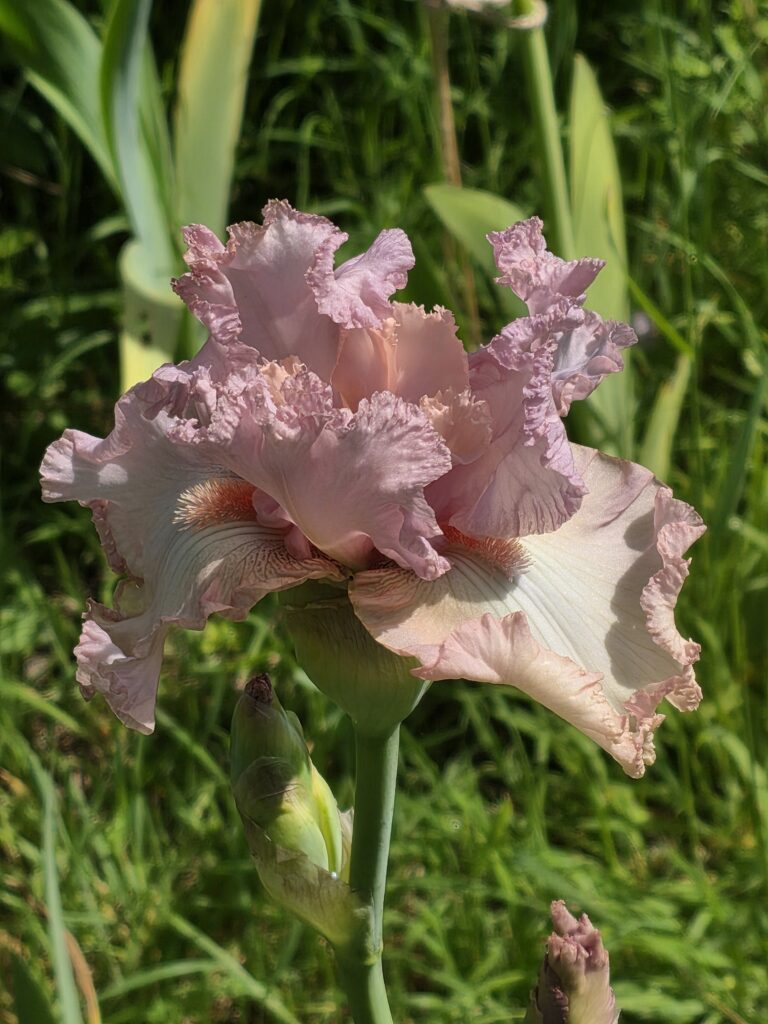
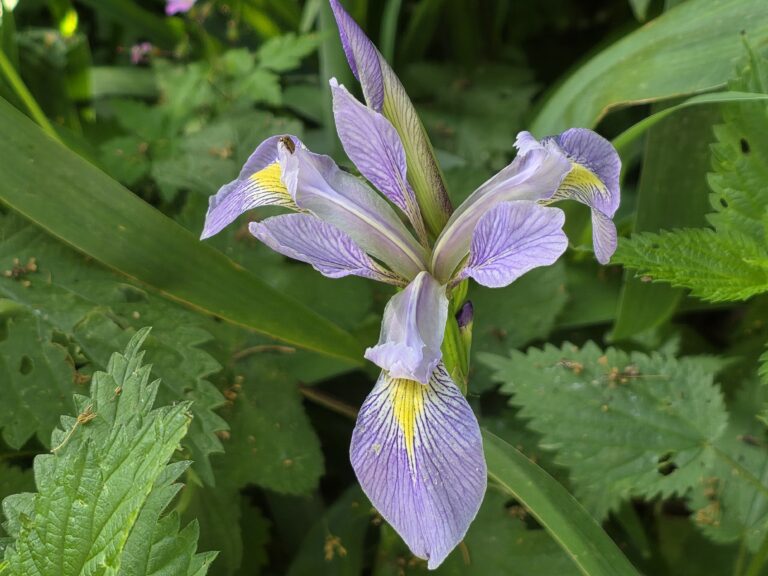
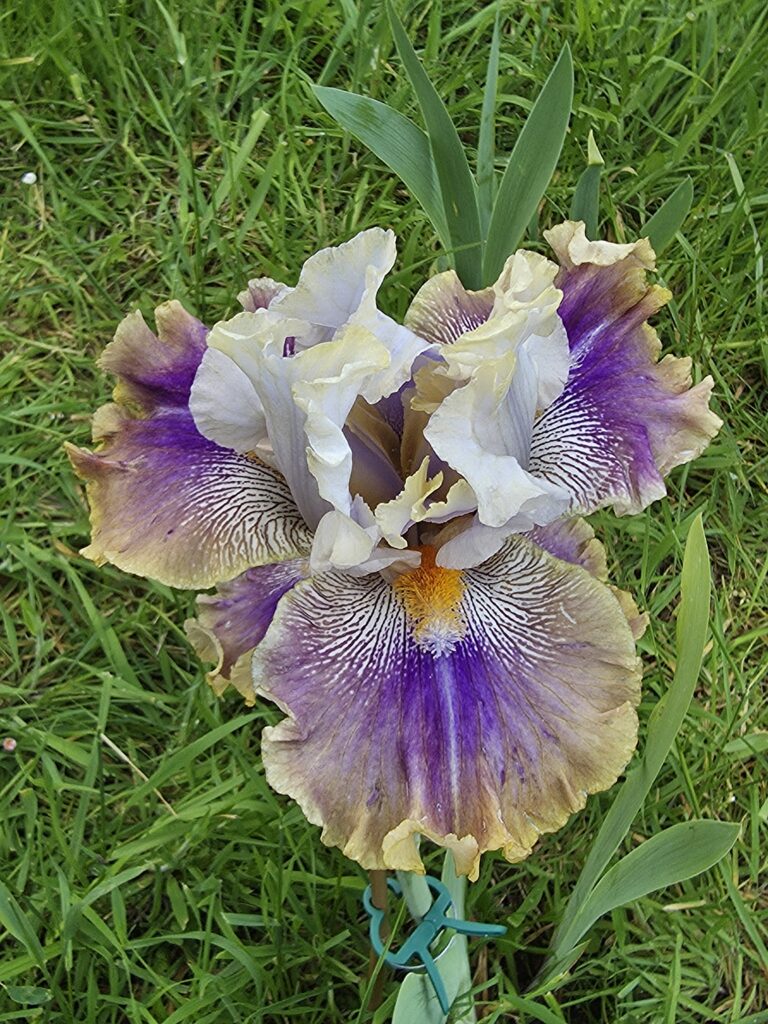
My collection of bearded irises

'Three of a kind'

I’ve noticed over time that whenever I start to accumulate three or more objects of the same ‘family’, it tends to become a collection, if not actually an obsession.
When I was but a kid, a few wrapped sugar lumps saved from a holiday trip, along with others brought back by friends and family from business trips or holidays abroad, soon developed into a full-scale hobby and a collection of ‘sugar-lump wrappers’ going into the thousands.
Teapots followed shortly afterwards and, more recently, 1950s-1960’s kitchen clocks, which now adorn my kitchen walls… to name just a few of the weird and wonderful objects I’ve found myself collecting over the years.

Plants, of course, just lend themselves to being collected.
In fact, the whole history of gardening could be resumed through its ‘plant collections’ and their collectors.
There is, at once, the coming together of a scientific, ‘identifying and cataloguing’ spirit along with the artistic, ‘eye-of-the-beholder’ sense of awe and wonder evoked by the similarities, yet contrasts, implied by every collection, of whatever nature.

The bearded iris was « waiting for me at the corner »…

That “collecting impulse” makes a lot of sense with irises, because the genus offers an unusually large range of forms, colours, and named cultivars, so acquiring a few plants can easily trigger a whole new hobby of chasing the next one. 

Why the collecting starts
Irises are not a single uniform flower; there are many varieties, and their colours span a broad spectrum, which naturally invites comparison and ‘completionism’. 
For enthusiasts, each new cultivar can feel like a distinct “edition,” especially when differences are subtle but meaningful in colour, shape, height, or bloom timing. 

What keeps people adding more
The number of known forms is huge: one source notes roughly 1,500 natural species and tens of thousands, possibly hundreds of thousands, of hybrids
That means there is always another niche to explore, whether someone is drawn to historic varieties, modern hybrids, specific colours, or rare lines preserved by collections and societies. 

The collector mindset
A big part of the appeal is that irises are easy to turn into a “set” to build over time, so the hobby rewards accumulation rather than a single purchase. 
There is also a strong community and naming culture around them, which makes the plants feel like collectible objects with lineage, not just garden decorations. 

In short, people keep collecting irises because the genus is incredibly diverse, visually nuanced, and organized in a way that makes “one more variety” feel worthwhile. 
As someone with a well-established ‘collector mindset’, the bearded iris was just « waiting for me at the corner »!

Photo de Lucy Masonsur Unsplash